Skip to content
New

Shopify launched Agentic Storefronts. We make AI agents recommend you - not just list you.

See the Shopify integration
Tru Commerce
PricingStart free →

INSIGHTS

Notes from the agentic commerce frontline.

Weekly. Numbers-first. The deals, the protocol shifts, the brand moves we think you should know about.

weekly·numbers-first·no fluff

Latest · AI Agent Storefronts · Oct 12, 2026

How a Claude shopping agent picks products

Anthropic ships no ranking layer. A Claude for Commerce shopping agent reads compact catalog rows of 70 to 120 characters that the merchant's own search returns, adds only server-issued ids to the cart, and never sees the checkout URL. Claude in Chrome reads the page and asks before buying. What is documented, what is not, and who filled the gap.
Read the latest →

AI Agent Storefronts · Oct 12, 2026

Claude commerce agents: what a merchant has to build

Anthropic's blueprint of 2 September 2026 hands a merchant's engineers a shopping agent, a merchant agent and an 11-method backend contract, and leaves payments, authorization, ranking and fraud to the deployment. The three runtime paths, where MCP enters, Shopify's UCP implementation, and what to build first.

AI Agent Storefronts · Oct 12, 2026

Claude for Commerce explained: what Anthropic shipped

Anthropic published its commerce agents blueprint on 2 September 2026: a shopping agent and a merchant agent as open-source reference code, payment left to the merchant. What shipped, who is named, what the 35% figure describes, and what is still missing.

ChatGPT Ads · Oct 10, 2026

ChatGPT Ads in India: six weeks in, on the record

ChatGPT Ads switched on in India on 27 August 2026. Six weeks on, eight articles in five outlets quoted us and TechTimes cited our benchmarks. Every question the press asked, every answer verbatim and linked, and the numbers behind each one.

AI Agent Storefronts · Oct 10, 2026

AI shopping agents: how they buy, what brands need

Meta calls Muse the world's first personal AI agent, but ChatGPT agent, Google's agentic checkout, Alexa+ and Copilot Checkout already buy for shoppers. The rail each pays on, what your gateway sees, the documented fees (Shopify: none on Muse; OpenAI's retired 4%) and the four things a brand needs.

AI Agent Storefronts · Oct 10, 2026

AI shopping assistants: the 2026 map for brands

Six platform assistants now sell on a brand's behalf and a seventh kind runs on the brand's own store. How each gets your catalog, where checkout happens, what each documents about ranking, and the one on-site funnel published in full: 4,045 messages, 6 orders.

AI Agent Storefronts · Sep 26, 2026

Meta Muse in India: when it lands, what it will meet

Meta Muse is live in the US and Canada, not India, with no date or waitlist. A launch here will meet CERT-In's human-in-the-loop line, NPCI's paused agent protocol and two conflicting UPI caps. What Indian D2C brands should do now.

AI Agent Storefronts · Sep 26, 2026

Meta Muse: what merchants are saying in month one

We read 53 merchant, agency and advertiser reactions to Muse in its first month: 14 positive, 24 wary, 15 negative, and not one first-hand report of a Muse order in a Shopify admin.

AI Agent Storefronts · Sep 26, 2026

How Meta Muse shops: what is documented and what is guessed

Meta has published nothing on how Muse ranks products. Here is the line between what Meta, Shopify, OpenAI and Google confirm, what first-hand tests saw (3 of 7 deal prompts worked), and which claims are vendor inference.

AI Agent Storefronts · Sep 26, 2026

Meta Muse connectors: what to build, how to submit

Meta opened Muse to outside connectors on 18 September 2026 and counted over 2,000 submissions within days. The two connector classes in Meta's words, the three-step submission, and what a merchant connector should carry that Shopify Catalog does not.

AI Agent Storefronts · Sep 26, 2026

Meta Muse retailers: who is on, and how each got there

Meta named ten retailers for Muse on 23 September 2026 and none is live yet. The partner table, the three ways a brand gets in, and what a store with no deal already has by default.

AI Agent Storefronts · Sep 26, 2026

How Meta Muse pays: Link, Shop Pay, PayPal and the fee

Muse pays through four rails today: a Link one-time card, the shopper's own saved card, Shop Pay and PayPal. None adds a merchant fee. Meta's own cut has no rate, date or payer yet, against the 4% OpenAI charged and retired in 2026.

AI Agent Storefronts · Sep 26, 2026

Meta Muse on Shopify: what is on by default, what to change

Shopify shares your products with Meta by default and turns on direct checkout for eligible stores. The two switches, the exact admin path, the excluded product types, the pixels that will not fire, and a 13-step checklist.

AI Agent Storefronts · Sep 26, 2026

Amazon blocks Muse: what it means for brands

Amazon began blocking Meta's Muse agent on 20 September 2026 after Meta declined a removal request. There is no Muse path to an Amazon purchase, so the same shopping intent now lands on brand sites, Walmart and Shopify stores.

AI Agent Storefronts · Sep 26, 2026

Meta Muse explained: what it is, why it's No. 1, how it buys

Meta's Muse agent launched on 8 September 2026 and was the No. 1 free app in the US ten days later; three analytics firms put downloads between 2.3 million and 4.3 million by 24 September. What it is, what it costs, and why the checkout is the part brands should watch.

AI Search Visibility · Sep 23, 2026

Reddit Marketing Services: Who Actually Does What

Most Reddit agency lists are opinion. This one is built from 33 live AI answers measured across ChatGPT, Gemini, Perplexity, Copilot and Google AI Mode in three markets, showing which firms assistants actually name when a buyer asks. Full disclosure: we publish this list and we are on it, so every placement carries the number behind it.

Citation Rank & Share of Voice · Sep 23, 2026

Reddit Monitoring Tools, Ranked by What AI Assistants Say

Fourteen tools, measured across 18 live AI answers on six engines in three markets. Syften leads on frequency, Brandwatch and Brand24 follow, and the best-known name in the category carries the worst sentiment of the set. Plus the job none of them are built for: telling you whether a Reddit thread produced an AI citation.

Citation Rank & Share of Voice · Sep 23, 2026

Why AI Search Engines Cite Reddit So Often

Across 3,750 tracked AI answers on five engines in three markets, reddit.com is the most-cited domain we measure - 439 citations in the AI-visibility corpus, appearing in more separate answers than any other source. But community content is only about 5% of all citations. Reddit is not most of the evidence; it is the most concentrated single piece of it. Here is the measured picture, the Google-versus-OpenAI split nobody talks about, and what it means for a brand.

Checkout & Protocols · Sep 19, 2026

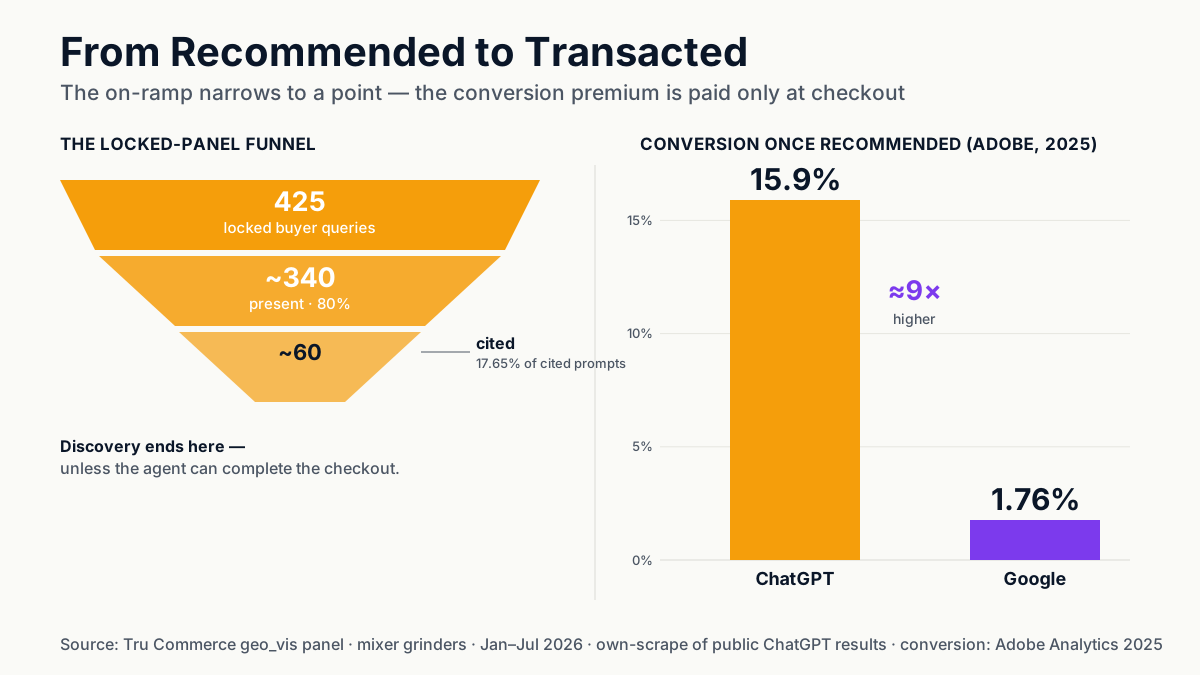
From recommended to transacted: agentic commerce

Getting recommended is the on-ramp; being transactable is the destination. Adobe has AI-referred retail visits converting 60% higher than other traffic in July 2026, yet most brands still make an agent find them and then dead-end it at a checkout it cannot complete. The series finale: why discovery without transactability leaks the value, what ACP, UCP and AP2 do, and how a recommendation becomes a purchase inside the chat.

AI Agent Storefronts · Sep 17, 2026

commercetools and Agentic Commerce: The Composable Position

The most architect-facing platform in agentic commerce. Powerful if you have the engineering team, more than the job needs if you do not - and, like every platform, it solves connectability, not selection.

AI Search Visibility · Sep 17, 2026

6 myths about answer engine optimization

Answer engine optimization is not keyword stuffing, schema magic, or word count. We debunk 6 AEO myths with citation-corpus data from 2026.

Citation Rank & Share of Voice · Sep 17, 2026

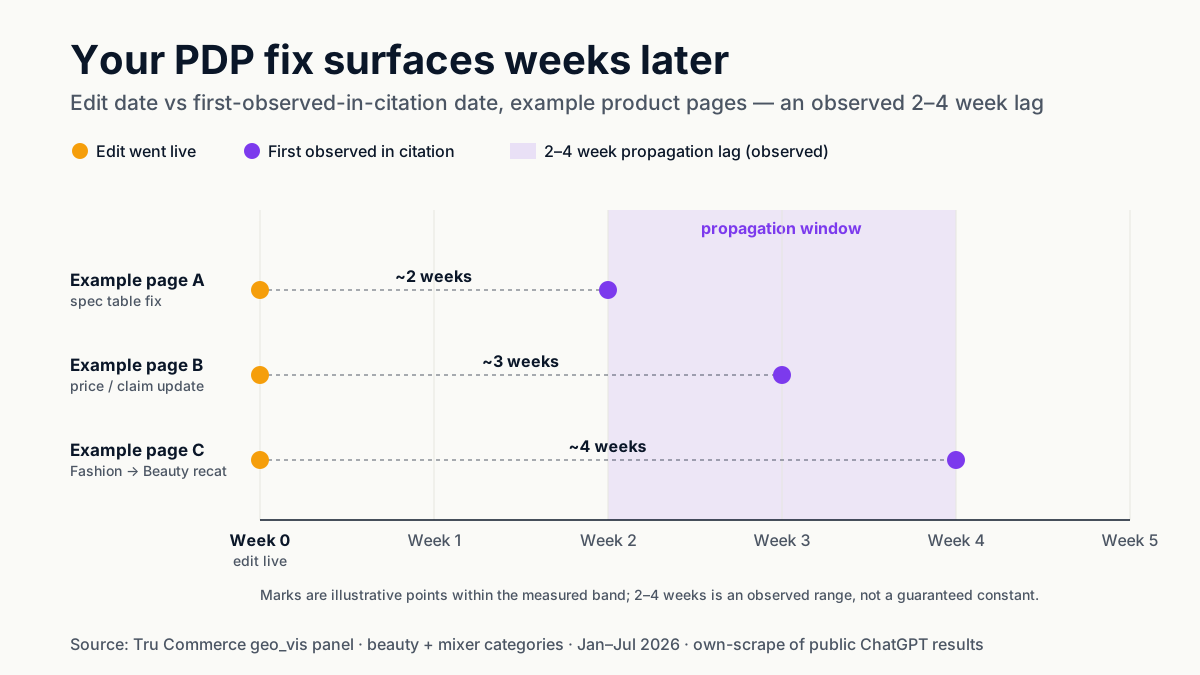
The AI Re-Crawl Lag — Your PDP Fix Takes Weeks to Surface

You fix a product page and check the assistant the next morning. It still shows the old answer. In one case we tracked, a PDP corrected to the Beauty category kept getting cited under Fashion for weeks after the edit went live. AI answers run on a re-crawl clock, not an edit clock, and the two are 2–4 weeks apart. This piece is about measuring the propagation, not the change — and planning campaigns around the lag instead of being surprised by it.

Checkout & Protocols · Sep 17, 2026

Visa, Mastercard and the Agent Trust Frameworks

The card networks are solving the one problem agentic checkout cannot solve for itself: proving the agent is allowed to spend. Here is what that means for merchants.

Citation Rank & Share of Voice · Sep 15, 2026

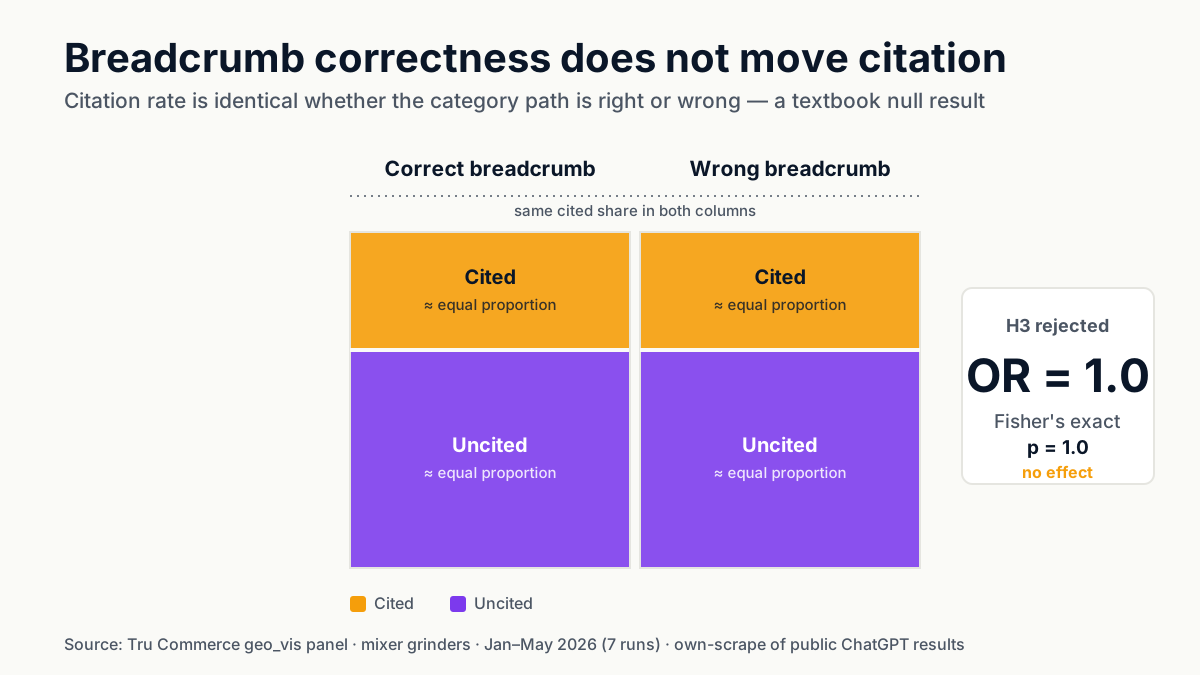
The Breadcrumb Myth — Category Path Is Hygiene, Not Leverage

One of the most repeated theories in AI shopping is that a 'wrong' category breadcrumb quietly suppresses your citations. We tested it on a locked panel and the theory collapsed: the odds ratio between breadcrumb-correctness and being cited was 1.0, with a Fisher's exact p of 1.0 — no association at all. Correct categorization is basic hygiene. It is not a visibility lever. Here is the test, why the intuition is wrong, and the three levers that actually move the needle.

Citation Rank & Share of Voice · Sep 15, 2026

The Variant-Fragmentation Myth — Consolidating Listings Can Hurt Your AI Visibility

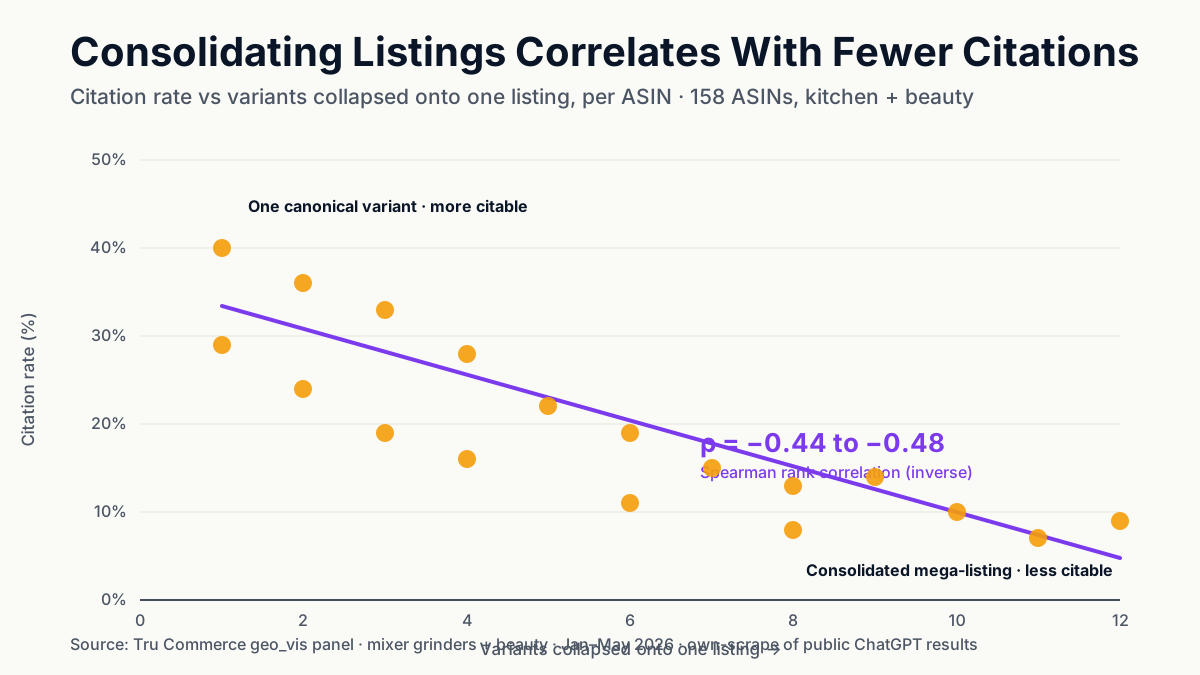
One of the most repeated PDP recipes says merge your color, size, and pack variants onto a single listing to concentrate authority. In our locked-panel data, consolidation ran the wrong way: the more variants a brand collapsed onto one listing, the lower its AI citation rate (Spearman ρ = −0.44 to −0.48). The tidy hypothesis that fewer listings win was disproven across 158 ASINs. Here is the data, the honest correlational caveat, and the reframed play — promote one canonical variant instead of collapsing everything.

Vertical Playbooks · Sep 12, 2026

The Broken Carousel — AI Shopping Is Half-Built in Beauty, and That's the Opening

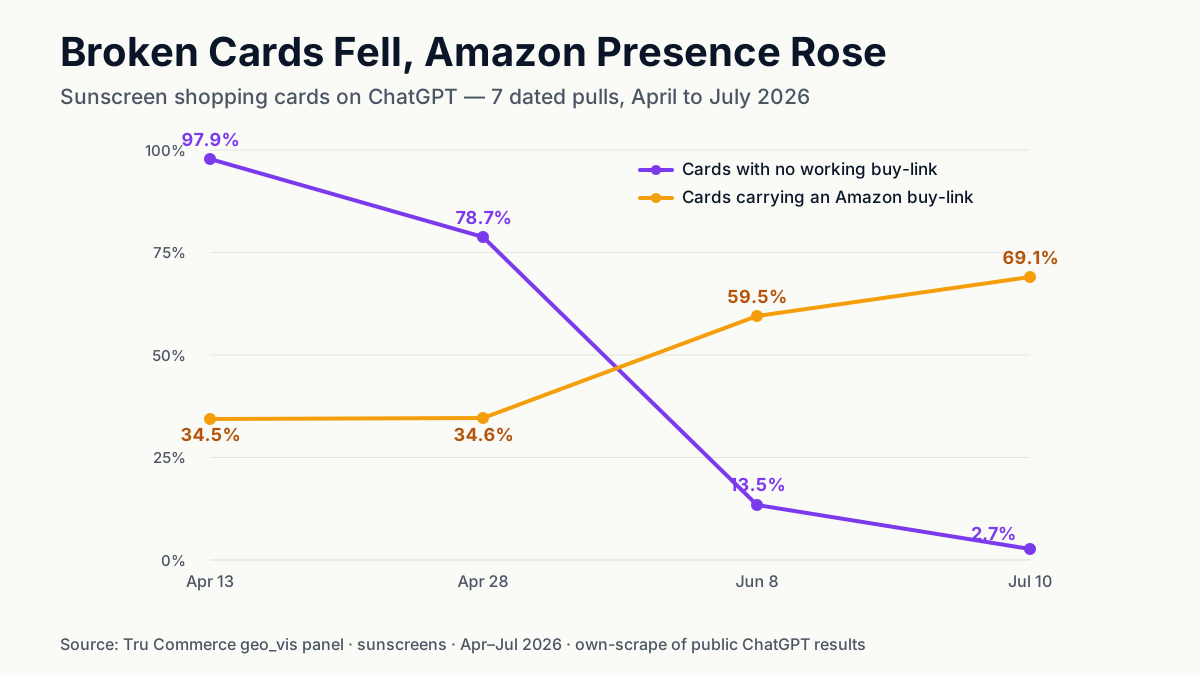
In a young AI-shopping category, the shelf itself is broken before ranking ever matters. In April, 97.9% of sunscreen cards in our locked panel had no working buy-link, and the links that did resolve pointed at obscure cross-border dropshippers, not the largest marketplace. By July the shelf had healed to 2.7% broken and the marketplace rode 69% of cards. The first battle in an emerging category is not citation or ranking — it is the data integrity of the carousel, and it is winnable right now.

Citation Rank & Share of Voice · Sep 12, 2026

Product Type Determines Destiny — Some Categories Are 15x More Citable

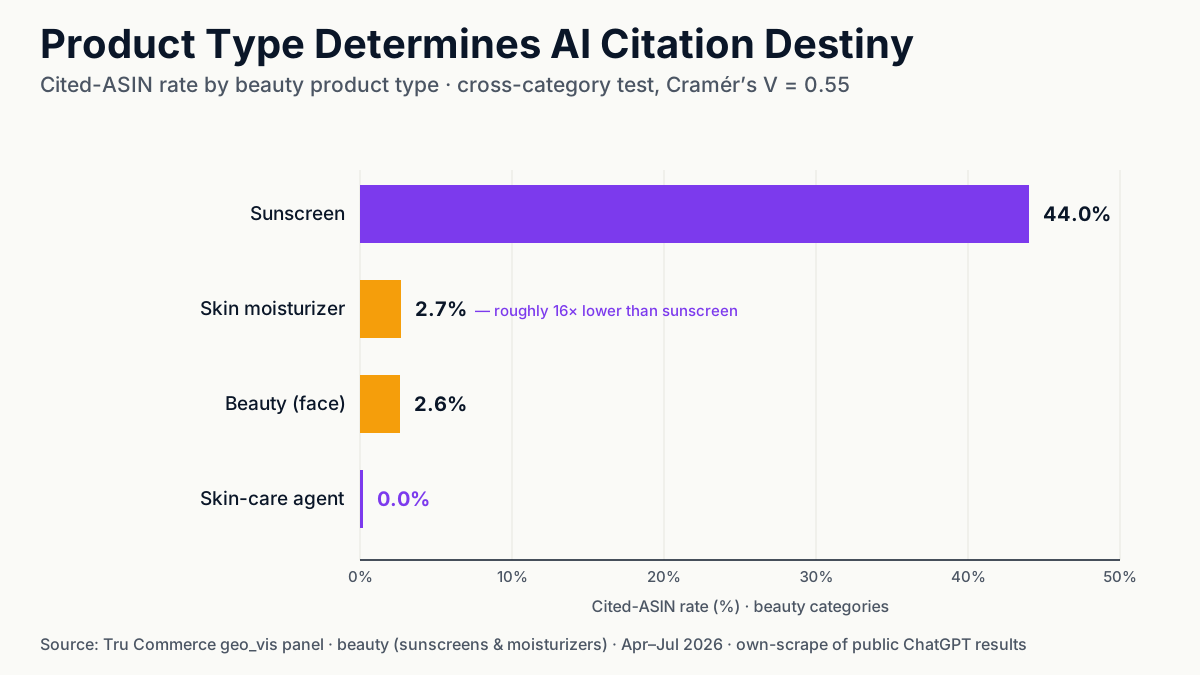
Citability is not evenly distributed across a catalogue. In our beauty panel, sunscreen ASINs are cited by ChatGPT at roughly 16 times the rate of moisturizers (44.0% vs 2.7%), and the association between product type and citation is statistically strong (Cramér's V = 0.55). Which category you lead with is itself a visibility lever — and most AEO programs pick it by revenue instead of by structure.

Citation Rank & Share of Voice · Sep 11, 2026

The Citation Graph Rewires Itself — Editorial, Then Community, Then Niche Affiliate

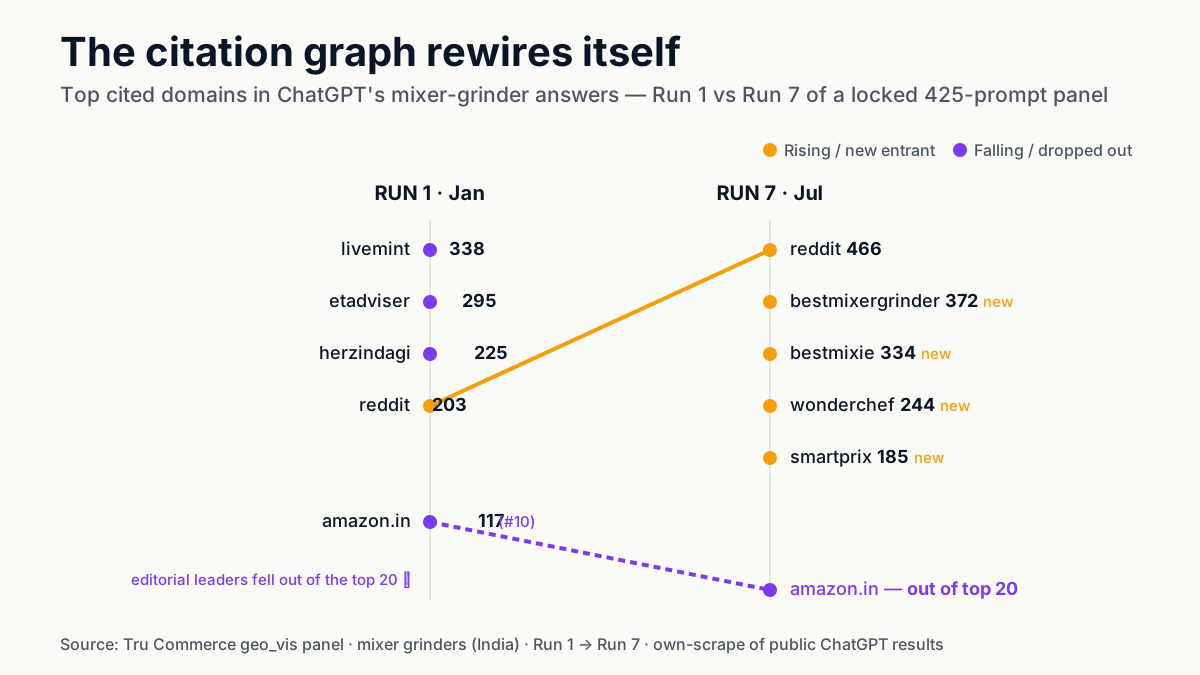
The set of domains ChatGPT cites to justify its shopping answers is not stable — it churns fast. Across seven monthly pulls of one locked panel, the leaderboard rewired from mainstream editorial to community to niche affiliate: Reddit climbed from #4 to #1 (203 to 466 citations), four of Run 7's top five did not exist in Run 1's top five, and amazon.in fell out of the top 20 entirely even as its buy links kept winning slots. If you track your own page instead of the graph, you cannot see the ground moving under your placement — here is the data, the mechanism, and what to watch.

Insights · Sep 10, 2026

Zomato MCP and Swiggy MCP: India's Apps Inside AI Assistants

Zomato and Swiggy both run MCP servers, so an AI assistant can search restaurants, build a cart and place a real order without the app ever opening. Zomato shipped an official open-source server in September 2025; Swiggy followed in January 2026 across food delivery, Instamart and Dineout. Here is how each works, what Instamart and BigBasket actually did, and what the pattern tells every other brand.

Insights · Sep 10, 2026

Why a Single AI Visibility Score Is a Vanity Metric

An AI visibility score is a single number meant to summarise how often AI assistants surface your brand. The problem is not the arithmetic — it is that one number hides the two things that decide whether you get the sale. Being named is not being recommended, and one run is not a measurement. Here is what to demand from any score before it goes in a board deck, including ours.

Citation Rank & Share of Voice · Sep 10, 2026

Measurement Is the Moat — Why Every AI-Visibility Number Lies Without a Locked Prompt Set

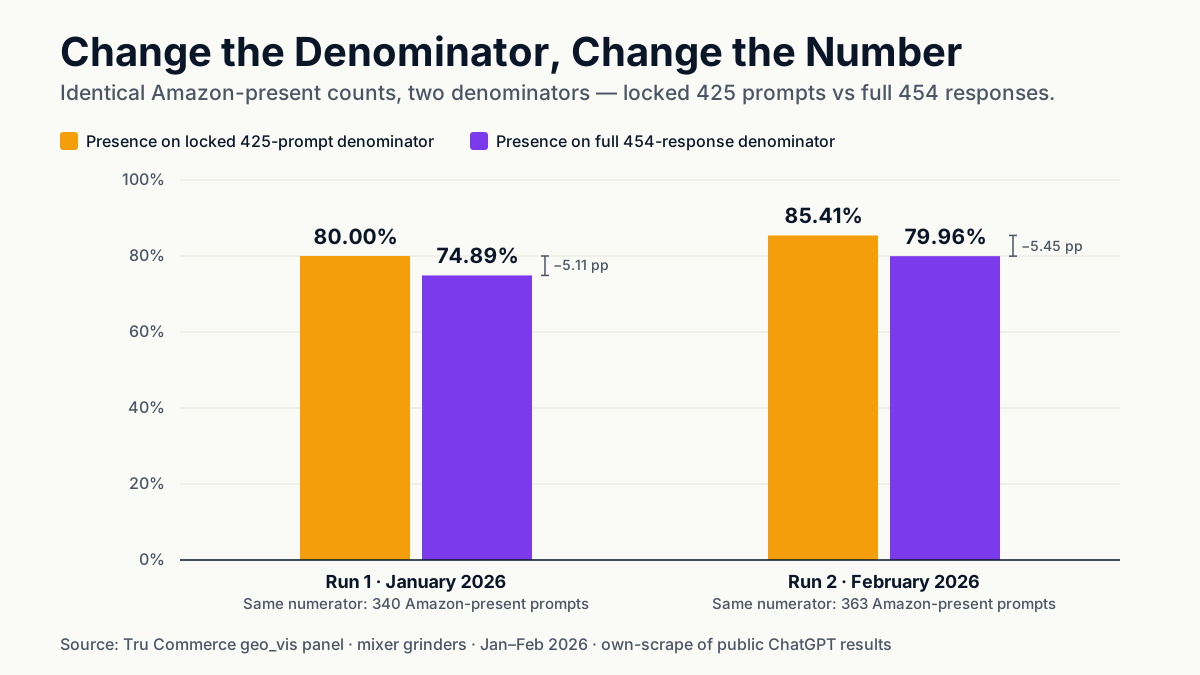
The same Amazon-present count reads 80% on a locked 425-prompt denominator and 74.89% on a full 454-response one — the number moves five points on the denominator alone. Add runs with zero cards, partial card coverage, and a position metric that swings from 0.41 to 1.41 depending on where you start counting, and most AI-visibility dashboards are quietly reporting fiction. This piece shows the exact ways a number lies, includes a correction we owe our own data, and gives the validity checklist that has to run before any figure ships.

Citation Rank & Share of Voice · Sep 10, 2026

The Long Tail Is Where You Lose — Regional and Use-Case Queries Are the Leak

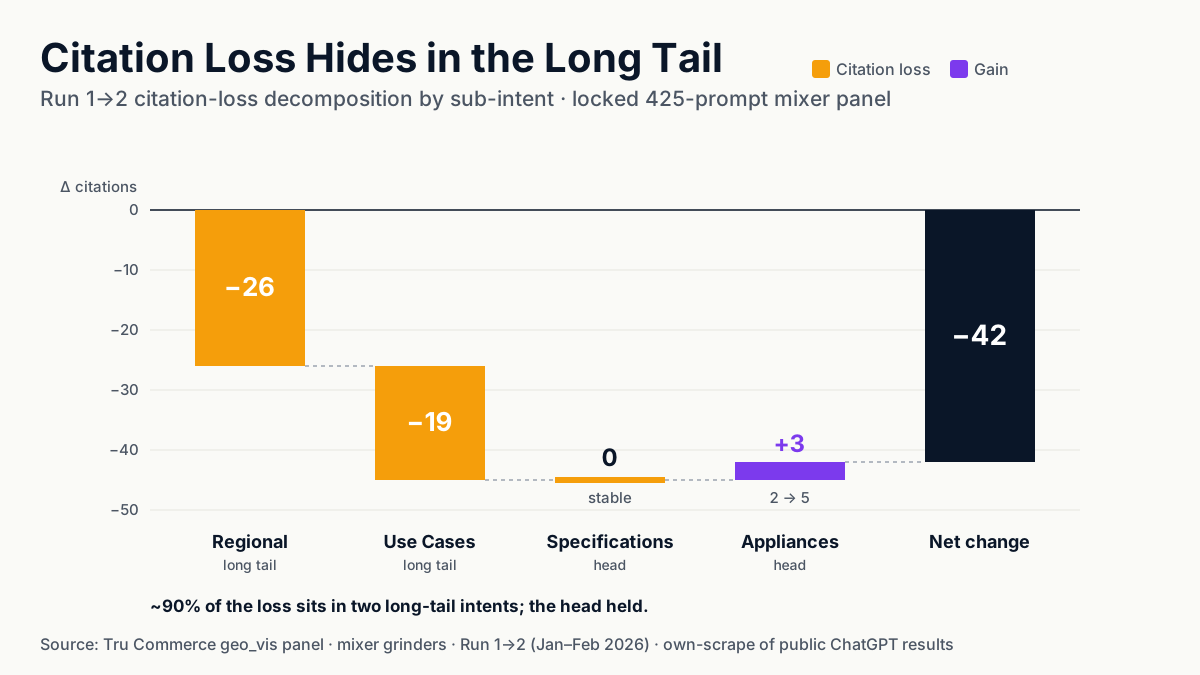
When we decomposed AI citation loss by sub-intent between two early runs, almost all of it lived in the long tail: regional queries contributed a drop of 26 and use-case queries 19, while spec queries stayed stable and appliance queries even gained. Hero terms held; the tail leaked. This piece shows why the model retrieves differently for 'mixie for dhokla batter' than for a spec query, and why you defend the tail before the head.

Citation Rank & Share of Voice · Sep 9, 2026

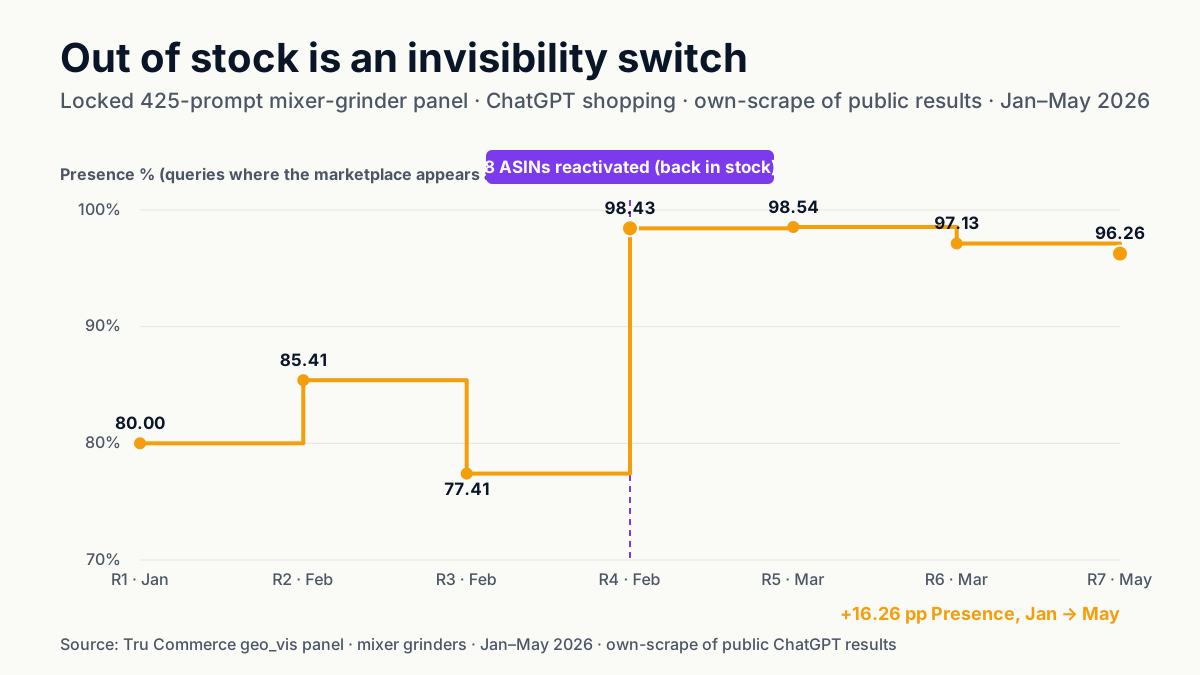
Out of Stock Is an Invisibility Switch — Availability Beats Cleverness in AI Shopping

When a product goes out of stock, AI shopping does not down-rank it — it silently deletes it from the answer. In our locked mixer-grinder panel, the largest marketplace's Presence jumped from 80% to 96.26% (+16.26 points) across seven monthly pulls, and the step-change lands exactly when 8 previously lapsed ASINs returned to stock. Availability is not an operations problem hiding downstream of visibility; it is the first gate of visibility. With ChatGPT product feeds live since June 2026, feed and stock hygiene are now visibility infrastructure.

Citation Rank & Share of Voice · Sep 8, 2026

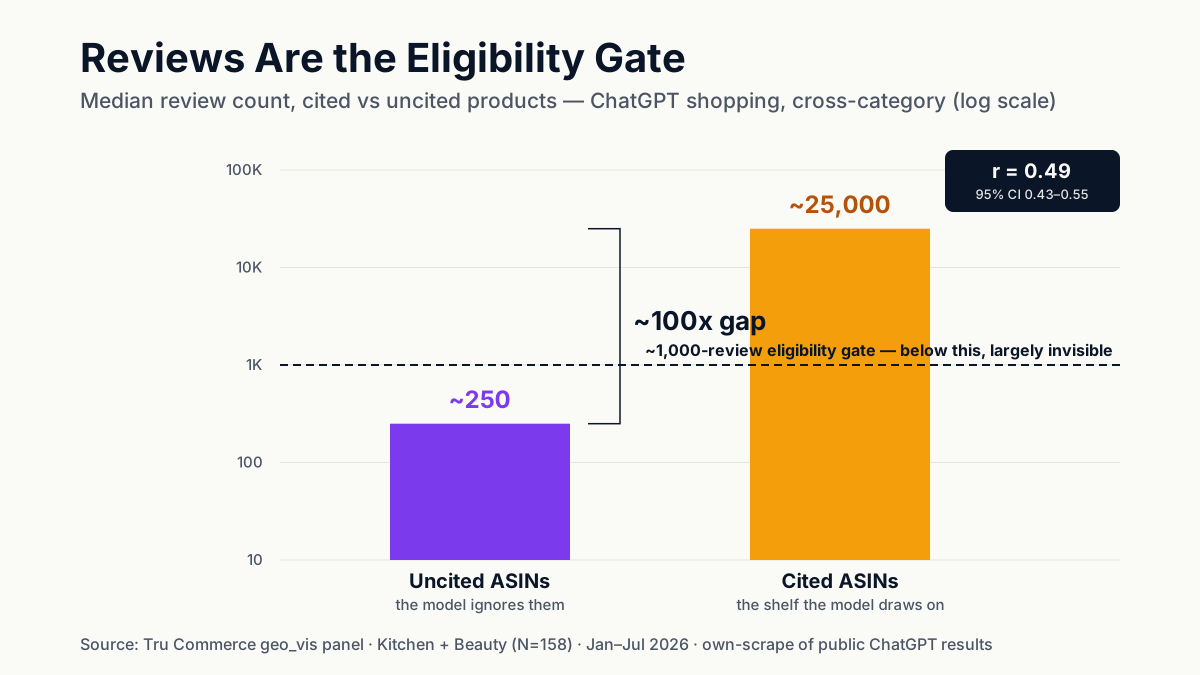
Reviews Are the Eligibility Gate — You Don't Get Cited Until You Cross the Threshold

Review count is the strongest single predictor of whether a product gets cited in ChatGPT shopping answers (r = 0.49). The products the model cites carry a median of ~25,000 reviews; the ones it ignores sit around ~250 — a roughly 100x gap. Below about 1,000 reviews a product is largely invisible to the citation layer, no matter how good the listing is. Reviews are not a tiebreaker. They are the gate you cross to be eligible at all.
AI Search Visibility · Sep 4, 2026

Criteo Prompt Smart Ads: 2,000 Brands on ChatGPT and a 4x Spend Lift

Criteo was the first ad-tech partner inside OpenAI's ChatGPT ads pilot. Its Prompt Smart Ads product auto-generates creatives and context hints matched to how people actually prompt - here is what it is, the numbers behind it, and what its creative reports teach every advertiser.

Citation Rank & Share of Voice · Sep 3, 2026

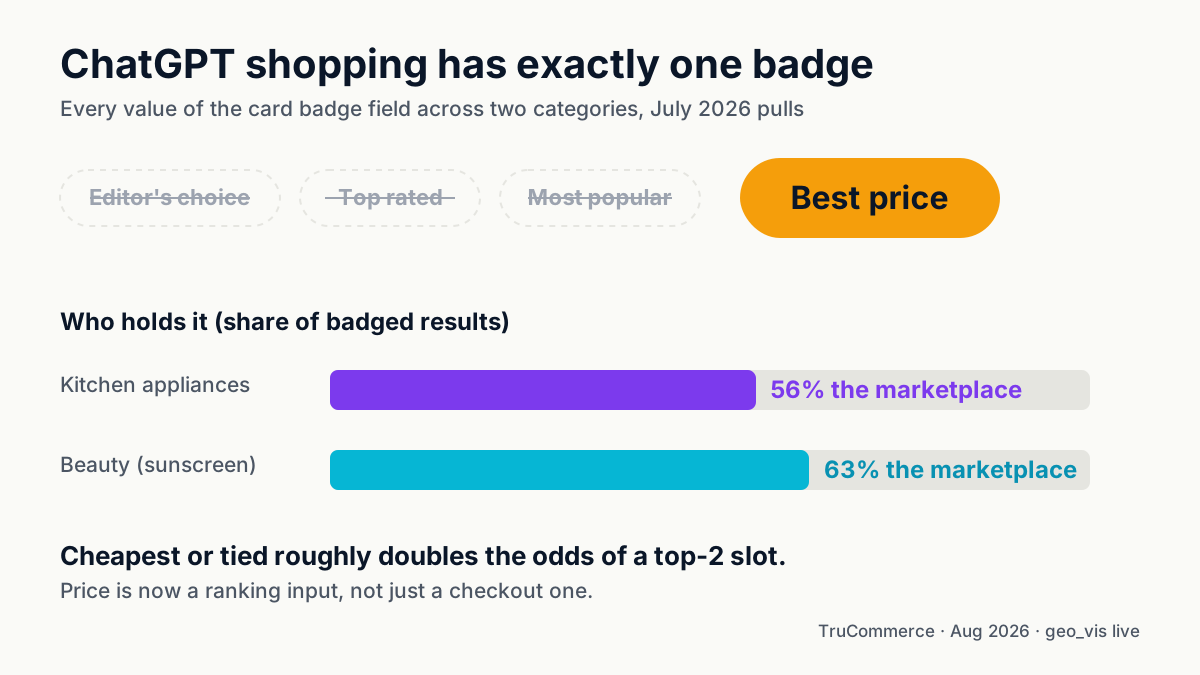
The Cheapest Product Wins — ChatGPT's Only Badge Is 'Best Price'

ChatGPT shopping ships exactly one product badge. Not Editor's choice, not Top rated — Best price. In our tracked categories the largest marketplace holds it on 56% of badged kitchen results and 63% in beauty, and holding the cheapest-or-tied offer roughly doubles a product's odds of a top-2 slot. Price has quietly moved from a conversion lever to a distribution lever: the model compares every offer before the shopper sees any of them. Here is the live data, the mechanism, and what a repricing strategy that stops at the buy box is missing.

Citation Rank & Share of Voice · Sep 1, 2026

Reddit Is the New PDP — Where AI Shopping Actually Gets Its Evidence

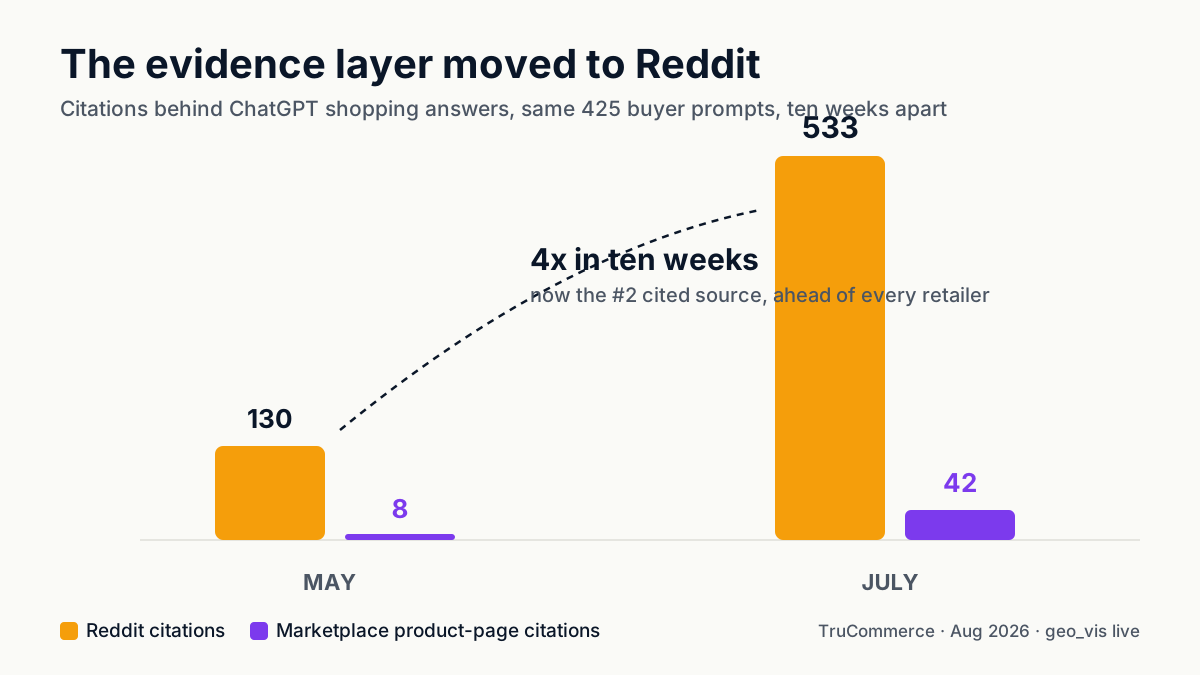
Over ten weeks of locked-panel measurement, Reddit citations in ChatGPT shopping answers grew 4x to become the #2 cited source in the category — ahead of every retailer. Product pages, including the marketplace's own, stayed under 1 source in 25. The page you control most is the page the model trusts least. Here is the data on where the evidence layer actually lives, why threads beat product pages, and what a brand can do about a layer it cannot buy.

AI Search Visibility · Aug 29, 2026

ChatGPT Ads by Industry: Which Categories Fit, Ranked

Not every industry belongs on ChatGPT ads yet. We rank seven categories by conversational fit and economics, from DTC ecommerce at the top to the ones that should wait, with a full playbook linked for each.

AI Search Visibility · Aug 29, 2026

Every AI Crawler That Reads Your Store, Listed

GPTBot, OAI-SearchBot, ClaudeBot, PerplexityBot, Amazonbot: a dozen-plus AI crawlers hit ecommerce sites in 2026, and blocking the wrong one quietly deletes you from AI shopping answers. Here is the full list, what each bot actually does, and the robots.txt policy that protects your content without erasing your visibility.

Citation Rank & Share of Voice · Aug 29, 2026

How to Track Your Brand Mentions in ChatGPT

Before the rebrand, the two highest-demand queries reaching our old site were 'chatgpt brand tracker' and 'chatgpt visibility tracker' - and we had no page answering them. This is that page: the manual method, the math on why 20 prompts a month tells you nothing, and the metrics that make ChatGPT presence a number you can manage.

AI Search Visibility · Aug 29, 2026

llms.txt for Ecommerce Brands: The Complete Guide

One plain-text file at your domain root tells AI systems what your store sells, what your policies are, and which pages matter. It takes under an hour to ship and it was the single best-performing organic asset in our own playbook before the rebrand. Here is the spec, the ecommerce-specific template, and the honest read on who actually consumes it.

ChatGPT Ads · Aug 29, 2026

Who Is Advertising on ChatGPT? The Named Brands So Far

Target, Williams-Sonoma, Adobe, Ford, Audible, HelloFresh - the confirmed ChatGPT advertisers from the launch pilot, the agencies running them, the India wave, and what the roster tells you about who this channel is for.

ChatGPT Ads · Aug 29, 2026

ChatGPT Ads or Organic Visibility: Which Comes First?

ChatGPT conversations now have two layers: the organic recommendation you earn and the sponsored slot you buy - and only the earned layer reaches every user. AI-referred visits to US retail sites convert 60% better than non-AI traffic (Adobe Analytics via Digital Commerce 360, July 2026 data), and a ten-question test tells you which move to make first.

ChatGPT Ads · Aug 29, 2026

ChatGPT Ads for B2B and SaaS: The $8-18 CPC Category

Software and finance are ChatGPT's most expensive ad categories at $8-18 per click - and for B2B economics, that is still a bargain. How to run lead-gen campaigns built for long sales cycles.

ChatGPT Ads · Aug 29, 2026

ChatGPT Ads for Food and Beverage Brands

ChatGPT ads reach shoppers mid-conversation about protein, clean-label ingredients, and kids' snacks - at $3-5 CPCs that fit subscription economics. Here is how F&B brands set them up.

ChatGPT Ads · Aug 29, 2026

ChatGPT Ads for Fashion and Apparel Brands

Fashion shoppers ask ChatGPT about occasions, fit, and fabric - not keywords. Here is how apparel brands use product feed ads (100 SKU minimum), what the returns math does to a $3-5 CPC, and why catalog quality decides the earned layer.

ChatGPT Ads · Aug 29, 2026

ChatGPT Ads for Beauty Brands: Winning the Ingredient Conversation

Beauty shoppers ask ChatGPT ingredient and skin-type questions, not keyword queries. AI-referred visits to US retail sites converted at a rate 60% higher than non-AI traffic in July 2026, the eleventh straight month ahead (Adobe Analytics, via Digital Commerce 360, 19 August 2026).

ChatGPT Ads · Aug 29, 2026

ChatGPT Ads for DTC Brands: The Full-Funnel Playbook

AI-referred visits to US retail sites converted at a rate 60% higher than non-AI traffic in July 2026, the eleventh straight month ahead (Adobe Analytics, via Digital Commerce 360, 19 August 2026). Here is the full-funnel playbook for DTC brands: earn the organic recommendation first, then buy the sponsored layer.

ChatGPT Ads · Aug 29, 2026

ChatGPT Ads vs Amazon Sponsored Products: Different Ends of the Funnel

Amazon Sponsored Products buys shelf space at the point of purchase. AI-referred visits to US retail sites converted at a rate 60% higher than non-AI traffic in July 2026, the eleventh straight month ahead (Adobe Analytics, via Digital Commerce 360, 19 August 2026). Here is how brands selling on both should split spend.

ChatGPT Ads · Aug 29, 2026

ChatGPT Ads vs Meta Ads: Intent vs Interruption

Meta interrupts a feed; ChatGPT answers a question. AI-referred visits to US retail sites converted at a rate 60% higher than non-AI traffic in July 2026, the eleventh straight month ahead (Adobe Analytics, via Digital Commerce 360, 19 August 2026).

ChatGPT Ads · Aug 29, 2026

ChatGPT Product Feed: The Complete Merchant Guide

ChatGPT product feed ads launched June 2026: upload a Google Shopping-format catalog (100 SKU minimum, up to 1M) and ChatGPT auto-generates product ads matched to conversational intent. Here is the full merchant setup.

ChatGPT Ads · Aug 29, 2026

ChatGPT Ads Bidding: CPM vs CPC vs Conversion-Optimized CPC

ChatGPT Ads offers three bid models - CPM, CPC, and conversion-optimized CPC - inside a relevance-weighted second-price auction. Recommended starting bids run $3-5 in the US, climbing to $8-18 in software and finance.

ChatGPT Ads · Aug 29, 2026

The OpenAI Pixel: Installation, Events, and the __oppref Cookie

How the OpenAI measurement pixel (oaiq.min.js) actually works: the init snippet, the standard events, event_id deduplication, and the __oppref first-party cookie that links ChatGPT ad clicks to conversions. Implementation notes from shipping it on our own Next.js site.

AI Search Visibility · Aug 29, 2026

OpenAI Ads Manager: Hands-On Guide to Every Screen (2026)

Every section of OpenAI Ads Manager, mapped from a live advertiser account with screenshots of every key screen: Overview, Campaigns, Tools, Billing, and Settings - plus the two required tasks that block serving and the 4-step conversion wizard.

ChatGPT Ads · Aug 29, 2026

Why Does ChatGPT Have Ads Now? The Business Model, Explained

ChatGPT ads exist because free users cost real money to serve - and advertising already runs at $100M annualized (eMarketer, 2026). Here is the business model, OpenAI's stated principles, and why paid tiers stay ad-free.

AI Search Visibility · Aug 29, 2026

ChatGPT Ads Specs: Image Sizes, Logo Requirements, and Character Limits

The full ChatGPT ads spec sheet: square image at least 256×256, logo requirements at 32×32, title capped at 50 characters, description at 100, one destination URL. Plus the creative rules that keep a unit this small from getting ignored — or rejected.

AI Search Visibility · Aug 29, 2026

ChatGPT Ads Examples: 1,193 Real Ads, Measured

A public ChatGPT ad library exists, and we crawled it in full: 1,193 unique creatives from 336 advertisers, each with the conversational prompt that fired it. The headline finding is that the format limit is 50 characters and the median ad uses 26. Real examples, the conquesting pattern behind comparison prompts, and five templates for your own category.

ChatGPT Ads · Aug 29, 2026

ChatGPT Ads Targeting Options: What You Can and Cannot Control

ChatGPT ads have exactly three targeting levers - geography, custom audiences, and 5-15 context hints per ad group. There are no keywords, no demographic profiles, and no third-party audiences. Here is the full inventory.

ChatGPT Ads · Aug 29, 2026

Are ChatGPT Ads Worth It? The Honest Early Read

AI-referred visits to US retail sites converted at a rate 60% higher than non-AI traffic in July 2026, the eleventh straight month ahead (Adobe Analytics, via Digital Commerce 360, 19 August 2026). We weigh both sides and land on a 10-15% incremental test.

ChatGPT Ads · Aug 29, 2026

What Do ChatGPT Ads Look Like? Format, Placement, and Anatomy

A ChatGPT ad is a single labeled sponsored box below the answer — advertiser name, 32×32 logo, title up to 50 characters, description up to 100, a square image and a link. But we measured 1,193 real creatives, and the median ad uses just 26 title characters. Here is the anatomy, element by element, and what advertisers actually ship.

ChatGPT Ads · Aug 29, 2026

How to Run ChatGPT Ads in India: Setup From September 4

ChatGPT self-serve ads open to every Indian business on September 4, 2026, with a ₹725 minimum daily budget and no agency required. Here is the full setup: account verification, campaign build, context hints, and the conversion tracking you must install before your first rupee of spend.

AI Search Visibility · Aug 7, 2026

Query Fan-Out: One Question Becomes 5-7 Searches (And ChatGPT Rewrites All of Them)

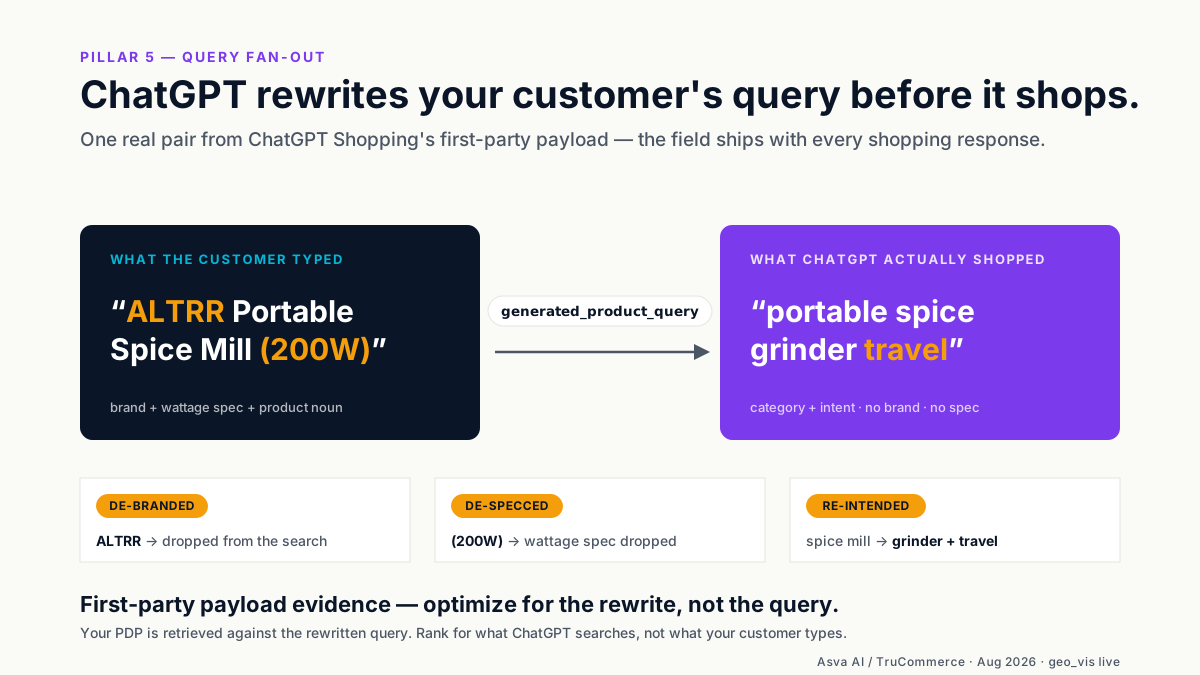
A user typed 'ALTRR Portable Spice Mill (200W)' into ChatGPT. The shopping backend searched 'portable spice grinder travel' - brand stripped, spec dropped, intent added. That rewrite is stamped into every card's payload as generated_product_query, and it is only one branch of a fan-out that turns a single buyer question into 5-7 sub-queries across 8 distinct axes. Classical SEO optimizes one keyword per page. AI shopping ranks you across the whole fan-out - which is exactly why Amazon holds 63-79% presence on every sub-intent type we measure.

Citation Rank & Share of Voice · Aug 7, 2026

The 86% Rule - In AI Shopping, Eligibility Beats Ranking

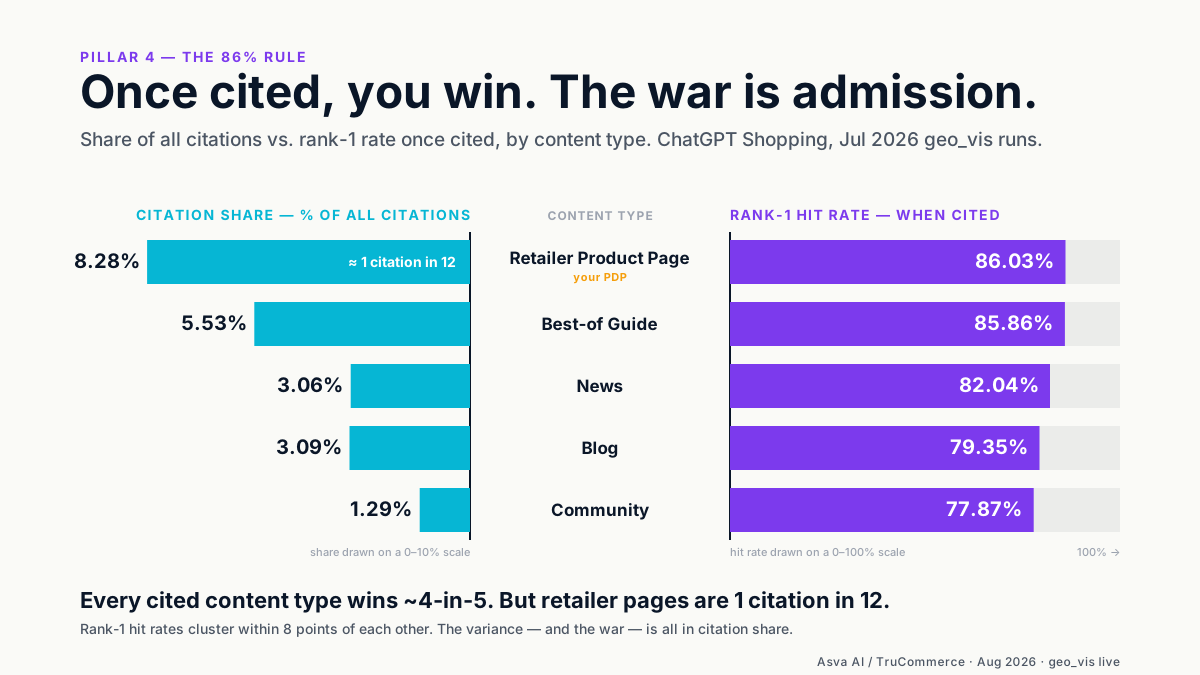
When a retailer product page gets cited in a ChatGPT shopping answer, it wins the top recommendation slot 86.03% of the time - the highest hit rate of any content type in an 18,942-citation dataset. But retailer pages are only 8.28% of what ChatGPT cites. That inversion rewrites the whole playbook: the scarce, high-conversion battle in AI shopping is getting cited at all, not ranking once cited. Here are the three gates that decide citation eligibility - reviews, product-type fit, sub-intent presence - and the two beloved PDP levers that tested statistically dead.

Citation Rank & Share of Voice · Aug 7, 2026

AI Visibility Has Two Layers: The Placement vs Citation Dashboard That Actually Works

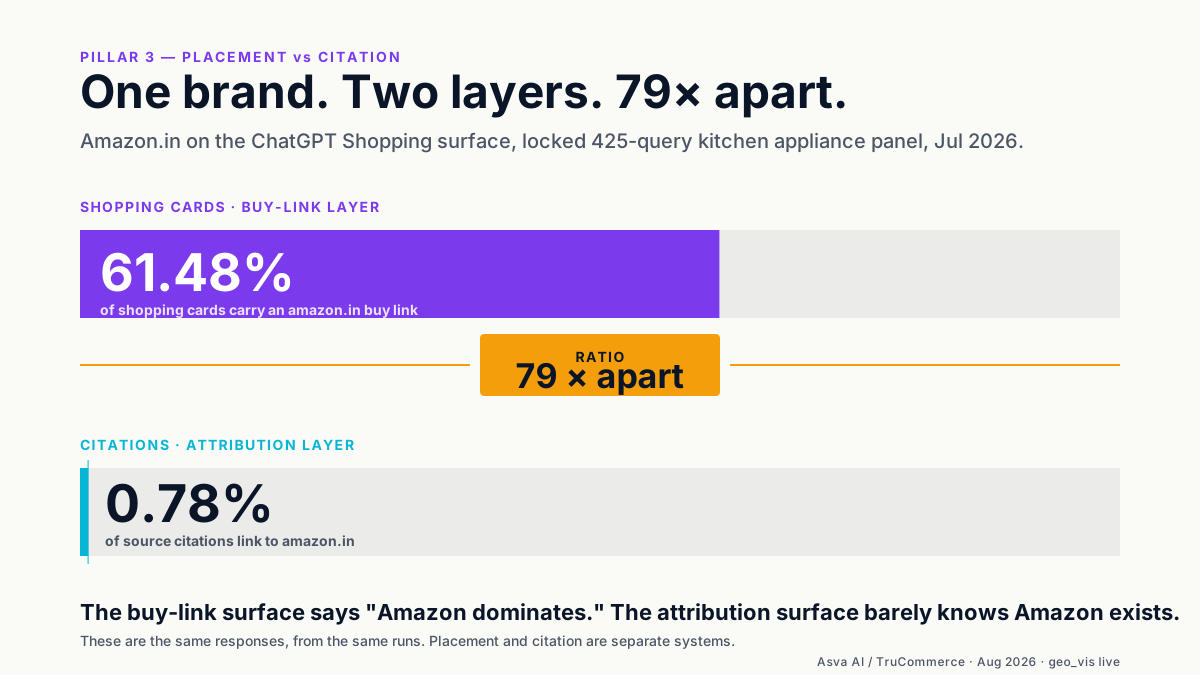
AI shopping answers have two independent layers - the products the model recommends (placement) and the sources it attributes the answer to (citation) - and every brand's AI-visibility dashboard is quietly blending them into one number that lies. On Amazon's India mixer-grinder data, one layer is 61.48% and the other is 0.78% - a 79× gap. On sunscreens the same structural pattern holds at 25×. And both layers moved in opposite directions twice in eight months. Here is the four-KPI-group model that fixes it.
Citation Rank & Share of Voice · Aug 7, 2026

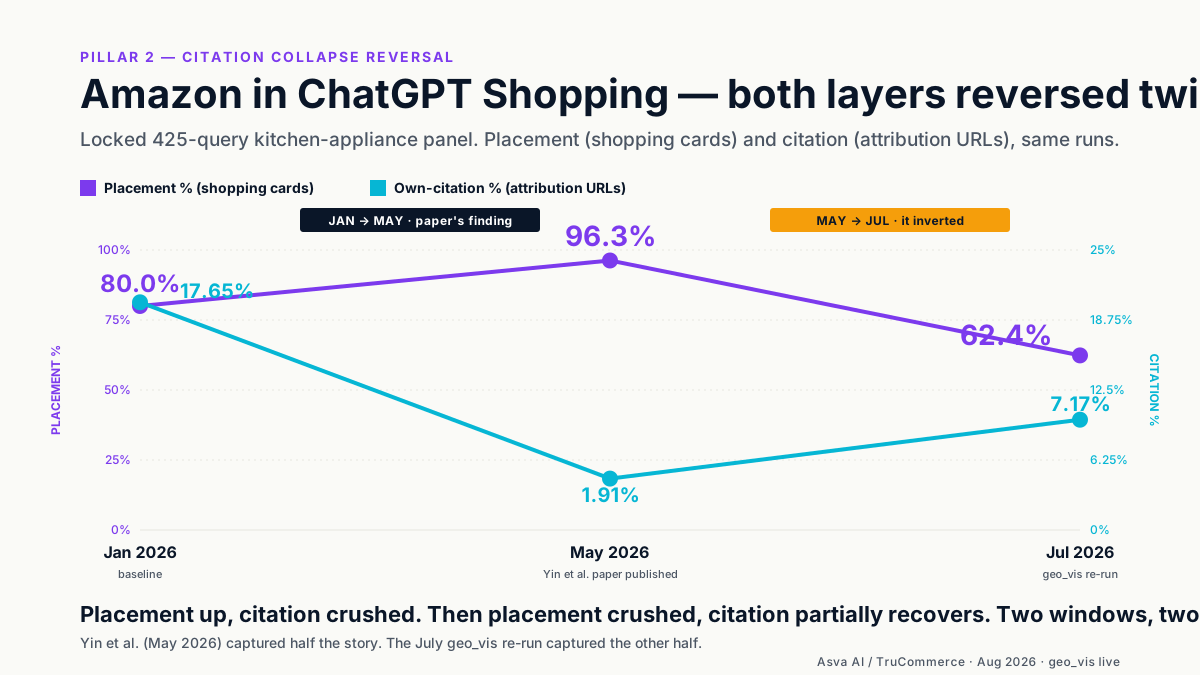
The Amazon Shelf Story: What Really Happened to Amazon in ChatGPT Shopping Between May and July 2026

Everyone screenshotted the May chart: Amazon's ChatGPT presence rose to 96% while its citation rate collapsed to 1.91%. Two months later, on the exact same 425 buyer prompts, both metrics reversed - and the popular narrative got the story completely wrong. The 96% was on a half-empty shelf (56% zero-card responses). The July shelf is about three times healthier. And Amazon still wins the top-2 slot plus cheapest price on 210 of those 425 prompts. Here is the reverse-engineered version of what actually moved.

Agentic Commerce Fundamentals · Aug 7, 2026

Inside chatgpt.com/shopping: A 200-Query Teardown of OpenAI's Real Commerce Stack

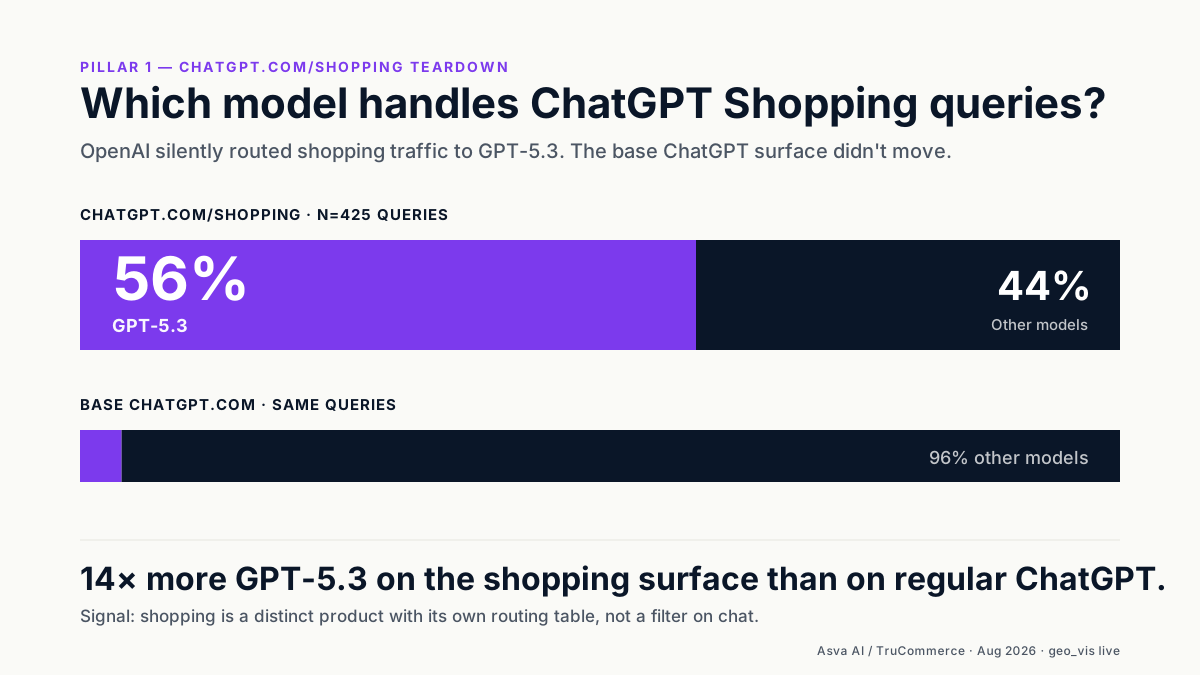
We ran 200 buyer queries against ChatGPT's dedicated shopping surface, captured every response payload, and reverse-engineered the plumbing. A hidden GPT-5.3 handles 56% of shopping queries. Fifteen direct feed partners power the carousel - Amazon isn't one, and still owns the single badge OpenAI ships. Ads run through Criteo. Every image is face-detected. Here's what a teardown of the payload actually reveals.

Agentic Commerce Fundamentals · Jul 26, 2026

AI commerce conversion rate: what the data actually says

Adobe's July 2026 reading: AI-referred retail visits converted 60% higher than non-AI visits. The 15.9% vs 1.76% stat we and others credited to Adobe is Seer Interactive's single B2B client. The correction, the real Adobe arc and the absolute rates.

AI Search Visibility · Jul 25, 2026

How to Optimize Your Product Catalog for AI Agents

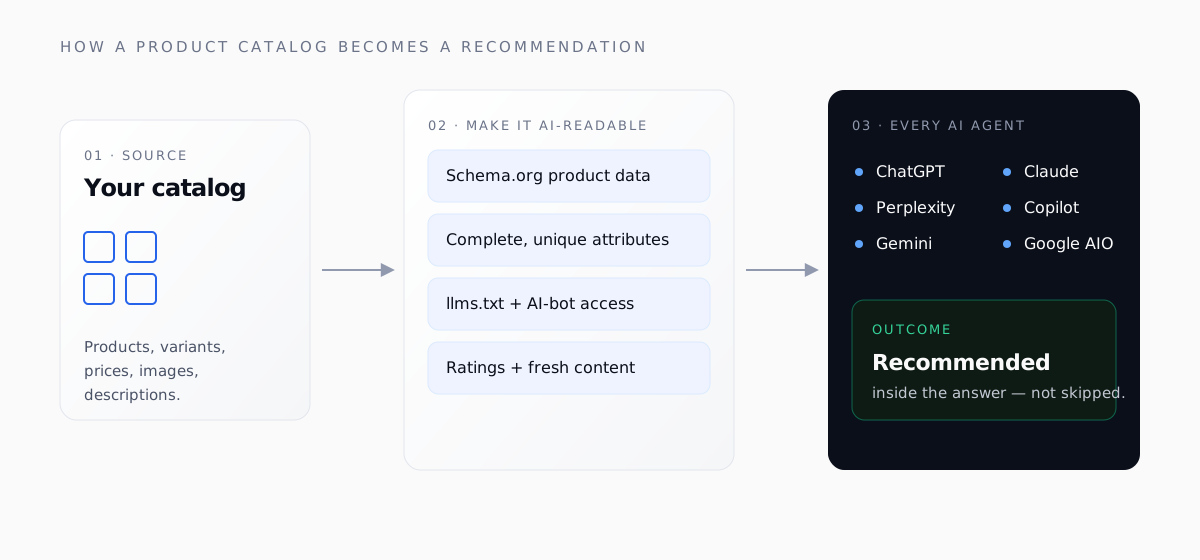
An AI agent can only recommend what it can parse. Here's the practical checklist for making your product catalog readable, structured, and retrievable by shopping agents.

Checkout & Protocols · Jul 22, 2026

Agentic Payments Explained: Rails, Protocols, Liability

Six live rails, five protocols, one merchant of record: you. A Stripe Shared Payment Token carries a currency, a maximum amount and an expiry set by the agent; Shopify charges no fee on Meta's direct checkout; OpenAI's 4% was retired in March 2026.

Agentic Commerce Fundamentals · Jul 14, 2026

Agentic Commerce, Defined: The 7-Layer Map of How AI Buys

Most vendor pitches in this category sound interchangeable because they're describing the same problem from one layer of a seven-layer stack. The map sorts the noise. After you read it you can

AI Search Visibility · Jul 14, 2026

Agentic Commerce Signal Report H1 2026

The first half of 2026 was the inflection point for agentic commerce. Amazon endorsed UCP. Alexa+ crossed 15M subscribers. ChatGPT Instant Checkout matured to multi-item carts. Buy for Me

Agentic Commerce Fundamentals · Jul 14, 2026

AI Ecommerce Platforms Compared, 2026

Ecommerce teams in 2026 run 5-8 AI tools across support, marketing, personalization, and analytics - but 89% of retailers have adopted AI while only 7% have actually scaled it. Here's how the

AI Search Visibility · Jul 14, 2026

AI Search Visibility: The Complete Guide

Getting your brand cited by ChatGPT, recommended by Gemini, mentioned by Perplexity, and named by Rufus is one discipline with six surfaces. This guide is the complete methodology - the signals

AI Agent Storefronts · Jul 14, 2026

Alexa+ for brands: how voice agent commerce works

Alexa+ launched 26 February 2025 at $19.99 a month, free with Prime. Amazon says more than 350 million customers used Alexa Shopping in 12 months and that US users spend more than 40% more per order. A spoken answer names one product; here is what decides which.

Checkout & Protocols · Jul 14, 2026

Amazon Buy for Me: Should Your Brand Opt In?

Buy for Me is Amazon's first outbound-agent product - Rufus can now complete a purchase on your DTC site, with Amazon acting as the front end. The question isn't "is it real?" (500+ retailers

ChatGPT Ads · Jul 14, 2026

ChatGPT Ads Cost (2026): CPM, CPC, and Minimum Budgets

ChatGPT ads launched at a $60 CPM with a $200,000 minimum in February 2026. By August, CPCs start around $3-5, CPMs run roughly $25-60, and the minimum is $25/day in the US and ₹725/day in India.

Agentic Commerce Fundamentals · Jul 14, 2026

ChatGPT for Ecommerce Marketing: A Practical Guide

This is about using ChatGPT as a marketing tool - copywriting, catalog descriptions, customer segmentation - not about getting your products recommended inside ChatGPT Shopping. Those are two

AI Agent Storefronts · Jul 14, 2026

ChatGPT Shopping for Brands: What Works in 2026

ChatGPT's shopping research feature gives users a personalized buyer's guide - product matches, trade-offs, and "up-to-date information from reliable retailers" - after a short back-and-forth

AI Agent Storefronts · Jul 14, 2026

How to Win at ChatGPT Shopping: A Complete Playbook for DTC Brands

AI-referred visits to US retail sites converted at a rate 60% higher than non-AI traffic in July 2026, the eleventh straight month ahead (Adobe Analytics, via Digital Commerce 360, 19 August 2026). Inside ChatGPT, conversion goes higher still - Shopify's recent webinar series cites 49% lifts when the transaction

AI Agent Storefronts · Jul 14, 2026

Claude Commerce: How Claude Shops and How Brands Get In

Claude reaches products through tools exposed over MCP, not a crawled index. Anthropic's 2 September 2026 commerce blueprint ships a shopping agent and a merchant agent and leaves payment to the merchant. Retailers led by Claude traffic went from 1 to 15 in a quarter.

AI Agent Storefronts · Jul 14, 2026

Microsoft Copilot Shopping for Brands: The Complete Guide

The Microsoft Merchant Center feed path into Copilot, step by step: store, feed, the UCP attributes Copilot Checkout needs, who is merchant of record, what Microsoft says about fees, and the Shopify defaults to check.

Vertical Playbooks · Jul 14, 2026

Food & Beverage DTC: The Agentic Commerce Playbook

The DACT multiplier in food and beverage runs 6.4× - meaningfully hidden but not the worst. What matters more is the vertical's ranking dynamics: recipe-adjacent queries dominate; brand

AI Agent Storefronts · Jul 14, 2026

Gemini Shopping for Brands: The Complete Guide

The Merchant Center feed path into Gemini and AI Mode, step by step: seven required attributes, the native_commerce(checkout_eligibility) attribute, UCP, the documented fee position, and why you stay seller of record.

AI Search Visibility · Jul 14, 2026

How to Show Up in Perplexity: A Brand's Field Guide

A typical Perplexity answer cites 3 to 5 sources out of roughly 10 pages it evaluates during retrieval. Citation slots are scarce, and unlike most AI answer engines, Perplexity shows its

AI Search Visibility · Jul 14, 2026

How to Optimize Your Product Catalog for AI

AI assistants now read your catalog before shoppers do - and most product pages are unreadable to them. Here's how to fix the data, the feed, and the crawl access so agents recommend you.

AI Search Visibility · Jul 14, 2026

Perplexity Shopping for Brands: The Complete Guide

Perplexity's shopper is the most premium in the six-agent set - higher AOV, higher LTV, deeper research intent. If you win Perplexity you don't just win incremental volume, you win the customer

ChatGPT Ads · Jul 14, 2026

ROAS by Channel: 2026 Benchmarks

The old "4:1 is good ROAS" rule of thumb is dead - blended ROAS has eroded to roughly 2.87:1 in 2026 as competition and attribution gaps both worsen. Here's what good actually looks like

Vertical Playbooks · Jul 14, 2026

Rufus vs. ChatGPT: When Amazon Wins and When It Doesn't

A brand ranks well on Rufus. A different brand ranks well on ChatGPT. Sometimes it's the same brand and sometimes it's not - and the pattern of when the two agents diverge is the load-bearing

Dark Agentic Commerce Traffic (DACT) · Jul 14, 2026

Server-Side Tracking Setup for Shopify in a Cookieless World

Ad blockers, iOS privacy settings, and consent banners routinely block 30-40% of browser-based tracking data before it ever reaches your analytics. Server-side tracking recovers most of that

ChatGPT Apps & MCP · Jul 14, 2026

Shopify MCP Server List: What Each One Does

Four official servers, four different jobs. This is the quick-reference version - what each Shopify MCP server actually does, who it's for, and its current availability status as of mid-2026.

ChatGPT Apps & MCP · Jul 14, 2026

Shopify MCP: What It Is and How to Set It Up

Shopify shipped four official MCP servers during Q1 2026, and every eligible store has had a Storefront MCP endpoint live by default since then. Most merchants don't know it's already running

AI Agent Storefronts · Jul 14, 2026

Six AI shopping assistants compared: ChatGPT to Claude

ChatGPT, Gemini, Perplexity, Alexa for Shopping, Copilot and Claude each take your catalog a different way and finish the order in a different place. Only OpenAI publishes a ranking rule. The per-surface facts, sourced, and what to do on each this quarter.

Checkout & Protocols · Jul 14, 2026

Unified Checkout for AI Agents: The Complete Guide

Winning visibility is half the work. If the shopper taps Buy inside ChatGPT and gets kicked to a desktop form on your website, you've lost 30-50% of the conversion lift agentic commerce is

Agentic Commerce Fundamentals · Jul 14, 2026

What Is AI Ecommerce

"AI ecommerce" isn't one thing - it's at least three separate categories people mean when they use the term, and conflating them is why so many "AI ecommerce" explainers talk past each other

ChatGPT Apps & MCP · Jul 10, 2026

The ChatGPT Apps Directory: A Buyer's Map (July 2026)

The ChatGPT Apps directory has ~380 live apps as of July 2026 - 85% US-focused. This is the buyer's map, categorized by cluster (Insurance, Automotive, Tickets, QSR, Gifting, Domain, Travel, and 20+ more) with density counts, geographic distribution, and whitespace gaps for DTC brands.

ChatGPT Apps & MCP · Jul 10, 2026

ChatGPT Apps for Beauty Brands: The 2026 Playbook

Beauty is one of the highest-intent, lowest-density lanes in the ChatGPT Apps directory. Only one pure-play beauty app is live today (AMORE MALL, Korea), against 3,130 US and 530 UK monthly searches for AI-native beauty queries. Here's the wedge for DTC beauty brands.

ChatGPT Apps & MCP · Jul 10, 2026

ChatGPT Apps for Fashion Brands

AI-native fashion queries hit 2,670 US and 580 UK monthly searches - driven by 'ai outfit generator' at 1,600 and 'ai stylist' at 880. The ChatGPT Apps directory has zero pure-play fashion DTC brands. Here's the playbook for winning the outfit-shape recommendation.

ChatGPT Apps & MCP · Jul 10, 2026

ChatGPT Apps for Home & Décor Brands

Home & décor is the #1 industry cluster by AI-native search volume - 6,710 US and 1,620 UK monthly searches, driven by 'ai interior design' at 6,600 alone. The ChatGPT Apps directory has near-zero pure-play home apps. Here's how a home or décor brand claims the slot.

ChatGPT Apps & MCP · Jul 10, 2026

ChatGPT Apps for Kids & Baby Brands

Kids & baby is directory whitespace - zero apps in the ChatGPT Apps directory. Real search volume is small today (30 US/mo, growing), but the buyer LTV is exceptional. This is a first-mover play for DTC baby brands who structure their catalog around safety, age, and stage queries.

ChatGPT Apps & MCP · Jul 10, 2026

ChatGPT Apps for Pet Brands

Pet is directory whitespace - zero pet brands, zero pet-adjacent apps. Real search intent is small (20 US/mo) but growing, and pet parents have some of the highest DTC LTV in the category. First-mover playbook for pet brands.

ChatGPT Apps & MCP · Jul 10, 2026

ChatGPT Apps for UK Brands

The UK runs roughly 16% of US search volume across every AI-native shopping keyword we measured - 74,000 monthly searches for `chatgpt apps` alone. Zero UK-focused brands are in the directory yet. Playbook for UK DTC brands to claim first-mover.

ChatGPT Apps & MCP · Jul 10, 2026

ChatGPT Apps for Wellness & Supplements Brands

Wellness & supplements is a directory whitespace with high CPC ($9.10 average, $21.55 on `ai vitamins`). Zero wellness apps live today. Compliance-forward brands with structured ingredient data have a clean path to first-mover.

ChatGPT Apps & MCP · Jul 10, 2026

ChatGPT Apps SDK for Commerce Teams

`chatgpt apps sdk` has the highest CPC in our AI-shopping keyword dataset - $71.01 US, LOW competition - because it's what developers at brands search when they realize the app slot is the future distribution channel. This is the commerce team's guide to the SDK.

Subscribe

Get the issue Monday morning.