
ChatGPT Ads for DTC Brands: The Full-Funnel Playbook
AI-referred visits to US retail sites converted at a rate 60% higher than non-AI traffic in July 2026, the eleventh straight month ahead (Adobe Analytics, via Digital Commerce 360, 19 August 2026). Here is the full-funnel playbook for DTC brands: earn the organic recommendation first, then buy the sponsored layer.
Viren Inaniyan · August 29, 2026 · ChatGPT Ads
ChatGPT ads opened to every US advertiser in May 2026 at a $25 daily minimum, and DTC brands are the most natural fit on the platform. But the sponsored box is only half the channel - Plus and Pro shoppers never see it. The brands winning ChatGPT run two layers: earn the organic recommendation first, then buy the ad as an accelerant.
Which DTC categories fit
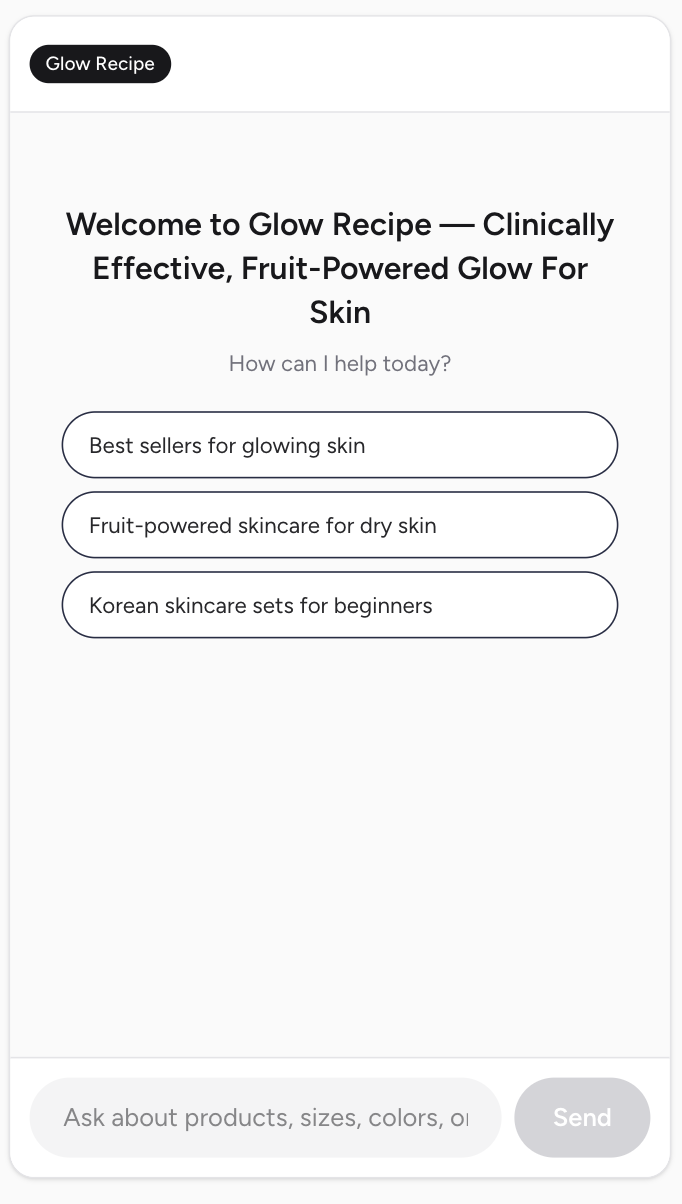
ChatGPT ads reward products people deliberate about out loud. The ad unit is a single labeled sponsored box below the answer - one advertiser per matched conversation - so it works best where the conversation itself is long enough to establish intent.
Considered purchases. Mattresses, cookware, luggage, running shoes, skincare regimens. The shopper is comparing, asking follow-ups, and describing their situation - exactly the conversational signal the matching system reads.
Ingredient- and spec-heavy products. Supplements, clean beauty, performance apparel, coffee, non-alcoholic beverages. When the question is "which protein powder has no stevia and under 3g sugar," a brand with clean catalog data wins the answer - and the ad slot beneath it.
Weaker fits. Impulse buys, sub-$20 commodity products, and anything bought on price alone. With ad CTR around 0.9% (eMarketer, 2026), low-consideration products rarely generate enough conversational volume to justify the spend. Our own US campaigns running since July 2026 have averaged ~1.3% CTR (our campaign data) - better, but still a channel you feed with intent, not impulse.
The two-layer strategy: earn first, buy second
As our founder put it in The Hindu BusinessLine (Aug 28, 2026): "Brands cannot buy influence over ChatGPT's answers." Ads never touch the answer itself, and conversations stay private from advertisers (OpenAI, stated since Feb 2026). That splits the channel into two layers:
Layer 1 - the earned recommendation. This is ChatGPT naming your product inside the answer. It reaches every user on every tier, including Plus and Pro shoppers who never see ads. It is won with catalog quality, third-party presence, and structured data - the mechanics we broke down in our ChatGPT Shopping teardown.
Layer 2 - the bought placement. The labeled sponsored box, visible only to logged-in adults on Free and Go tiers. It is an accelerant: it captures conversations where you are not yet the organic answer, and it defends conversations where you are.
The order matters. If you buy Layer 2 before you have Layer 1, you are renting attention in a conversation where the answer above your ad recommends someone else. Start with a free Citation Rank scan to see where ChatGPT already recommends you - then aim ad budget at the gaps.
A budget ladder from $25/day
Delivery ramps slowly during beta by design (OpenAI onboarding), so scale in rungs, not leaps.
Rung 1 - $25-50/day, weeks 1-4. One campaign, Clicks objective, Maximize results bidding. Recommended starting bids are $3-5 CPC in most DTC categories (WebFX; OpenAI docs, 2026). Goal: confirm the pixel fires, learn which context hints match, and bank enough clicks to read.
Rung 2 - $50-150/day, months 2-3. Split ad groups by product line, each with its own 5-15 hints. Switch high-signal groups to conversion-optimized CPC - OpenAI optimizes delivery toward your selected conversion event but still charges per click (OpenAI Help Center, article 20001210). Add geo splits: country, region, DMA, or postal code.
Rung 3 - $150+/day, quarter 2. Layer in a Reach campaign on CPM (~$25-60 range per practitioner reports, 2026) for launches, and custom audiences with bid multipliers on your buyers. This is a fraction of what the channel cost at the February test launch - $60 CPM with a $200,000 minimum, both since eliminated.
The full account-setup walkthrough - business details, tax ID, Persona verification, postpay billing - is in our setup guide.
Context hints by category
There are no keywords. Matching is conversational - current topic, past chats, past ad interactions - and context hints are how you steer it: 1-2-sentence buyer-moment descriptions, 5-15 per ad group (OpenAI Ads Manager docs). Patterns that work by category:
- Food and beverage: "Someone is looking for a non-alcoholic beer that still tastes like a craft IPA for a dry-January challenge."
- Beauty and skincare: "A shopper with sensitive, acne-prone skin is asking for a fragrance-free moisturizer under $40."
- Apparel: "Someone is comparing travel pants that look office-appropriate but pack without wrinkling."
- Supplements: "A runner is asking which electrolyte mix has no artificial sweeteners for marathon training."
Write the moment, not the product. Hints guide matching but are not exact-match rules, so cover distinct buyer situations rather than rephrasing one. Our guide to context-hint targeting covers testing patterns.
Product feeds for 100+ SKU catalogs
If you carry 100 or more SKUs, product feed ads - launched June 2026 - change the math. Upload a Google Shopping-format catalog and ChatGPT auto-generates product ads from it, with support from the 100-SKU minimum up to 1M SKUs (OpenAI Ads Manager docs; Digiday, June 2026).
The catch: the feed is only as good as the catalog. Sparse titles, missing attributes, and inconsistent variants degrade both the auto-generated ads and your organic answers - the same data feeds both layers. Clean the catalog once and both improve; our guide to optimizing your product catalog for AI covers the fields that matter, and the product feed complete guide covers the upload itself.
The measurement stack
Agencies still report measurement gaps and unproven outcomes on this channel (eMarketer/Digiday, 2026) - which is exactly why you instrument before you scale. The minimum stack:
- OpenAI pixel (oaiq.min.js) on your store, which sets the
__opprefclick-id cookie. - Server-side Conversions API (bzr.openai.com/v1/events) as the redundant path; events deduplicate on a shared event_id. Default conversion window: 30 days.
- A DACT check. AI-referred visits routinely land in GA4 as Direct, so your ChatGPT traffic is bigger than your reports say - the dark agentic commerce traffic problem.
Step-by-step tagging is in our conversion tracking setup guide, and the cost mechanics live in how ChatGPT ads work for ecommerce.
Where Tru Commerce fits
ChatGPT ads hit $100M in annualized revenue (eMarketer, 2026), and the channel will keep pulling DTC budgets. But ads rent the conversation; the organic recommendation is earned - and it is the only layer premium shoppers ever see.
That earned layer is what we build. Tru Commerce connects your catalog to every agent surface, tracks where ChatGPT, Gemini, and Perplexity recommend you, and fixes the gaps - the same work behind the results on our case studies page. Start where every DTC brand should: run the free Citation Rank scan and see your earned position in 24 hours. Then decide where ad dollars accelerate, and browse our ChatGPT Ads hub when you are ready to spend them.
For a sense of what winning this channel is worth, we took House of Zelena from #6 to #1 across 3 LLMs in 6 months - read the House of Zelena case study. If you want to see where you stand before committing, start with ChatGPT Ads for ecommerce brands.
FAQ
For considered, spec-heavy purchases, yes - as an accelerant. AI-referred visits to US retail sites convert 60% better than non-AI traffic (Adobe Analytics via Digital Commerce 360, July 2026 data). But ad CTR is low (~0.9%, eMarketer 2026), so earn the organic recommendation first and use ads to fill gaps.
Minimum daily budget is $25 with no lifetime minimum. Recommended starting bids run $3-5 CPC in most categories; $8-18 in software and finance (WebFX; OpenAI docs, 2026). Billing is postpay through the self-serve Ads Manager at ads.openai.com.
No. There are no keywords. Matching is conversational - based on the current conversation, past chats, and past ad interactions. You steer it with context hints: OpenAI recommends 5-15 short buyer-moment descriptions per ad group (OpenAI Ads Manager docs, 2026).
Product feed ads launched June 2026: upload a Google Shopping-format catalog and ChatGPT auto-generates product ads. The minimum is 100 SKUs, with support up to 1M (OpenAI Ads Manager docs; Digiday, June 2026).
Install the OpenAI pixel (oaiq.min.js), which sets an __oppref click-id cookie, and pair it with the server-side Conversions API. Events deduplicate on a shared event_id, and the default conversion window is 30 days (OpenAI docs, 2026).
Sources
- 1.Ads in ChatGPT: The Basics - OpenAI Help Center, 2026
- 2.ChatGPT ads will soon reach more users — proven results still missing - eMarketer, 2026
- 3.AI-driven traffic converts 42% better than non-AI traffic - Adobe Analytics via Digital Commerce 360, 2026
- 4.Adobe: AI referral traffic to retail sites converts 60% higher, July 2026 data - Digital Commerce 360, 2026
Continue reading
October 10, 2026
ChatGPT Ads in India: six weeks in, on the record
ChatGPT Ads switched on in India on 27 August 2026. Six weeks on, eight articles in five outlets quoted us and TechTimes cited our benchmarks. Every question the press asked, every answer verbatim and linked, and the numbers behind each one.
September 4, 2026
Criteo Prompt Smart Ads: 2,000 Brands on ChatGPT and a 4x Spend Lift
Criteo was the first ad-tech partner inside OpenAI's ChatGPT ads pilot. Its Prompt Smart Ads product auto-generates creatives and context hints matched to how people actually prompt - here is what it is, the numbers behind it, and what its creative reports teach every advertiser.
September 2, 2026
ChatGPT Ads Conversion Strategies: What the Query-Mix Data Says to Do
Only ~1 in 10 ChatGPT conversations carries commercial intent, 76.4% of shopping answers already show an ad, and market leaders buy almost none of them. Four strategies built on that data - not on search-ads instinct.