
ChatGPT Ads or Organic Visibility: Which Comes First?
ChatGPT conversations now have two layers: the organic recommendation you earn and the sponsored slot you buy - and only the earned layer reaches every user. AI-referred visits to US retail sites convert 60% better than non-AI traffic (Adobe Analytics via Digital Commerce 360, July 2026 data), and a ten-question test tells you which move to make first.
Viren Inaniyan · August 29, 2026 · ChatGPT Ads
Every brand asking "should we buy ChatGPT ads?" is really asking a prior question it hasn't checked: does ChatGPT already recommend us? Since OpenAI began testing ads in the US in February 2026 - and switched them on in India on August 27, 2026 - brands compete on two layers inside the same conversation: the organic recommendation, which is earned and cannot be bought, and the sponsored slot, which is bought and labeled. The right budget decision depends entirely on which layer you already occupy. Here is how to find out in ten minutes, and what to do with the answer.
The two layers, and why they cannot blur
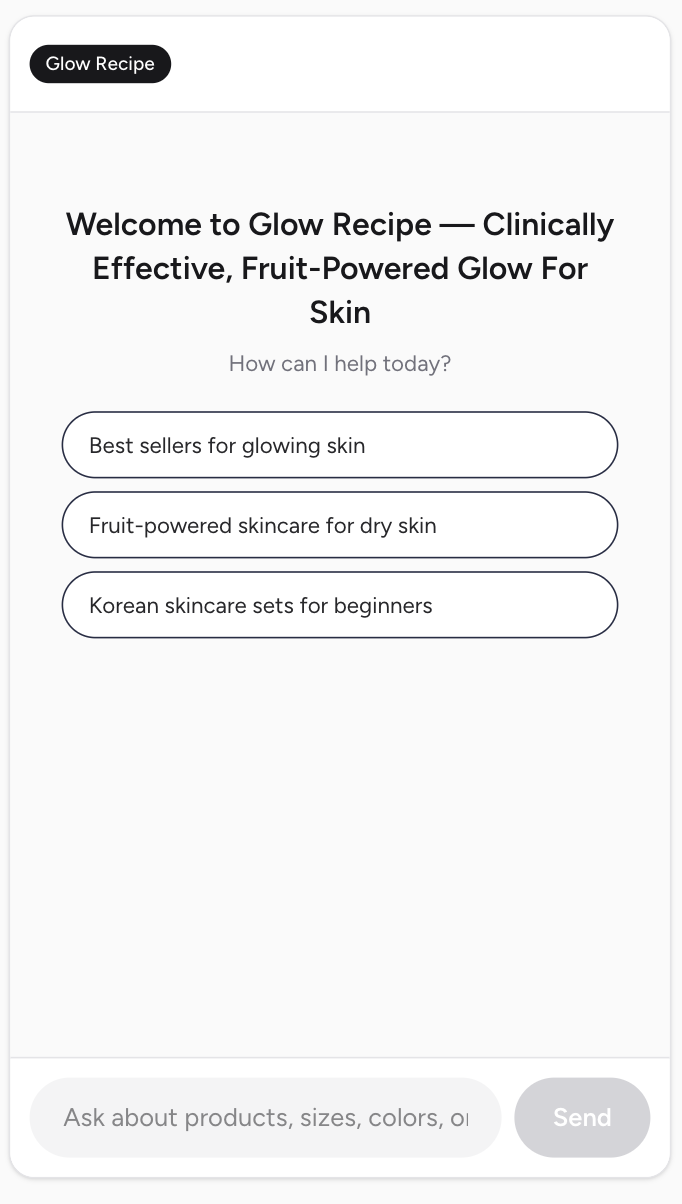
When a shopper asks ChatGPT what to buy, the answer itself - the brands named, the products compared, the "here's what I'd get" - is generated from what the model knows and retrieves. Below it, on Free and Go tiers, a single labeled sponsored box can appear: advertiser name, logo, title, description, image, link. One advertiser per matched conversation.
Those are different real estate with different rules. Our founder put it on the record in The Hindu BusinessLine the day after India's launch: "Brands cannot buy influence over ChatGPT's answers." OpenAI has said the same thing repeatedly since February 2026 - ads never touch the answer, and conversations stay private from advertisers.
That separation is not a technicality. It is the product's survival condition. Shoppers trust ChatGPT's recommendations precisely because they are not for sale; the moment the earned and paid layers blur, users walk, and both layers lose their value. OpenAI knows this, which is why the sponsored unit is boxed, labeled, and kept out of the answer. For a full teardown of how the organic side actually assembles a shopping answer, see our inside ChatGPT Shopping teardown.
The strategic consequence: you are not choosing between two versions of the same thing. You are managing two separate assets - one earned, one rented.
The layer only some buyers ever see
Here is the fact that settles most budget debates. Ads show only to logged-in adults on the Free and Go tiers. Plus, Pro, Business, Enterprise, and Education users never see ads (OpenAI, 2026).
Think about who pays for ChatGPT: heavier users, professionals, higher-income households, businesses. For that entire population, your ad does not exist. The organic recommendation is the only surface your brand can occupy in front of them.
And the organic surface is where the money is. AI-referred visits to US retail sites convert 60% better than non-AI traffic (Adobe Analytics via Digital Commerce 360, July 2026 data) - a shopper who arrives from an AI recommendation has already been advised, compared, and reassured. That conversion premium belongs to the earned layer. An ad click can borrow some of it; a recommendation owns it.
The ten-question test: your first move costs nothing
Before you open the Ads Manager, open ChatGPT.
Write down ten questions your buyers actually ask. Not your brand name - buyer moments. "Best protein powder for women over 40." "Sunscreen that doesn't pill under makeup." "Espresso machine under $500 for a small kitchen." The questions that sit one step before a purchase.
Type them in and record three things. Which brands are named. In what order. Which sources the model cites for its reasoning.
Score yourself honestly. In how many of the ten do you appear at all? In how many are you a top-three recommendation?
This is a crude version of what we measure continuously as Citation Rank, and it maps to exactly two situations:
If you are recommended - ads are a top-up. The model already trusts you. A sponsored slot under a conversation where you are also the organic answer compounds the win: the shopper sees you endorsed and promoted, and the ad captures Free-tier buyers at the moment of highest intent. This is the position from which ChatGPT ads perform. Our own US campaigns, running since July 2026, average ~1.3% CTR (our campaign data) against eMarketer's ~0.9% industry figure - and we entered every category with the organic layer already established.
If you are absent - you are renting a spot next to someone else's win. The conversation above your ad recommends a competitor. Your sponsored box sits below an answer that just told the shopper to buy something else. You are paying $3-5 per click at recommended starting bids - $8-18 in software and finance (WebFX; OpenAI docs, 2026) - to be the labeled second opinion against an unpaid endorsement. Some of those clicks convert. Most reinforce the competitor's position at your expense.
Same ad product, same auction, opposite economics. The variable is not the ad. It is the layer underneath it.
The sequence, not the choice
So the question was never "ads or organic." It is an ordering problem.
Step one: measure the earned layer. The ten-question test by hand, or a free Citation Rank scan across AI surfaces - email plus brand URL, results in 24 hours.
Step two: fix visibility before scaling spend. Catalog structure, source coverage, the content the model cites - this is the work that moves recommendations. Our guide to optimizing your product catalog for AI covers the mechanics.
Step three: add ads where you already win. Once you are the organic answer in a category, the sponsored slot is cheap compounding. Setup takes an afternoon - our ChatGPT ads setup guide walks through it, and self-serve is open with a $25 minimum daily budget in the US and, from September 4, 2026, ₹725 per day in India (Storyboard18, 2026).
Step four: measure both layers separately. Ads report in the Ads Manager. The earned layer needs its own tracking - and note that agencies still report measurement gaps and unproven outcomes on the paid side (eMarketer/Digiday, 2026). One honest number per layer beats one blended number that lies. We wrote up that failure mode in the two-layer measurement model.
If you are weighing ChatGPT spend against your existing channels, our comparison of ChatGPT ads vs Google Ads covers where the next dollar goes. The full playbook - formats, costs, feeds, rollout status - lives on our ChatGPT Ads hub.
Where Tru Commerce fits
We operate the earned layer. Tru Commerce connects your catalog to the AI surfaces where shoppers ask - ChatGPT, Gemini, Perplexity, Rufus, Copilot, Claude - and measures whether the answers recommend you. Citation Rank tells you where you stand today; the platform does the work that moves it.
Ads rent the conversation. The recommendation is earned - and for every Plus, Pro, and business buyer, it is the only layer that exists. So run the diagnostic before you fund the auction: the free Citation Rank scan takes a work email and a brand URL, and returns your position across AI surfaces within 24 hours, with prescriptive fixes. If you are already winning, go buy the top-up. If you are not, you now know what to fix first - and you found out for free instead of at $3-5 a click.
Before writing the channel off, measure it - MyMuse's real AI revenue turned out to be 7× what GA4 reported - see the MyMuse case study. The usual first step is ChatGPT Ads for ecommerce brands.
FAQ
Check organic first. Type ten real buyer questions into ChatGPT. If you are already recommended, ads are a top-up that compounds an earned position. If you are absent, fix visibility first - otherwise you are paying to appear next to a competitor's recommendation.
No. OpenAI has stated since February 2026 that ads never influence ChatGPT's answers, and conversations are kept private from advertisers. The ad is a single labeled sponsored box below the answer. The recommendation itself cannot be bought - it has to be earned.
No. Ads appear only to logged-in adults on the Free and Go tiers (OpenAI, 2026). Plus, Pro, Business, Enterprise, and Education users never see ads - for those buyers, the organic recommendation is the only layer your brand can occupy.
Ask it. Run ten buyer-intent questions your customers actually type and note which brands come up, in what order, and which sources get cited. A free Citation Rank scan does this systematically across AI surfaces and returns your position within 24 hours.
They can be. ChatGPT ads passed $100M annualized revenue (eMarketer, 2026), and our own US campaigns average ~1.3% CTR against eMarketer's ~0.9% industry figure. But agencies still report measurement gaps, so treat ads as a layer on top of earned visibility, not a substitute.
Sources
- 1.Ads in ChatGPT: The Basics - OpenAI Help Center, 2026
- 2.ChatGPT ads will soon reach more users — proven results still missing - eMarketer, 2026
- 3.AI-driven traffic converts 42% better than non-AI traffic - Adobe Analytics via Digital Commerce 360, 2026
- 4.Adobe: AI referral traffic to retail sites converts 60% higher, July 2026 data - Digital Commerce 360, 2026
Continue reading
October 10, 2026
ChatGPT Ads in India: six weeks in, on the record
ChatGPT Ads switched on in India on 27 August 2026. Six weeks on, eight articles in five outlets quoted us and TechTimes cited our benchmarks. Every question the press asked, every answer verbatim and linked, and the numbers behind each one.
September 4, 2026
Criteo Prompt Smart Ads: 2,000 Brands on ChatGPT and a 4x Spend Lift
Criteo was the first ad-tech partner inside OpenAI's ChatGPT ads pilot. Its Prompt Smart Ads product auto-generates creatives and context hints matched to how people actually prompt - here is what it is, the numbers behind it, and what its creative reports teach every advertiser.
September 2, 2026
ChatGPT Ads Conversion Strategies: What the Query-Mix Data Says to Do
Only ~1 in 10 ChatGPT conversations carries commercial intent, 76.4% of shopping answers already show an ad, and market leaders buy almost none of them. Four strategies built on that data - not on search-ads instinct.