
ChatGPT Ads vs Google Ads (2026): Costs, Targeting, and Where the Next Dollar Goes
Google Ads captures the search; ChatGPT Ads sits mid-comparison, with $3-5 starting CPCs and no minimum spend since May 2026. How the mechanics differ, and a framework for splitting budget.
Viren Inaniyan · July 14, 2026 · AI Search Visibility
Google Ads captures the search. Meta Ads finds the audience that wasn't looking yet. ChatGPT Ads sits in a different moment entirely - mid-conversation, mid-comparison, right before the decision. Here's how the three actually differ mechanically, and a framework for splitting budget across them.
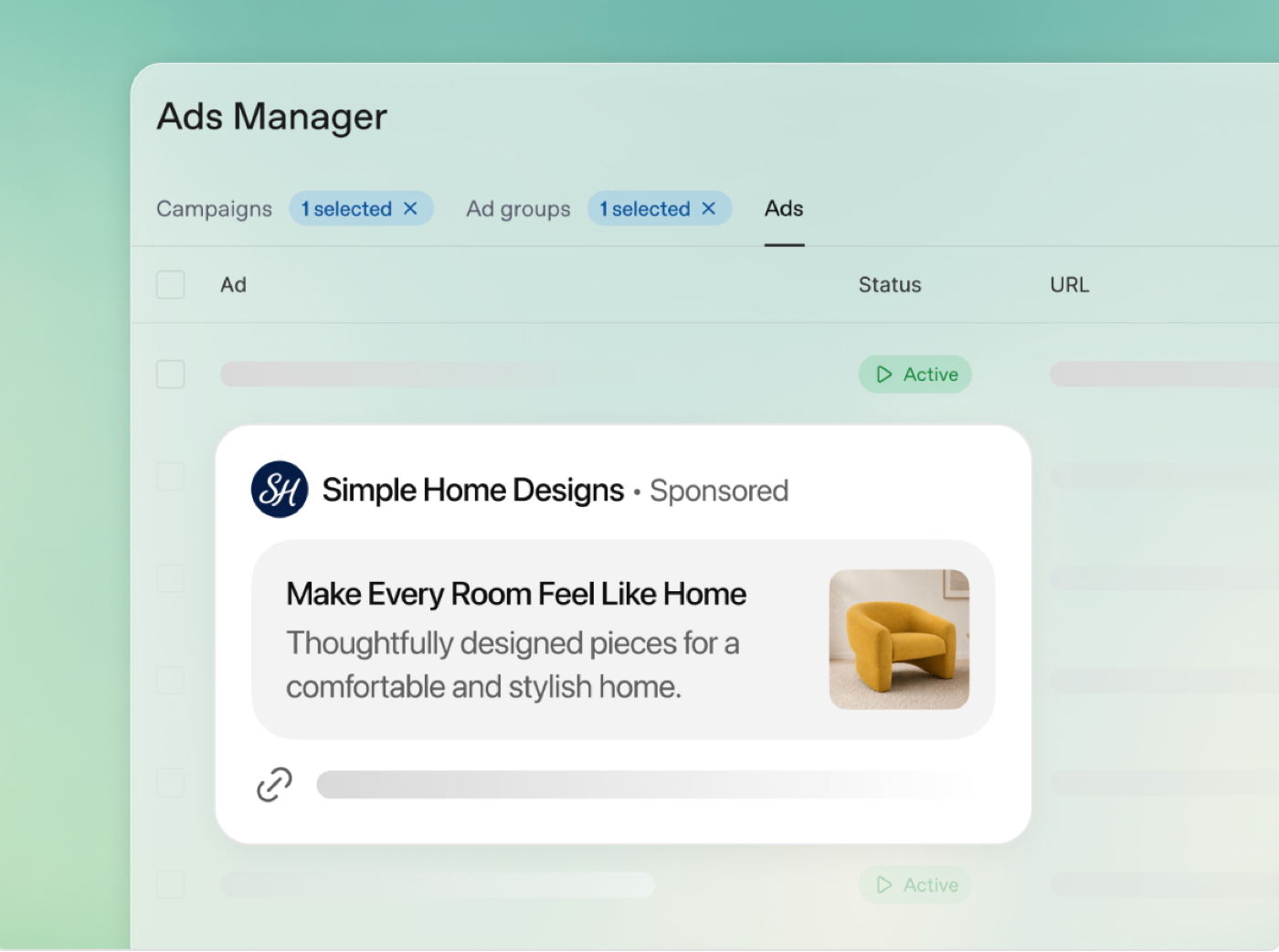
The unit we're comparing: one sponsored card below a ChatGPT answer - a single advertiser, a single static creative - versus Google's page of slots and Meta's infinite feed.
The short answer
They're not substitutes. Google, Meta, and ChatGPT ads capture three different moments in the same buyer's journey, and the mechanics - targeting, creative, bidding - are different enough that "just move your Google budget to ChatGPT" is the wrong move for almost every brand in 2026. The right move is understanding which moment each channel owns, then allocating to match where your category's buyers actually spend time.
At a glance
| Google Ads | Meta Ads | ChatGPT Ads | |
|---|---|---|---|
| Moment / intent | Active search - the buyer typed a query | Passive discovery - no active intent yet | Mid-conversation evaluation and comparison |
| Targeting unit | Keywords with match types, plus audience layers | Interests, behavior, lookalike modeling | Conversational context - no keywords, no demographic layer |
| Placement | Multiple ad slots per results page | Dense, scrollable feed | One labeled sponsored card below the answer; one advertiser per conversation |
| Cost model | CPC, CPM, target ROAS, and more | CPM, CPC, cost-per-result | CPC (~$3-5 starting), CPM, CPA (added June 5, 2026) |
| Minimums | None | None | No minimum spend since the May 2026 self-serve launch; $25 minimum daily budget (was $200,000 at the February 2026 invite-only launch) |
| Measurement maturity | Mature - search-terms report, full-funnel attribution | Mature - granular pixel + CAPI reporting | Early - aggregate metrics only, with UTM, pixel, and Conversions API support; no conversation data |
| Best first use | Bottom-funnel capture of demand that already exists | Top-of-funnel awareness at efficient CPMs | Small test budget in categories with a real comparison phase |
Targeting: keywords vs. interests vs. context
Google Ads targets on explicit intent - keywords the user typed, with match types, negative keywords, and audience layers stacked on top. It's the most controllable, most mature targeting system of the three, built for capturing people who already know roughly what they want.
Meta Ads targets on interest, behavior, and lookalike modeling - deep behavioral data used to surface visually compelling ads to people who match a pattern, whether or not they're actively looking for anything right now. It's the strongest discovery engine of the three.
ChatGPT Ads targets on conversational context - OpenAI's own description is matching by "the topic of your conversation, your past chats, and your past interactions with ads." There's no keyword match-type system and no demographic targeting layer to configure. Advertisers submit a merchant description and category mapping; OpenAI decides relevance per conversation. If there's more than one relevant advertiser, only the single most relevant one is shown.
That last point matters operationally: you're not bidding for one of several slots on a results page. You're competing to be the one ad shown in that conversation, if any is shown at all.
Funnel position: search, discovery, evaluation
Think of it less as three ad platforms and more as three different jobs:
- Google captures the searcher - someone who has already formed a query and wants a fast path to a transaction.
- Meta finds the dreamer - someone who didn't know they wanted this yet, surfaced through pattern-matching rather than an active search.
- ChatGPT convinces the decider - someone actively comparing options in real time, asking follow-up questions, weighing tradeoffs out loud (in text) before committing.
If your category has a genuine comparison phase - electronics, beauty routines, anything with real feature tradeoffs - that evaluation moment is exactly where ChatGPT usage concentrates. A 2026 Pacvue survey found 53% of US consumers use AI tools to research products, and 28% do it daily. That's evaluation-stage traffic that Google and Meta were never built to capture directly.
Cost model, side by side
| Google Ads | Meta Ads | ChatGPT Ads | |
|---|---|---|---|
| Minimum spend | None | None | None (as of the May 2026 self-serve launch) |
| Bidding | CPC, CPM, target ROAS, and more | CPM, CPC, cost-per-result | CPC (~$3-5 starting), CPM (as low as ~$25 in pilot categories), CPA (added June 5, 2026) |
| Ad slots per placement | Multiple per results page | Dense, scrollable feed | One advertiser per conversation |
| Typical CPM range | Varies widely by category | Generally lower | Reported higher than Meta, tied to high-intent moments |
| Reporting | Search terms + full-funnel | Granular, pixel + CAPI | Aggregate only - impressions, CTR, CPC, CPM, conversions; no conversation data |
The CPC/CPM numbers on ChatGPT ads have moved fast in one direction - down. Launch pricing in February 2026 required a ~$60 CPM and a $200,000 minimum commitment, invite-only. By the May 2026 self-serve rollout, that minimum was gone entirely and CPC bidding opened at roughly $3-5 to start.
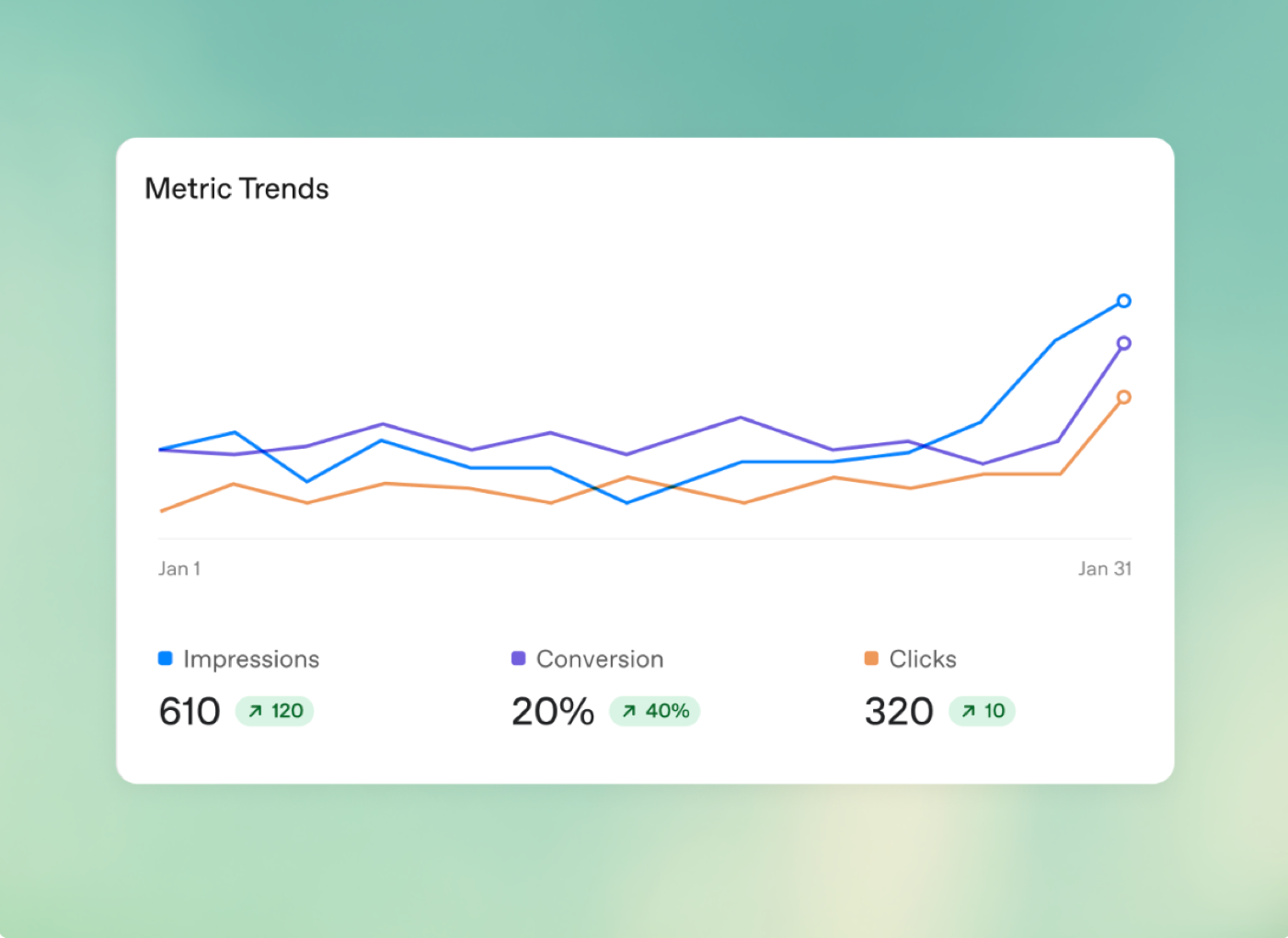
On reporting, ChatGPT Ads is closer to Google and Meta than its targeting is - Ads Manager shows impressions, CTR, CPC, CPM, and conversions, with UTM and Conversions-API support. The one thing it withholds is the conversation behind each impression.
Creative requirements: what you actually have to build
This is where ChatGPT Ads is meaningfully cheaper to produce for, at least today. Requirements are lean: a 40-80 word merchant description, one square hero image, and category mapping. No video, no carousel, no dynamic product feed formats yet - reported production cost roughly 70% lower than an equivalent Google Performance Max campaign, which typically needs multiple image ratios, headlines, and descriptions to feed the automation.
That's a real advantage for a lean marketing team testing a new channel: the barrier to trying ChatGPT ads is lower than the barrier to properly configuring a PMax campaign, even before you weigh performance.
How to measure ROI on each platform
On Google, ROI measurement starts with the search-terms report: you can see the queries that spent your money and cut the ones that didn't convert. ChatGPT gives you nothing equivalent. There are no keywords, and OpenAI withholds the conversation behind each impression - so you cannot audit why your ad matched, only that it did and what happened after the click.
That makes the click itself your measurement foundation, and three disciplines carry the weight:
- UTM discipline. Tag every ChatGPT destination URL with a distinct source and campaign so the traffic is separable in your analytics from day one. Skip this and ChatGPT clicks blur into referral or direct traffic you can never unpick.
- Pixel + Conversions API. Install the OpenAI pixel and back it with the server-side Conversions API, deduplicating on a shared event_id. Browser-only tracking undercounts; the server-side layer is what makes the conversion numbers trustworthy. Our conversion tracking guide walks through the full setup.
- Blended measurement, not last-click. Last-click attribution was built for Google's world, where the ad and the conversion sit minutes apart. A ChatGPT ad often lands mid-evaluation, days before purchase, and the eventual visit can arrive untagged. Judge the channel on blended results - did total revenue move against total spend during the test window - and read our GA4 attribution guide before deciding the channel "didn't work."
The honest comparison: Google's measurement is two decades mature, Meta's pixel-plus-CAPI stack is close behind, and ChatGPT's is early. Budget accordingly - and instrument before you spend, not after.
Which industries should test ChatGPT ads first
The channel rewards categories where buyers genuinely deliberate. Three profiles fit best today:
- Considered-purchase DTC. Skincare, supplements, cookware, apparel with real feature tradeoffs - anywhere the buyer asks follow-up questions before committing. This is the evaluation moment ChatGPT owns, and the $3-5 starting CPCs keep a test affordable. Our DTC playbook covers campaign structure for these brands specifically.
- B2B SaaS. Software and finance sit in the $8-18 CPC band - the priciest categories on the platform - but a single closed deal covers a lot of clicks, and software evaluation is exactly the multi-question, compare-three-options conversation ChatGPT hosts all day.
- Services. Insurance, legal, financial, and home services share the same trait: high order value, long deliberation, and buyers who ask an AI to explain their options before choosing a provider.
If your category converts on impulse or pure price, Google Shopping and Meta remain the better first dollars. If it converts on deliberation, ChatGPT is worth a structured test - see our case studies for how brands have approached the organic side of the same conversations.
A framework for splitting budget
Don't ask "which channel is best." Ask which job needs doing for your specific funnel, then fund that job:
- High-intent, bottom-funnel, already-searching category? Google Ads still owns this. Don't pull budget from a channel that's converting to fund an experiment.
- Need to build awareness with people who aren't looking yet? Meta's discovery engine and lower CPMs make it the efficient choice for top-of-funnel reach.
- Category has a real comparison/evaluation phase? This is where a ChatGPT Ads test budget belongs - start small (no minimum spend removes the old barrier), and treat the first 60-90 days as a learning phase given how new the self-serve platform still is.
- Not sure where your buyers actually research? This is the more important question underneath all three, and it's not really a paid-media question - it's whether you know where your category shows up in AI answers organically in the first place. That's a visibility question before it's a budget question.
Update: the India wrinkle (August 2026)
This comparison now has a second market. ChatGPT ads launched in India on August 27, 2026, with self-serve from September 4 at ₹725/day (The Hindu BusinessLine; Storyboard18) - which means Indian brands face this budget question while the ChatGPT auction is days old and Google's is two decades deep. The early-mover math is different there: thin competition, uncontested conversational inventory, and benchmarks still being set. We've written the India-specific version of this comparison in ChatGPT Ads vs Google Ads in India.
Where Tru Commerce fits
That fourth framework question is the piece most budget-allocation conversations skip. Paid placement on ChatGPT competes for one slot in one conversation - you rent it, and it disappears when the campaign ends. Organic citation - the AI recommending you unprompted, in the answer itself - is earned, and it's the only layer Plus and Pro users ever see. We work on both sides: AI-Sponsored Placements for the paid slot, and Citation Rank to track and improve how often you're the organic answer. Most brands starting a ChatGPT ads test should know their organic baseline first - otherwise you're paying to win a slot you might already own for free, or missing that you're invisible everywhere else in the same conversation. Start with the free Citation Rank scan, then book a demo if you want a category-specific read on where your budget should actually go before you commit spend to a new channel.
This is the same approach that took House of Zelena from #6 to #1 across 3 LLMs in 6 months - see the House of Zelena case study.
FAQ
No - they capture different moments in the buyer journey. Google Ads still wins for high-intent, transactional search. ChatGPT Ads is worth testing as incremental budget for categories with a real comparison phase, not as a replacement.
Creative production is cheaper - roughly 70% less than a comparable Google Performance Max campaign, since requirements are limited to a short merchant description and a single hero image. CPMs are reported higher than Meta's on a like-for-like basis, but the channel has no minimum spend as of the May 2026 self-serve launch.
No. Google uses keyword targeting, Meta uses interest/behavioral/lookalike targeting, and ChatGPT uses conversational context matching with no keyword or demographic layer. Each requires a different creative and campaign-structure approach.
One. If multiple advertisers are relevant to a given conversation, OpenAI selects the single most relevant one to show - unlike Google or Meta, which can surface multiple ads per page or feed session.
None, as of the self-serve Ads Manager launch in May 2026. CPC bidding starts around $3-5, making a small test budget realistic for most ecommerce brands - a sharp change from the $200,000 minimum required at the invite-only February 2026 launch.
Sources
- 1.Ads in ChatGPT: The Basics - OpenAI Help Center, 2026
- 2.ChatGPT ads will soon reach more users — proven results still missing - eMarketer, 2026
- 3.AI-driven traffic converts 42% better than non-AI traffic - Adobe Analytics via Digital Commerce 360, 2026
Continue reading
October 10, 2026
ChatGPT Ads in India: six weeks in, on the record
ChatGPT Ads switched on in India on 27 August 2026. Six weeks on, eight articles in five outlets quoted us and TechTimes cited our benchmarks. Every question the press asked, every answer verbatim and linked, and the numbers behind each one.
September 4, 2026
Criteo Prompt Smart Ads: 2,000 Brands on ChatGPT and a 4x Spend Lift
Criteo was the first ad-tech partner inside OpenAI's ChatGPT ads pilot. Its Prompt Smart Ads product auto-generates creatives and context hints matched to how people actually prompt - here is what it is, the numbers behind it, and what its creative reports teach every advertiser.
September 2, 2026
ChatGPT Ads Conversion Strategies: What the Query-Mix Data Says to Do
Only ~1 in 10 ChatGPT conversations carries commercial intent, 76.4% of shopping answers already show an ad, and market leaders buy almost none of them. Four strategies built on that data - not on search-ads instinct.