
ChatGPT Ads on Reddit: What Advertisers Actually Report
OpenAI publishes almost no benchmarks, so r/PPC built its own. We read the threads: real CPCs of $2-8, CTRs from 0% to 2.4%, and one recurring complaint that matters more than any number.
Viren Inaniyan · August 29, 2026 · ChatGPT Ads
OpenAI publishes no CPC tables, no CTR benchmarks, and no case studies for ChatGPT ads. So the advertisers running them built the reference themselves, one r/PPC thread at a time. We read the threads - here's what the field actually reports, with every number attributed to the person who posted it.
Why Reddit is currently the benchmark source
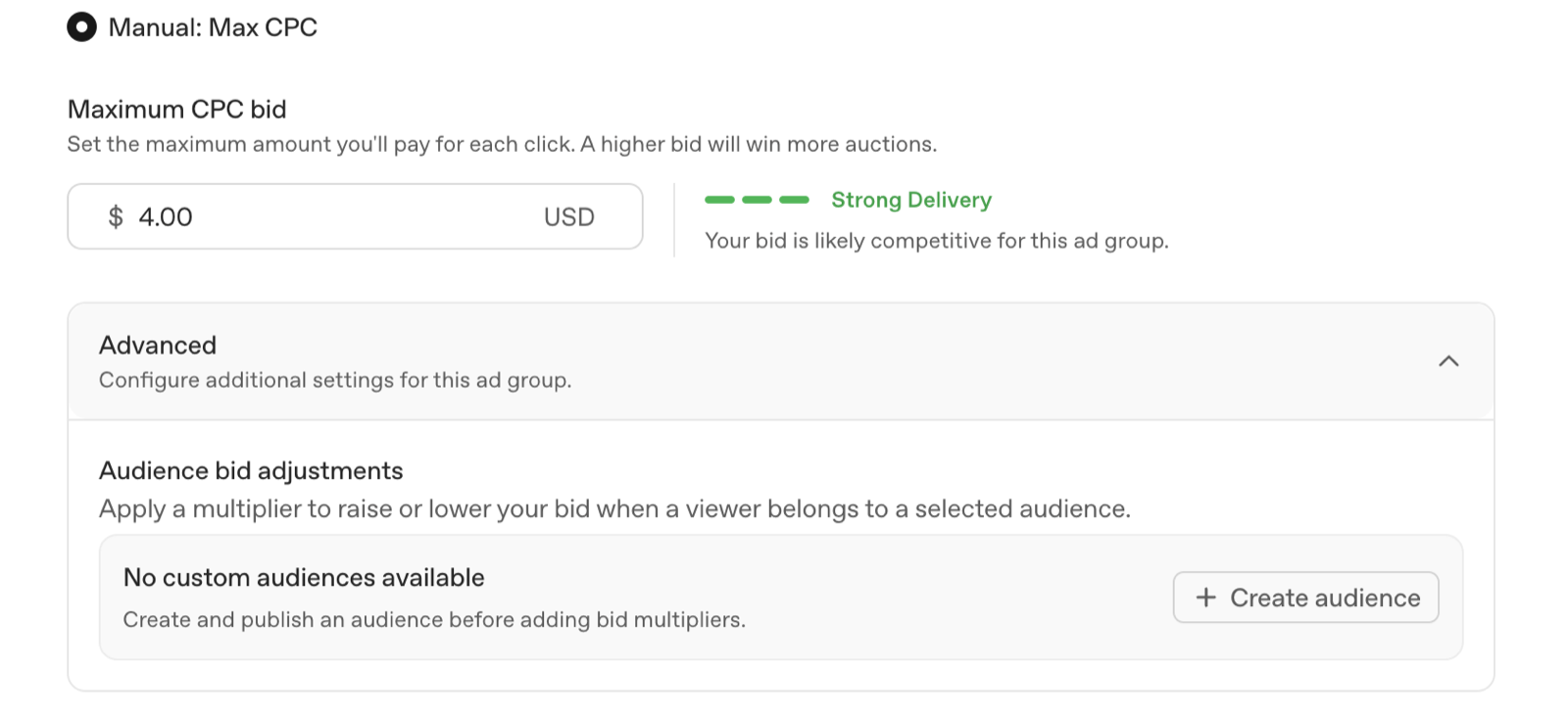
Ads Manager reports your own spend, impressions, and clicks - but the platform is months old, and OpenAI hasn't published performance norms. The result is a benchmark vacuum, and r/PPC has filled it the way practitioner communities always do: advertisers posting their real numbers and comparing notes. That data is anecdotal, self-selected, and unverified. It is also, right now, the only field data there is - so read it the way we present it: attributed, directional, and worth cross-checking against the sourced benchmarks we track.
What advertisers report paying
The self-reported cost picture from 2026 r/PPC threads:
- Most advertisers land in the $3-5 CPC band - the same range OpenAI suggests as starting bids. One documented three-ad-group test averaged $2.98-$3.23 per click.
- The floor is lower than expected. An agency running in-house campaigns reported CPCs below $2 with bids under $4.50.
- Specialized categories pay more. A developer-software advertiser reported $7-8 CPCs; that's consistent with the $8-18 range practitioner reports assign to software and finance (2026).
- CPMs compressed fast. Commenters citing partner data report CPMs falling from the $60 launch rate to roughly $25 within weeks of self-serve opening - the classic shape of a young auction gaining supply.
- Failures are real too. One home-services advertiser reported $5,000 over three weeks with poor lead quality; another described an expensive trial with high CPMs and zero conversions. Early channels punish broad targeting.
What advertisers report for CTR
The most useful documented test split three ad groups and saw 0%, 1.15%, and 2.4% - the poster noting the winner ran well above what they see on Google Display. A B2B SaaS advertiser running since March reports roughly 1% overall (0.8-1.2% by ad group). Both sit near our own ~1.3% average since July 2026 (our campaign data) and above eMarketer's ~0.9% industry chatbot figure (2026).
The spread is the lesson: with one ad slot per matched conversation, relevance decides everything. An ad group whose context hints match real buyer moments earns 2%+; one that casts a broad net earns zero.
The complaint that repeats in every thread
It isn't price. It's measurement. Advertisers describe dashboards reporting far more clicks than their analytics records as sessions, and traffic arriving unattributed. In one widely-discussed thread, an advertiser reported the dashboard showing 120 clicks while analytics showed 8 sessions; others report most of their ad traffic labelled as Direct.
Some of that gap is real platform immaturity - reporting is thin, and there's no placement-level breakdown. But much of it is the same attribution problem we've documented across all AI traffic: untagged clicks land in GA4 as Direct, the dark-traffic pattern in paid form. The advertisers who closed the gap did three things: query-parameter UTMs on every ad group, the OpenAI pixel plus a linked conversion event installed before spend, and GA4 cross-checks treated as routine.
The other themes worth knowing
Context hints confuse everyone at first. Advertisers describe the hints field as a blank box with no volume estimates - keyword muscle memory doesn't transfer. The craft emerging in the threads matches what we teach: group hints from narrow to broad - core use cases, pain-based moments, competitor-comparison conversations. Our context hints guide builds on exactly that structure.
The free-tier objection is honest and partial. High-ticket and B2B advertisers worry that their buyers sit on paid tiers, which never show ads. That's true - and it's the strongest argument for treating organic visibility as the first investment, with ads as the reach layer for everyone else.
Positive reports exist and share a pattern. The agency reporting sub-$2 CPCs saw form submissions the same evening and closed new clients; another commenter, citing partner data, described ChatGPT referrals converting notably better than other channels. AI-referred visits to US retail sites converted at a rate 60% higher than non-AI traffic in July 2026, the eleventh straight month ahead (Adobe Analytics, via Digital Commerce 360, 19 August 2026).
Where Tru Commerce fits
The benchmark vacuum is temporary; the measurement discipline isn't. We run ChatGPT campaigns ourselves, publish what we see in our benchmarks post, and ship the tracking that keeps the numbers honest. And because the ad slot only reaches free tiers, the first question is still the organic one: does ChatGPT already recommend you? A free Citation Rank scan answers that in 24 hours - before you spend a dollar competing for the slot next to someone else's recommendation.
For a sense of what winning this channel is worth, we took House of Zelena from #6 to #1 across 3 LLMs in 6 months - read the House of Zelena case study. The usual first step is ChatGPT Ads for ecommerce brands.
FAQ
Self-reports on r/PPC in 2026 cluster between $2 and $8: an agency below $2, several at $3-5 matching OpenAI's suggested bids, and developer-tools advertisers at $7-8. Official guidance remains $3-5 starting bids.
Advertisers on r/PPC report 0% to 2.4% by ad group, with a B2B SaaS advertiser averaging about 1% since March. Our own campaigns have averaged ~1.3% since July 2026. Industry reporting puts chatbot ads near 0.9% (eMarketer, 2026).
The most repeated advertiser complaint: dashboard clicks exceed analytics sessions, and untagged clicks land as Direct. UTM parameters on the landing page and the OpenAI pixel close most of the gap.
No. OpenAI publishes no CPC or CTR benchmarks, which is why r/PPC advertisers are crowd-sourcing a data archive. Treat every number - including ours - as early, self-reported, and category-specific.
Advertisers on r/PPC report CPMs falling from the $60 launch level to around $25 within weeks of self-serve opening, consistent with the pattern of thin early auctions. Pricing is moving fast; recheck before planning.
Sources
- 1.Ads in ChatGPT: The Basics - OpenAI Help Center, 2026
- 2.OpenAI Ads Manager beta walkthrough - r/PPC (self-reported advertiser data), 2026
- 3.Three weeks of ChatGPT ads: agency results - r/PPC (self-reported advertiser data), 2026
- 4.ChatGPT ads CTR benchmarks discussion - r/PPC (self-reported advertiser data), 2026
- 5.ChatGPT ads will soon reach more users — proven results still missing - eMarketer, 2026
- 6.Adobe: AI referral traffic to retail sites converts 60% higher, July 2026 data - Digital Commerce 360, 2026
Continue reading
October 10, 2026
ChatGPT Ads in India: six weeks in, on the record
ChatGPT Ads switched on in India on 27 August 2026. Six weeks on, eight articles in five outlets quoted us and TechTimes cited our benchmarks. Every question the press asked, every answer verbatim and linked, and the numbers behind each one.
September 4, 2026
Criteo Prompt Smart Ads: 2,000 Brands on ChatGPT and a 4x Spend Lift
Criteo was the first ad-tech partner inside OpenAI's ChatGPT ads pilot. Its Prompt Smart Ads product auto-generates creatives and context hints matched to how people actually prompt - here is what it is, the numbers behind it, and what its creative reports teach every advertiser.
September 2, 2026
ChatGPT Ads Conversion Strategies: What the Query-Mix Data Says to Do
Only ~1 in 10 ChatGPT conversations carries commercial intent, 76.4% of shopping answers already show an ad, and market leaders buy almost none of them. Four strategies built on that data - not on search-ads instinct.