
ChatGPT Ads for Beauty Brands: Winning the Ingredient Conversation
Beauty shoppers ask ChatGPT ingredient and skin-type questions, not keyword queries. AI-referred visits to US retail sites converted at a rate 60% higher than non-AI traffic in July 2026, the eleventh straight month ahead (Adobe Analytics, via Digital Commerce 360, 19 August 2026).
Viren Inaniyan · August 29, 2026 · ChatGPT Ads
Beauty shoppers do not type keywords into ChatGPT - they describe a face. "Retinol or bakuchiol for sensitive skin?" "Fragrance-free moisturizer for rosacea?" ChatGPT ads let you buy a labeled placement under those conversations, but the buyers with the most spend - the ones on Plus and Pro - never see an ad at all. For beauty, the earned recommendation is not optional.
Beauty questions are concern-based, not keyword-based
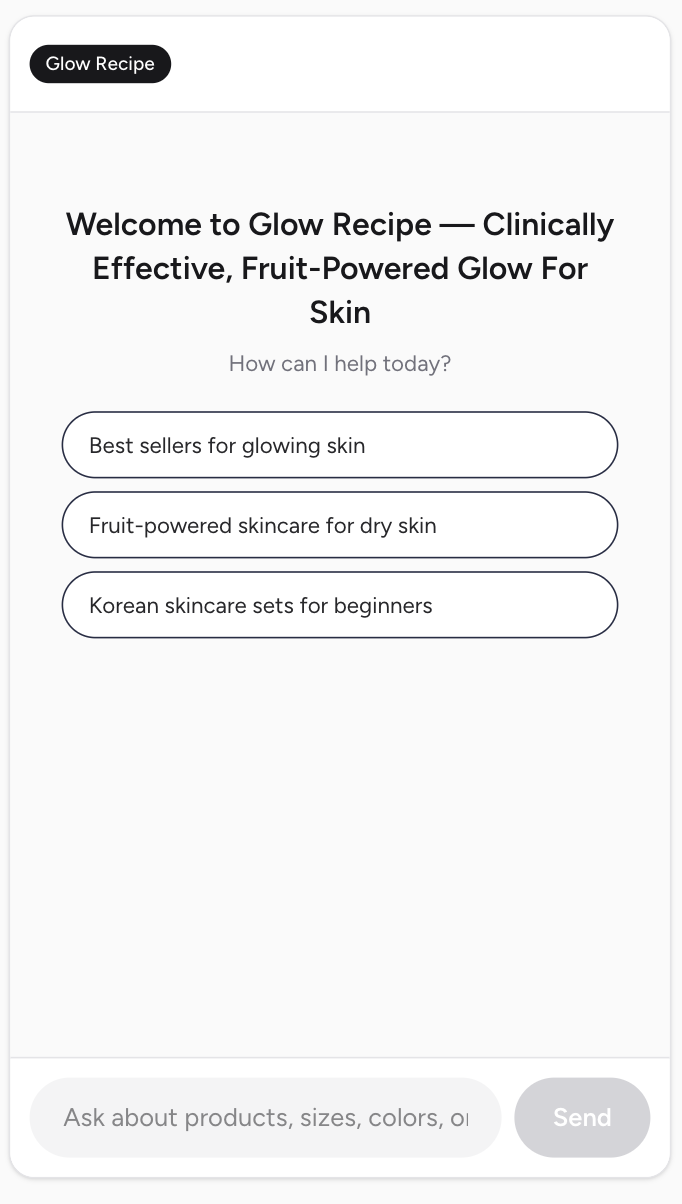
On Google, a shopper types "best vitamin C serum" and twelve brands bid on the phrase. In ChatGPT, the same shopper writes something no keyword tool ever captured: "I'm 34, combination skin, my vitamin C serum oxidizes before I finish it - what should I switch to?"
That is a diagnosis, not a query. The shopper names an ingredient, a skin type, a frustration, and a purchase intent in one message - and ChatGPT answers with specific products. Our teardown of how the organic layer picks those products is in Inside ChatGPT Shopping, and we broke down a single high-stakes example - the retinol-versus-bakuchiol question - in how to win the AI comparison query.
Ads entered this picture on February 9, 2026, when OpenAI began testing in the US (OpenAI announcement). The unit is deliberately modest: a single labeled sponsored box below the answer - advertiser name, logo, a title of at most 50 characters, a 100-character description, a square image, and a link. One advertiser per matched conversation (OpenAI, 2026). For a beauty brand, that means one box under "what should I switch to?" - and no competitor beside you.
Context hints: writing for the buyer moment
ChatGPT ads have no keyword bidding. Matching is conversational - driven by the current conversation topic, past chats, and past ad interactions. You steer it with context hints: OpenAI recommends 5-15 discrete, 1-2-sentence descriptions of buyer moments per ad group. Hints guide matching; they are not exact-match rules (OpenAI Ads Manager; help docs, 2026).
This format fits beauty unusually well, because beauty purchase moments are already sentences. A concern-based hint set for a skincare ad group might look like:
- Ingredient comparisons. "A shopper is comparing retinol and bakuchiol and asking which is gentler for sensitive or reactive skin."
- Skin-type routines. "Someone with oily or acne-prone skin is asking ChatGPT to build a morning and evening skincare routine."
- Condition-specific swaps. "A user with rosacea or eczema is asking for fragrance-free alternatives to a product that irritated them."
- Life-stage triggers. "A shopper describes being pregnant and asks which actives in her current routine she needs to replace."
- Regimen conflicts. "Someone asks whether they can layer vitamin C with niacinamide, or retinol with exfoliating acids."
Each hint is a moment where the shopper has told ChatGPT more about their skin than they have ever told a search engine. Write hints in the shopper's language, not your catalog's. The mechanics of building the campaign around them - objectives, bids, the relevance-weighted second-price auction - are covered in our setup guide.
On budget: minimum daily spend is $25, recommended starting bids are $3-5 CPC (WebFX; OpenAI docs, 2026), and you can choose CPM for awareness, CPC for traffic, or conversion-optimized CPC, where OpenAI optimizes delivery toward your conversion event but still charges per click (OpenAI Help Center, 2026). Expect modest click volume: chatbot ad CTR runs around 0.9% industry-wide (eMarketer, 2026); our own US campaigns since July 2026 have averaged about 1.3% (our campaign data). The value is in what happens after the click - AI-referred visits to US retail sites convert 60% better than non-AI traffic (Adobe Analytics via Digital Commerce 360, July 2026 data).
Feed ads for large beauty catalogs
Most beauty brands are not selling one hero SKU. Between shades, sizes, and formulations, a mid-size line clears a hundred SKUs quickly - and that is exactly the floor for ChatGPT's product feed ads, launched June 2026: upload a Google Shopping-format catalog, and ChatGPT auto-generates product ads from it, with a 100 SKU minimum and support up to 1 million SKUs (OpenAI Ads Manager docs; Digiday, June 2026).
For beauty catalogs, the feed does the shade-level and variant-level work no hand-built ad group can. But auto-generated ads are only as good as the catalog behind them: if your product data does not name the ingredient, the concentration, the skin type, and the concern, neither the feed ads nor the organic layer can match you to the conversation. The same structured-data work powers both - we cover it in how to optimize your product catalog for AI.
A caution before you scale spend: agencies report measurement gaps and unproven outcomes in ChatGPT ads so far (eMarketer/Digiday, 2026), and delivery ramps slowly during beta by design (OpenAI onboarding). Full cost mechanics are in our ecommerce cost breakdown.
The premium-tier blind spot
Here is the structural fact that changes the math for beauty specifically: ads appear only to logged-in adults on the Free and Go tiers. Plus, Pro, Business, Enterprise, and Education users never see ads (OpenAI, 2026).
Think about who pays a monthly subscription for an AI assistant. Prestige and premium beauty brands are chasing exactly the shopper most likely to sit behind a paid tier - and no ad budget reaches them. When that shopper asks "what's the best bakuchiol serum for sensitive skin," the only brands in the answer are the ones ChatGPT cites organically.
As our founder put it in The Hindu BusinessLine (August 28, 2026): "Brands cannot buy influence over ChatGPT's answers." Brands now compete on two layers - the organic recommendation, which is earned, and the sponsored placement, which is bought and labeled. Premium users see only the earned layer.
For a mass brand, ads cover a real slice of the audience. For a premium beauty brand, the ad-eligible audience and the target customer overlap less - which means organic citation matters doubly. The ad is a supplement. The citation is the strategy.
Where Tru Commerce fits
Ads rent the conversation; the organic recommendation is earned. For beauty, the split is sharper than in any other vertical we track, because the highest-value buyers sit on ad-free tiers where only the earned layer exists.
Before you spend the first $25 on context hints, find out where you already stand. Our free Citation Rank scan shows which ingredient and skin-type conversations cite your brand today - and which cite your competitors - across ChatGPT and the other major AI surfaces, with results in 24 hours. Then use ads to cover the moments you have not earned yet, guided by our ChatGPT Ads hub.
Two fields - work email and brand URL. No login, no credit card. See where the ingredient conversation puts you before you pay to sit underneath it.
The upside here is measurable: House of Zelena went from 22% to 56% ChatGPT mention share in 6 months with us - see the House of Zelena case study. If you want to see where you stand before committing, start with ChatGPT Ads for ecommerce brands.
FAQ
Yes. OpenAI's self-serve Ads Manager opened in May 2026 at ads.openai.com with no minimum lifetime spend and a $25 minimum daily budget. Beauty brands write context hints describing buyer moments instead of bidding on keywords (OpenAI, 2026).
There are no keywords. Matching is conversational - based on the current conversation topic, past chats, and past ad interactions. Advertisers steer it with context hints: OpenAI recommends 5-15 short buyer-moment descriptions per ad group (OpenAI Ads Manager, 2026).
No. Ads appear only to logged-in adults on the Free and Go tiers. Plus, Pro, Business, Enterprise, and Education users never see ads - they only see ChatGPT's organic recommendations (OpenAI, 2026).
100 SKUs, with support up to 1 million. You upload a Google Shopping-format catalog and ChatGPT auto-generates product ads from it. Feed ads launched in June 2026 (OpenAI Ads Manager docs; Digiday, June 2026).
No. Ads never influence ChatGPT's answers, and conversations are kept private from advertisers (OpenAI, stated since February 2026). The recommendation inside the answer is earned; the labeled sponsored box below it is bought.
Sources
- 1.Ads in ChatGPT: The Basics - OpenAI Help Center, 2026
- 2.ChatGPT ads will soon reach more users — proven results still missing - eMarketer, 2026
- 3.AI-driven traffic converts 42% better than non-AI traffic - Adobe Analytics via Digital Commerce 360, 2026
- 4.Adobe: AI referral traffic to retail sites converts 60% higher, July 2026 data - Digital Commerce 360, 2026
Continue reading
October 10, 2026
ChatGPT Ads in India: six weeks in, on the record
ChatGPT Ads switched on in India on 27 August 2026. Six weeks on, eight articles in five outlets quoted us and TechTimes cited our benchmarks. Every question the press asked, every answer verbatim and linked, and the numbers behind each one.
September 4, 2026
Criteo Prompt Smart Ads: 2,000 Brands on ChatGPT and a 4x Spend Lift
Criteo was the first ad-tech partner inside OpenAI's ChatGPT ads pilot. Its Prompt Smart Ads product auto-generates creatives and context hints matched to how people actually prompt - here is what it is, the numbers behind it, and what its creative reports teach every advertiser.
September 2, 2026
ChatGPT Ads Conversion Strategies: What the Query-Mix Data Says to Do
Only ~1 in 10 ChatGPT conversations carries commercial intent, 76.4% of shopping answers already show an ad, and market leaders buy almost none of them. Four strategies built on that data - not on search-ads instinct.