
ChatGPT Ads for Food and Beverage Brands
ChatGPT ads reach shoppers mid-conversation about protein, clean-label ingredients, and kids' snacks - at $3-5 CPCs that fit subscription economics. Here is how F&B brands set them up.
Viren Inaniyan · August 29, 2026 · ChatGPT Ads
Food and beverage is the category ChatGPT ads were quietly built for. Shoppers do not ask ChatGPT for "a protein bar" - they describe a diet, an ingredient worry, or a picky six-year-old, and the model matches an ad to that moment. At $3-5 recommended starting CPCs (WebFX; OpenAI docs, 2026), that moment is priced for subscription math, not just one-off cart sizes.
Why F&B conversations are different
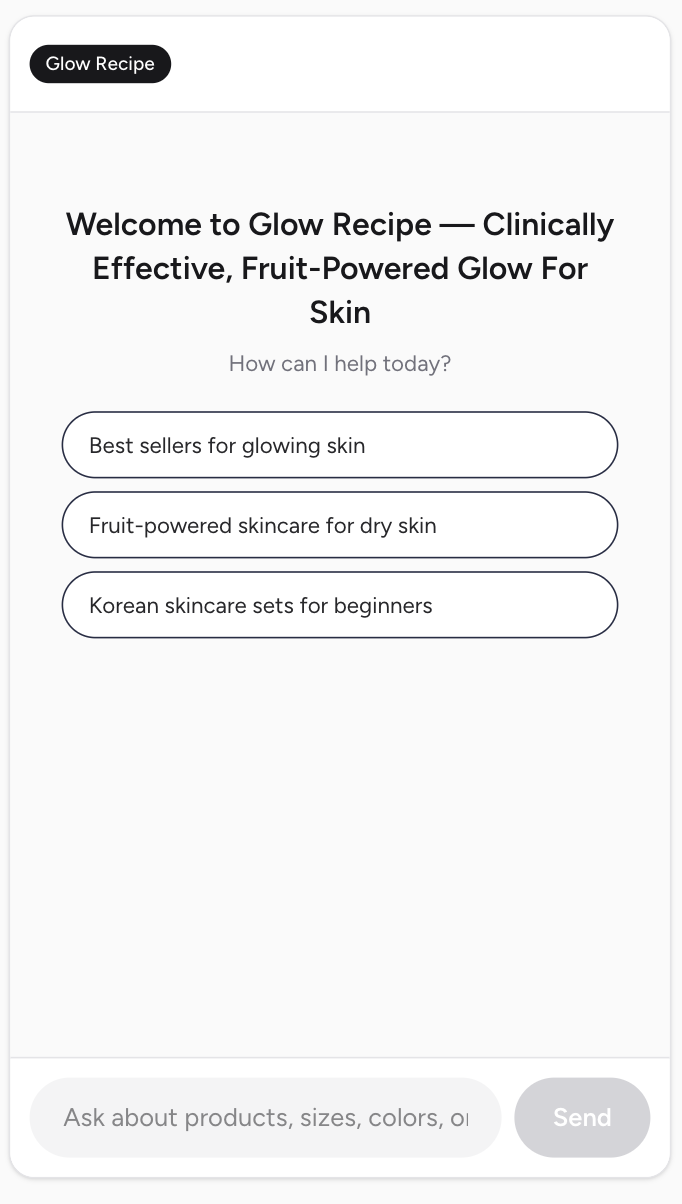
Most ad channels make food and beverage brands compete on generic terms: "protein powder," "sparkling water," "healthy snacks." ChatGPT conversations do not look like that. Shoppers describe situations:
- Diet goals. "I'm trying to hit 120g of protein a day without more chicken. What can I add to breakfast?"
- Ingredient anxiety. "Which electrolyte drinks don't have artificial sweeteners or dyes?"
- Household constraints. "Snacks for a 6-year-old's lunchbox - nut-free, no added sugar, and she refuses anything green."
- Occasions. "Non-alcoholic options for a dinner party that don't taste like juice."
Each of those is a purchase decision mid-formation, with the constraints stated out loud. Since matching in ChatGPT ads is conversational - based on the current conversation, past chats, and past ad interactions rather than keywords (OpenAI Ads Manager docs) - the system is unusually good at putting a clean-label brand in front of the person who just typed "no artificial sweeteners." No keyword list captures that intent; a context hint describes it directly.
The ad itself is modest by design: a single labeled sponsored box below the answer, with your name, logo, a title up to 50 characters, a description up to 100, a square image, and a link. One advertiser per matched conversation (OpenAI, 2026). For an F&B brand, that means no shelf full of competitors beside you - you either win the moment or you are absent from it.
Writing context hints for diet moments
Context hints are the entire targeting craft. OpenAI recommends 5-15 discrete hints per ad group, each a 1-2 sentence description of a buyer moment; hints guide matching but are not exact-match rules (OpenAI Ads Manager docs). The mistake we see most is writing hints about the product. Write them about the conversation instead.
Bad hint: "Our protein bar has 20g of protein and clean ingredients."
Good hints, one ad group per diet moment:
- "A shopper asks how to increase daily protein intake through snacks or breakfast, and wants convenient options rather than cooking more meat."
- "A parent asks for school-safe snacks for young kids - nut-free, low sugar, something a picky eater will actually accept."
- "Someone is cutting seed oils or artificial ingredients and asks which packaged snack brands have short, recognizable ingredient lists."
- "A shopper following a high-protein or low-sugar plan asks what to order online on a recurring basis so they don't run out."
Structure ad groups around moments, not SKUs: one for protein seekers, one for clean-label switchers, one for parents, one for occasion-based discovery. Then match the creative to the hint - the 50-character title answering the parent should not be the one answering the macro-counter. Our setup guide walks through the mechanics of building ad groups and hints step by step.
The subscription math at $3-5 CPC
Most F&B DTC brands live or die on subscription economics: modest first-order value, meaningful lifetime value. That is exactly the profile a $3-5 CPC suits.
Run the arithmetic on your own numbers. At a $4 CPC, 100 clicks cost $400. If 5% of those clicks subscribe, you paid $80 per subscriber; at 10%, $40. Whether that works depends on your churn and average subscription length - not on the channel. Compare that to the $8-18 CPCs software and finance advertisers pay (WebFX; OpenAI docs, 2026), and F&B brands are buying the same conversational placement at a fraction of the price.
Two honest caveats. AI-referred visits to US retail sites converted at a rate 60% higher than non-AI traffic in July 2026, the eleventh straight month ahead (Adobe Analytics, via Digital Commerce 360, 19 August 2026). Second, chatbot ad CTR runs around 0.9% versus roughly 6.4% for Google search (eMarketer, 2026), and agencies still report measurement gaps (eMarketer/Digiday, 2026). In our own US campaigns running since July 2026, CTR has averaged around 1.3% (our campaign data) - better than the industry figure, still a fraction of search. Delivery also ramps slowly during beta by design (OpenAI onboarding). Budget for a learning phase, and start at the $25 minimum daily budget rather than a large upfront commitment. Full pricing detail is in our ecommerce cost breakdown.
The conversion-optimized CPC bid model matters here too: OpenAI optimizes delivery toward your selected conversion event - make it "subscription started," not "add to cart" - while still charging per click (OpenAI Help Center, 2026). Install the OpenAI pixel and the server-side Conversions API before spending, or you will be optimizing blind.
Product feed ads for multi-flavor catalogs
Since June 2026, you can upload a Google Shopping-format catalog and ChatGPT auto-generates product ads from it - 100 SKU minimum, up to 1 million (OpenAI Ads Manager docs; Digiday, June 2026). F&B brands clear that minimum faster than most categories: flavors, pack sizes, bundles, and variety packs multiply SKU counts quickly.
The catch is that auto-generated ads are only as good as the feed. If your product data does not carry the attributes shoppers ask about - "nut-free," "no added sugar," "20g protein," "caffeine-free" - the matching engine has less to work with. Feed hygiene is the same discipline that drives organic AI visibility, and we cover it in depth in how to optimize your product catalog for AI. Do that work once and it pays on both the paid and organic layers.
Where Tru Commerce fits
Ads rent the conversation. They appear only to logged-in adults on Free and Go tiers - Plus, Pro, Business, Enterprise, and Education users never see them (OpenAI, 2026). And as our founder put it on record: "Brands cannot buy influence over ChatGPT's answers" (The Hindu BusinessLine, Aug 28, 2026). That leaves every brand competing on two layers: the sponsored placement you buy, and the organic recommendation you earn. Premium users only ever see the earned layer.
So before you spend a dollar on hints and bids, find out whether ChatGPT already recommends you when someone asks for the best clean-label snack or high-protein breakfast. Run the free Citation Rank scan - work email and brand URL, results in 24 hours - and see where you stand on the layer money cannot buy. Then use our ChatGPT Ads hub to plan the paid layer on top. For the full category playbook - organic and paid together - read the food and beverage DTC agentic commerce playbook.
The proof point in food: ITC MasterChef's AI Share of Voice rose 89% in 30 days - see the ITC MasterChef case study. The usual first step is ChatGPT Ads for ecommerce brands.
FAQ
Yes. Self-serve access opened in May 2026 at ads.openai.com with no minimum lifetime spend and a $25 minimum daily budget (OpenAI, 2026). Food and beverage brands write context hints describing buyer moments - diets, ingredients, occasions - instead of bidding on keywords.
Recommended starting bids are $3-5 CPC, well below the $8-18 seen in software and finance categories (WebFX; OpenAI docs, 2026). Minimum daily budget is $25, billing is postpay, and CPM options run roughly $25-60.
There are no keywords. Matching is conversational - based on the current conversation, past chats, and past ad interactions. You steer it with 5-15 context hints per ad group, each a 1-2 sentence description of a buyer moment, like a shopper asking for high-protein breakfasts (OpenAI Ads Manager docs).
No. Ads never influence ChatGPT's answers; a sponsored placement is a single labeled box below the answer, and conversations stay private from advertisers (OpenAI, stated repeatedly since February 2026). The organic recommendation has to be earned separately.
100 SKUs, up to 1 million. You upload a Google Shopping-format catalog and ChatGPT auto-generates product ads from it (OpenAI Ads Manager docs; Digiday, June 2026). Multi-flavor, multi-format F&B catalogs typically clear the minimum easily.
Sources
- 1.Ads in ChatGPT: The Basics - OpenAI Help Center, 2026
- 2.ChatGPT ads will soon reach more users — proven results still missing - eMarketer, 2026
- 3.AI-driven traffic converts 42% better than non-AI traffic - Adobe Analytics via Digital Commerce 360, 2026
- 4.Adobe: AI referral traffic to retail sites converts 60% higher, July 2026 data - Digital Commerce 360, 2026
Continue reading
October 10, 2026
ChatGPT Ads in India: six weeks in, on the record
ChatGPT Ads switched on in India on 27 August 2026. Six weeks on, eight articles in five outlets quoted us and TechTimes cited our benchmarks. Every question the press asked, every answer verbatim and linked, and the numbers behind each one.
September 4, 2026
Criteo Prompt Smart Ads: 2,000 Brands on ChatGPT and a 4x Spend Lift
Criteo was the first ad-tech partner inside OpenAI's ChatGPT ads pilot. Its Prompt Smart Ads product auto-generates creatives and context hints matched to how people actually prompt - here is what it is, the numbers behind it, and what its creative reports teach every advertiser.
September 2, 2026
ChatGPT Ads Conversion Strategies: What the Query-Mix Data Says to Do
Only ~1 in 10 ChatGPT conversations carries commercial intent, 76.4% of shopping answers already show an ad, and market leaders buy almost none of them. Four strategies built on that data - not on search-ads instinct.