
ChatGPT Ads Cost (2026): CPM, CPC, and Minimum Budgets
ChatGPT ads launched at a $60 CPM with a $200,000 minimum in February 2026. By August, CPCs start around $3-5, CPMs run roughly $25-60, and the minimum is $25/day in the US and ₹725/day in India.
Viren Inaniyan · July 14, 2026 · ChatGPT Ads
ChatGPT ads launched in February 2026 at a $60 CPM with a $200,000 minimum, sold through agencies. Six months later, self-serve CPCs start around $3-5, CPMs run roughly $25-60, and the minimum is $25 a day in the US and ₹725 a day in India. Here's the full pricing trajectory and what a test budget actually buys.
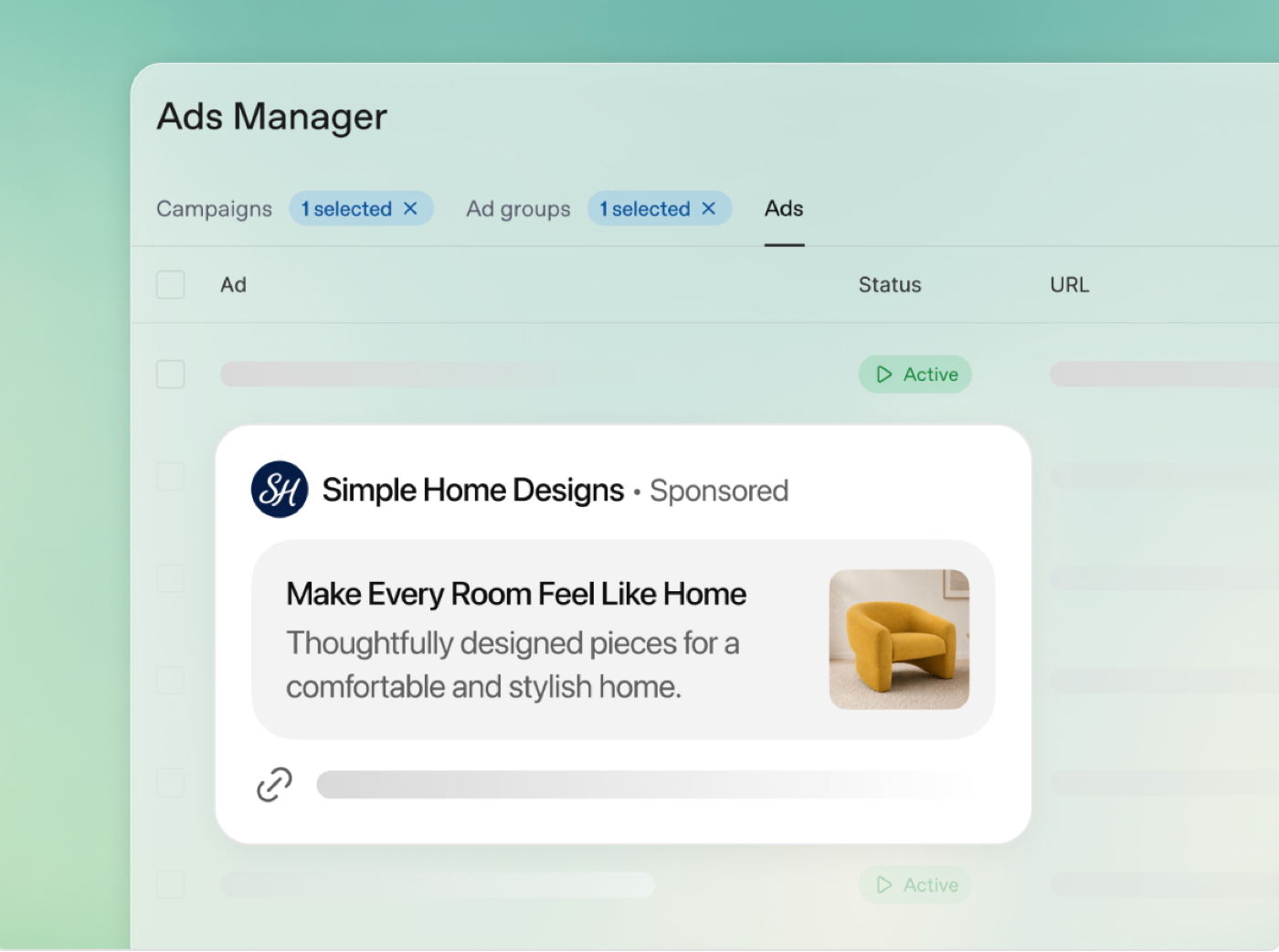
A ChatGPT ad is a single labeled unit - brand name, “Sponsored,” one headline, one line of copy, one product image - shown below the answer, never inside it.
What ChatGPT ads cost right now
Pricing has moved fast and in one direction: down and more accessible.
The self-serve Ads Manager at ads.openai.com is the on-ramp most brands will actually use - no agency relationship or minimum lifetime commitment required, in contrast to the invite-only managed launch. OpenAI has also brought in agency partners (Dentsu, Omnicom, Publicis, WPP) and ad-tech partners (including Adobe) for teams that want to buy through existing workflows instead of the self-serve tool directly.
The floor today is a $25 minimum daily budget in the US (₹725 per day in India when self-serve opens there on September 4). We break down what those minimum budgets actually buy at current CPCs in a separate post.
Creative requirements are lean by design: a merchant description in the 40-80 word range, a square hero image, and category mapping - no video, no carousel formats yet, and reported production cost roughly 70% lower than a comparable Google Performance Max campaign.
CPM and CPC, February to August 2026
Every figure below is dated, because in a beta channel the date matters as much as the number.
| Date | Milestone | Pricing |
|---|---|---|
| Feb 9, 2026 | US launch - managed, invite-only buys via agencies | ~$60 CPM, ~$200,000 minimum |
| May 2026 | Self-serve Ads Manager beta opens at ads.openai.com | No minimum lifetime spend; $25 minimum daily budget; $3-5 recommended starting CPC |
| Mid-2026 | CPM pricing settles as the auction fills | CPM options roughly $25-60 |
| Aug 27, 2026 | India launch for Free and Go users | Agency-led first week (WPP and Omnicom are the first partners) |
| Sept 4, 2026 | India self-serve opens to any Indian business | ₹725 minimum daily budget |
The direction is clear: from a six-figure managed buy to a channel any merchant can test for $25 a day, in under seven months. (Sources: OpenAI announcements and Ads Manager docs, 2026; WebFX and practitioner reports, 2026; The Hindu BusinessLine and Storyboard18, Aug 2026.)
How ChatGPT ad costs compare to Google and Meta
Qualitatively - the channels differ more in structure than in headline price:
| Dimension | ChatGPT Ads | Google Ads | Meta Ads |
|---|---|---|---|
| Cost model | CPC ($3-5 recommended starting bids) or CPM (~$25-60); conversion-optimized CPC still charges per click | Keyword-auction CPC; price set by keyword-level competition | Audience-auction CPM/CPC optimized to an objective |
| Auction maturity | Beta - thin auctions, delivery ramps slowly by design | Mature - two decades of dense auction history | Mature - dense, continuously optimized feed auctions |
| Competition level | Low - one ad slot per matched conversation; 220 US advertisers in our own crawl | High - multiple ad slots per results page, most categories saturated | High - deep advertiser pool competing for feed inventory |
We go deeper on the budget-allocation question in ChatGPT Ads vs Google Ads and ChatGPT Ads vs Meta Ads.
The launch, in OpenAI's own words
OpenAI's official framing, published February 9, 2026: "Today, we're beginning to test ads in ChatGPT in the U.S. The test will be for logged-in adult users on the Free and Go subscription tiers... Ads do not influence the answers ChatGPT gives you, and we keep your conversations with ChatGPT private from advertisers."
That distinction - ads that don't touch the answer - is the single design decision the whole program is built around. It shows up twice more in OpenAI's own updates: a March 26, 2026 post reporting "no impact on consumer trust metrics, low dismissal rates of ads" from the early test, and a May 7, 2026 expansion post reiterating the same commitment as the pilot grew into new markets.
If you prefer not to see ads at all, OpenAI's own workaround is upgrading to Plus or Pro, or opting out within the Free tier in exchange for fewer daily free messages - a detail worth knowing if you're trying to understand how much of your own target audience is even eligible to see your ad.
Where the ad actually appears
Ads show up as a clearly labeled, visually separated box below the AI's answer - not inline, not blended into the response text. OpenAI's stated goal is that the answer itself is "optimized based on what's most helpful to you," with the ad living entirely outside that boundary.
That single placement pattern (one contextual box, one advertiser shown at a time when there are multiple matches) is a real constraint worth planning around: there's no equivalent yet to Google's multiple ad slots per results page, or Meta's dense, scrollable feed inventory. Whoever wins the single relevant slot for a given conversation gets the whole placement.
How targeting actually works
This is the part most performance marketers get wrong on their first pass, because it doesn't map cleanly onto keyword bidding or audience segments.
OpenAI's own description: ads are matched by "the topic of your conversation, your past chats, and your past interactions with ads." Their example - a user researching recipes may see an ad for meal kits or grocery delivery - is contextual, not keyword-based. There's no traditional keyword match type, and no third-party demographic targeting layer to configure.
Two structural privacy commitments shape what advertisers can and can't do:
- Advertisers never see the conversation. No chat content, chat history, memories, or personal details are shared - only aggregate performance data like impression and click counts.
- No targeting near sensitive topics. OpenAI does not show ads in accounts it predicts belong to users under 18, and ads are not eligible to appear near health, mental health, or political conversations.
Practically, this means your targeting lever is the content and framing of your ad submission - the merchant description and category mapping you provide - rather than an audience you build and refine over time the way you would in Meta Ads Manager.
What you actually see in Ads Manager
The reporting side is more conventional than the targeting side. OpenAI's Ads Manager reports the metrics a performance marketer expects - impressions, click-through rate, CPC, CPM, and conversions - and supports UTM parameters plus a Conversions API for tying results back to on-site events. What it never exposes is the layer beneath the number: the conversations your ad appeared next to. You optimize against aggregate performance, not query-level data - which is exactly why ChatGPT-driven clicks so often land in GA4 as “Direct” unless you tag them yourself.
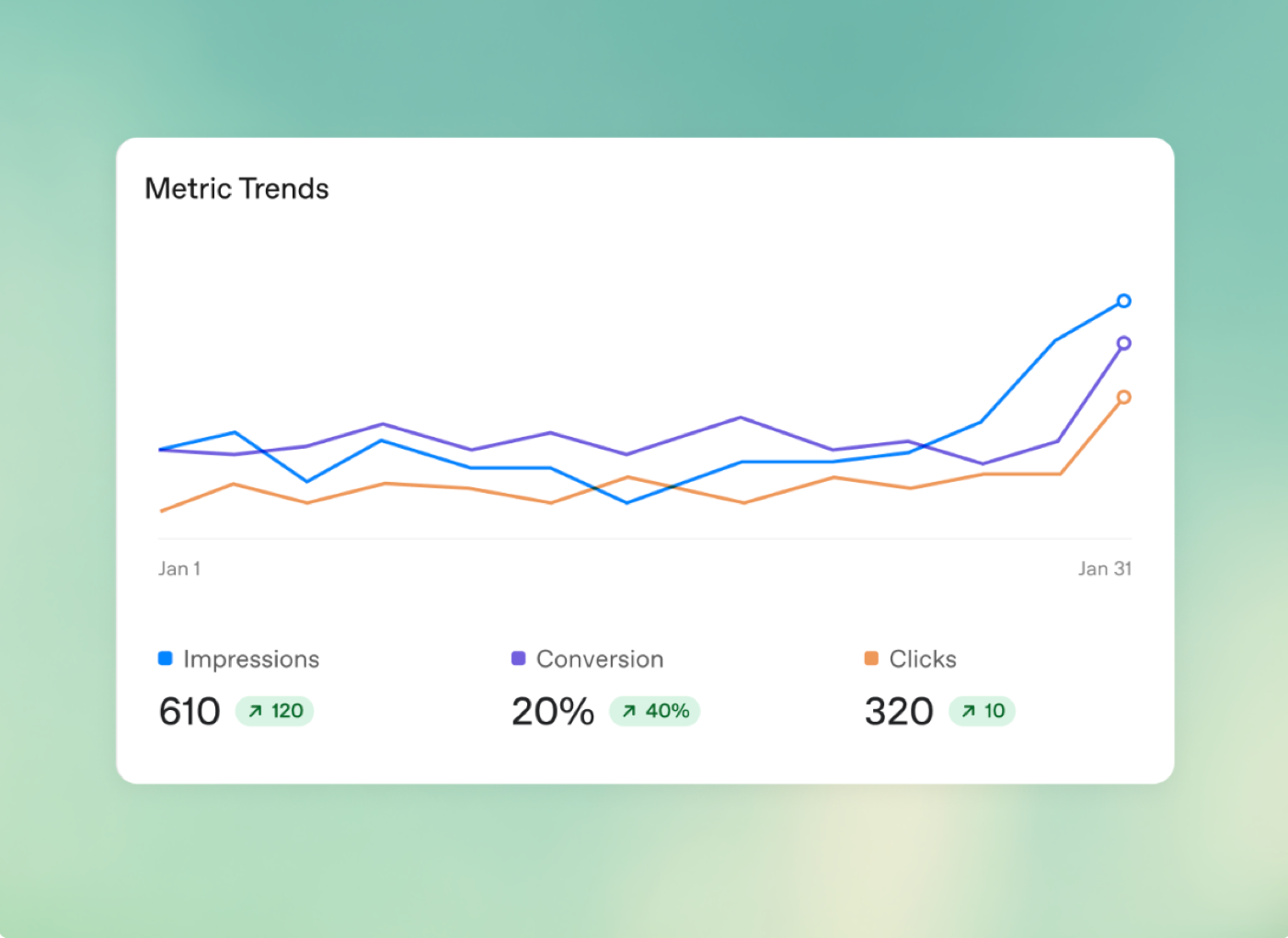
Ads Manager's own reporting view. The numbers are real and exportable; the conversation content behind each impression is not.
What this means for ecommerce brands
Rather than rely on secondhand reports, we ran our own research pass: 2,560 high commercial-intent US prompts submitted directly to ChatGPT, capturing every sponsored placement returned. The result is a live, first-party read on who's actually spending.
Headline numbers from our crawl:
- 220 distinct US advertisers identified across 1,746 captured ad creatives
- 72 are direct consumer ecommerce brands - the category most relevant to most readers here
- Ad density is concentrated: B2B SaaS accounts for 37.9% of all captured ads, consumer commerce 30.7%, with the remainder split across consumer services, affiliate aggregators, marketing agencies, and B2B supply
The heaviest ecommerce spenders we observed (by creative volume): Harbor Freight, Home Depot, JCPenney, Peloton, DreamCloud, Macy's, Dell, SkinCeuticals, Wayfair, and Avocado Green Mattress. Categories skew toward home goods, apparel, fitness equipment, and beauty - all categories where shoppers plausibly use ChatGPT to compare options before buying, matching the "evaluation phase" framing covered earlier in this piece.
What they're actually advertising isn't generic brand awareness - it's specific product and category pages: Harbor Freight running cordless drill kits and pressure washers, Peloton pushing treadmill comparisons, DreamCloud running mattress-in-a-box explainer creative, JCPenney promoting specific footwear categories. The pattern across nearly every advertiser we captured is direct-response, not brand-building.
Consumer research backs up why retail leads: a 2026 Pacvue survey of 1,008 US consumers found 53% use AI tools to research products, and 28% turn to AI for shopping research daily.
Should you actually spend here in 2026
Three honest signals to weigh:
In favor: No minimum spend anymore, CPC bidding as low as $3-5, and a genuinely high-intent moment - ChatGPT ads reach people mid-evaluation, actively comparing options, not passively scrolling.
Against: Single ad slot per conversation means real competition for the relevant moment, targeting is contextual rather than granular, and the ad format itself is still limited to one static creative type. This is an early-stage channel, not a mature one.
Update: India pricing (August 2026)
India joined the roster on August 27, 2026 - ads for Free and Go users, with the self-serve Ads Manager opening to Indian businesses on September 4 at a ₹725 minimum daily budget (The Hindu BusinessLine; Storyboard18, Aug 2026). No public India CPC data exists yet; early, thin auctions typically clear below mature-market rates, and we'll publish our own numbers as campaigns run. The India-specific budget math is in ChatGPT ads cost in India, and you can model scenarios in the cost calculator.
Where Tru Commerce fits
Paid placement inside ChatGPT is one lever. The other is being the brand the answer itself recommends - unpaid, based on how well your product data and content are structured for AI citation. An ad rents the conversation; the organic recommendation is earned - and Plus and Pro users, who never see ads, only ever see the earned layer. Most brands only think about the first lever. We work on both: AI-Sponsored Placements if you want to run paid campaigns, and Citation Rank to improve how often you show up organically in the answer itself, not just the ad slot beneath it.
Before spending a dollar, see where you stand in the earned layer with a free Citation Rank scan. And if you're weighing ChatGPT Ads against your existing Google and Meta spend, book a demo - we'll walk through where your category is likely to see the strongest early return.
Worth checking what this channel already drives for you: for MyMuse, GA4 reported ₹11.5K/mo of AI revenue when the real number was ₹81.2K/mo - read the MyMuse case study.
FAQ
Yes. OpenAI began testing ads on February 9, 2026, for logged-in adult US users on the Free and ChatGPT Go tiers. Plus, Pro, Business, Enterprise, and Education tiers remain ad-free.
As of the self-serve Ads Manager launch in May 2026, CPC bidding starts around $3-5, with CPM options reported as low as roughly $25 in some pilot categories and no minimum spend. That's down sharply from the ~$60 CPM and $200,000 minimum at the February 2026 launch.
Businesses can sign up for updates at openai.com/advertisers, or access the self-serve Ads Manager beta directly at ads.openai.com. Agencies including Dentsu, Omnicom, Publicis, and WPP also support ChatGPT ad buys for teams that prefer to buy through an existing partner.
No. OpenAI's stated policy is that advertisers never receive chat content, chat history, memories, or personal details - only aggregate performance metrics like impressions and clicks.
The US since February 9, 2026; Canada, Australia, and New Zealand followed in spring 2026; the UK went live June 6, 2026 as OpenAI's first European market; and Mexico, Brazil, Japan, and South Korea were announced for expansion starting May 7, 2026.
They serve different funnel stages, not the same job. Google Ads captures transactional, high-intent search; Meta Ads is strongest at discovery for audiences who aren't actively searching yet; ChatGPT Ads reach people mid-evaluation, comparing options in a conversation. Most brands will eventually run some mix of the three rather than replace one with another.
Sources
- 1.Ads in ChatGPT: The Basics - OpenAI Help Center, 2026
- 2.How much do ChatGPT ads cost? CPC & CPM pricing - WebFX, 2026
- 3.ChatGPT ads will soon reach more users — proven results still missing - eMarketer, 2026
- 4.AI-driven traffic converts 42% better than non-AI traffic - Adobe Analytics via Digital Commerce 360, 2026
Continue reading
October 10, 2026
ChatGPT Ads in India: six weeks in, on the record
ChatGPT Ads switched on in India on 27 August 2026. Six weeks on, eight articles in five outlets quoted us and TechTimes cited our benchmarks. Every question the press asked, every answer verbatim and linked, and the numbers behind each one.
September 4, 2026
Criteo Prompt Smart Ads: 2,000 Brands on ChatGPT and a 4x Spend Lift
Criteo was the first ad-tech partner inside OpenAI's ChatGPT ads pilot. Its Prompt Smart Ads product auto-generates creatives and context hints matched to how people actually prompt - here is what it is, the numbers behind it, and what its creative reports teach every advertiser.
September 2, 2026
ChatGPT Ads Conversion Strategies: What the Query-Mix Data Says to Do
Only ~1 in 10 ChatGPT conversations carries commercial intent, 76.4% of shopping answers already show an ad, and market leaders buy almost none of them. Four strategies built on that data - not on search-ads instinct.