Skip to content
New

Shopify launched Agentic Storefronts. We make AI agents recommend you - not just list you.

See the Shopify integration
Tru Commerce
PricingStart free →

INSIGHTS

Notes from the agentic commerce frontline.

Weekly. Numbers-first. The deals, the protocol shifts, the brand moves we think you should know about.

weekly·numbers-first·no fluff

Latest · Citation Rank & Share of Voice · Sep 23, 2026

Reddit Monitoring Tools, Ranked by What AI Assistants Say

Fourteen tools, measured across 18 live AI answers on six engines in three markets. Syften leads on frequency, Brandwatch and Brand24 follow, and the best-known name in the category carries the worst sentiment of the set. Plus the job none of them are built for: telling you whether a Reddit thread produced an AI citation.
Read the latest →

Citation Rank & Share of Voice · Sep 23, 2026

Why AI Search Engines Cite Reddit So Often

Across 3,750 tracked AI answers on five engines in three markets, reddit.com is the most-cited domain we measure - 439 citations in the AI-visibility corpus, appearing in more separate answers than any other source. But community content is only about 5% of all citations. Reddit is not most of the evidence; it is the most concentrated single piece of it. Here is the measured picture, the Google-versus-OpenAI split nobody talks about, and what it means for a brand.

Citation Rank & Share of Voice · Sep 17, 2026

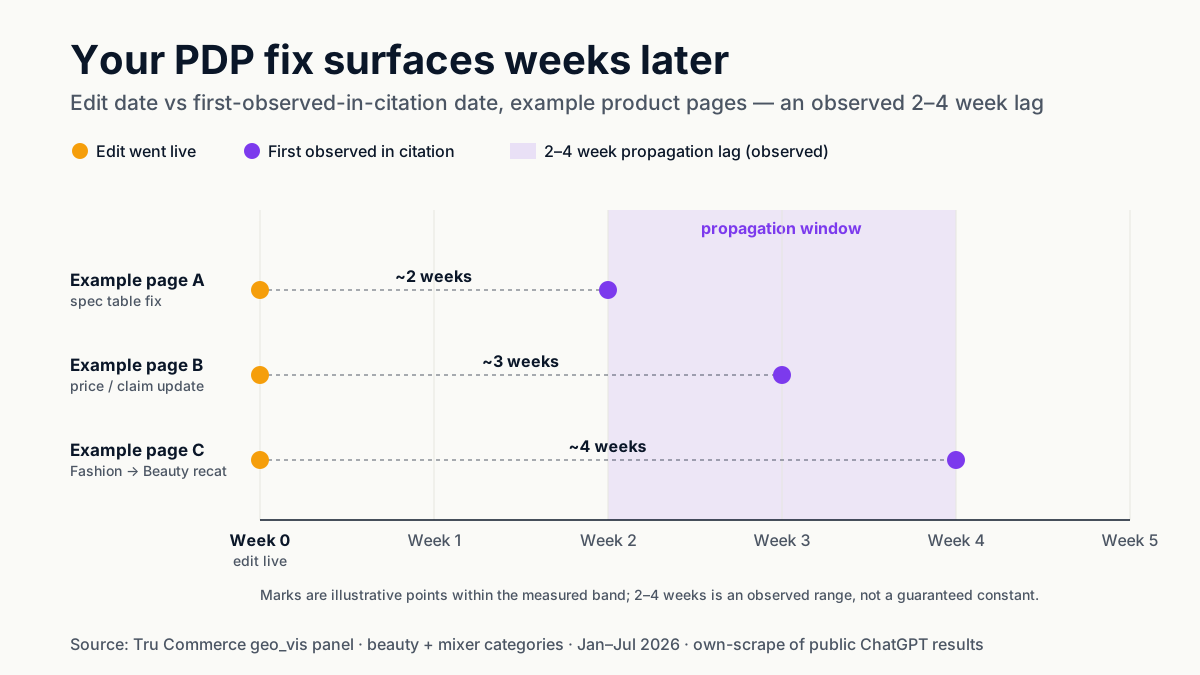
The AI Re-Crawl Lag — Your PDP Fix Takes Weeks to Surface

You fix a product page and check the assistant the next morning. It still shows the old answer. In one case we tracked, a PDP corrected to the Beauty category kept getting cited under Fashion for weeks after the edit went live. AI answers run on a re-crawl clock, not an edit clock, and the two are 2–4 weeks apart. This piece is about measuring the propagation, not the change — and planning campaigns around the lag instead of being surprised by it.

Citation Rank & Share of Voice · Sep 15, 2026

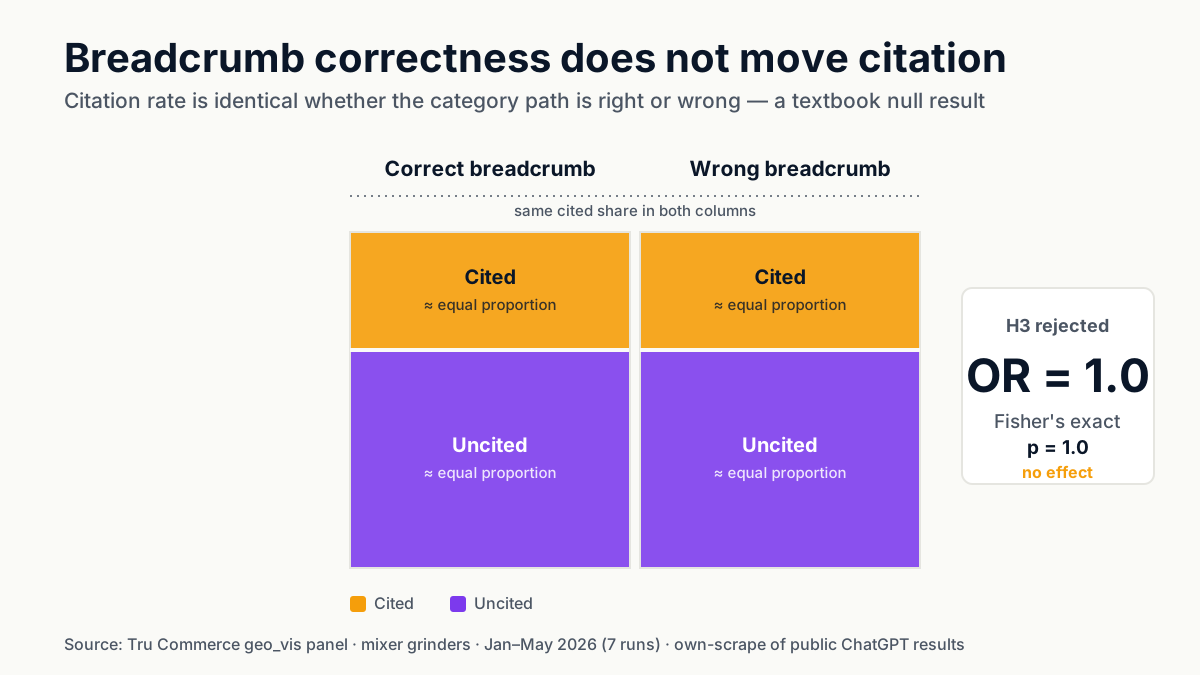
The Breadcrumb Myth — Category Path Is Hygiene, Not Leverage

One of the most repeated theories in AI shopping is that a 'wrong' category breadcrumb quietly suppresses your citations. We tested it on a locked panel and the theory collapsed: the odds ratio between breadcrumb-correctness and being cited was 1.0, with a Fisher's exact p of 1.0 — no association at all. Correct categorization is basic hygiene. It is not a visibility lever. Here is the test, why the intuition is wrong, and the three levers that actually move the needle.

Citation Rank & Share of Voice · Sep 15, 2026

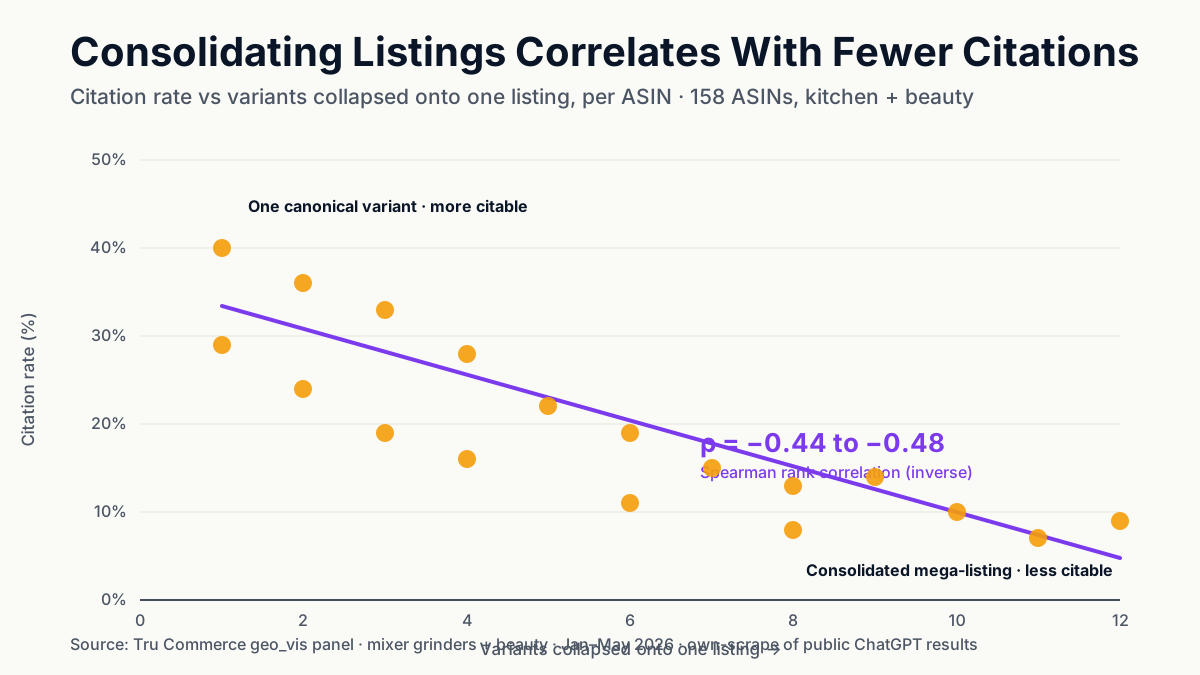
The Variant-Fragmentation Myth — Consolidating Listings Can Hurt Your AI Visibility

One of the most repeated PDP recipes says merge your color, size, and pack variants onto a single listing to concentrate authority. In our locked-panel data, consolidation ran the wrong way: the more variants a brand collapsed onto one listing, the lower its AI citation rate (Spearman ρ = −0.44 to −0.48). The tidy hypothesis that fewer listings win was disproven across 158 ASINs. Here is the data, the honest correlational caveat, and the reframed play — promote one canonical variant instead of collapsing everything.

Citation Rank & Share of Voice · Sep 12, 2026

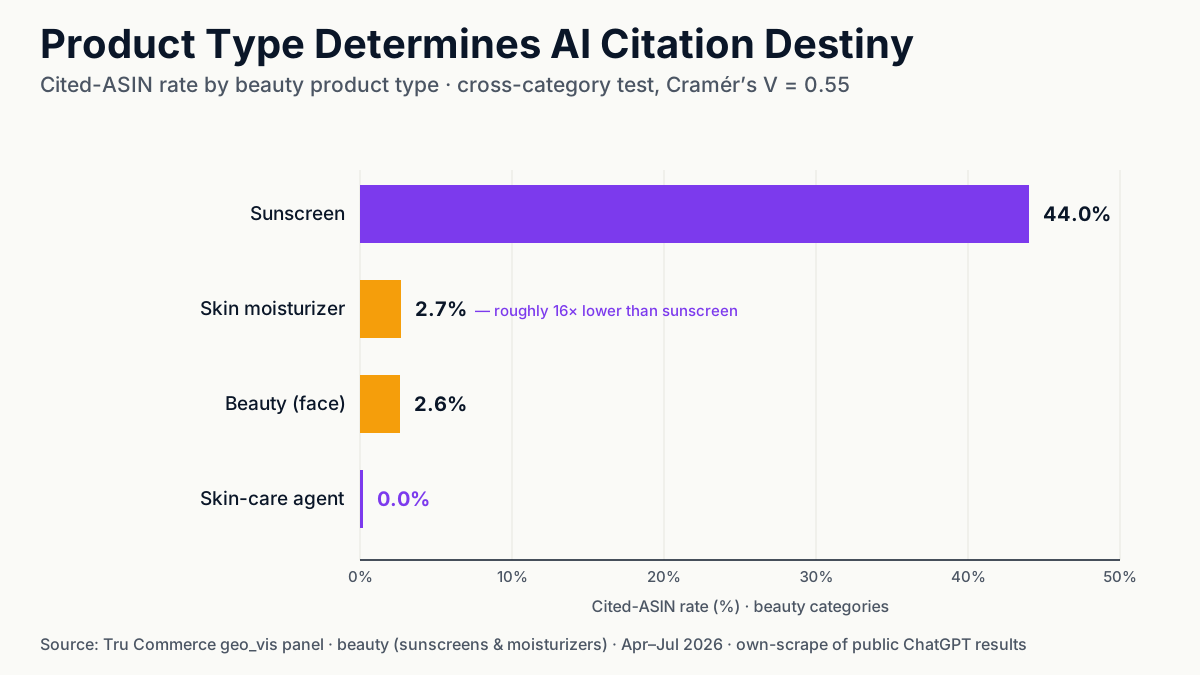
Product Type Determines Destiny — Some Categories Are 15x More Citable

Citability is not evenly distributed across a catalogue. In our beauty panel, sunscreen ASINs are cited by ChatGPT at roughly 16 times the rate of moisturizers (44.0% vs 2.7%), and the association between product type and citation is statistically strong (Cramér's V = 0.55). Which category you lead with is itself a visibility lever — and most AEO programs pick it by revenue instead of by structure.

Citation Rank & Share of Voice · Sep 11, 2026

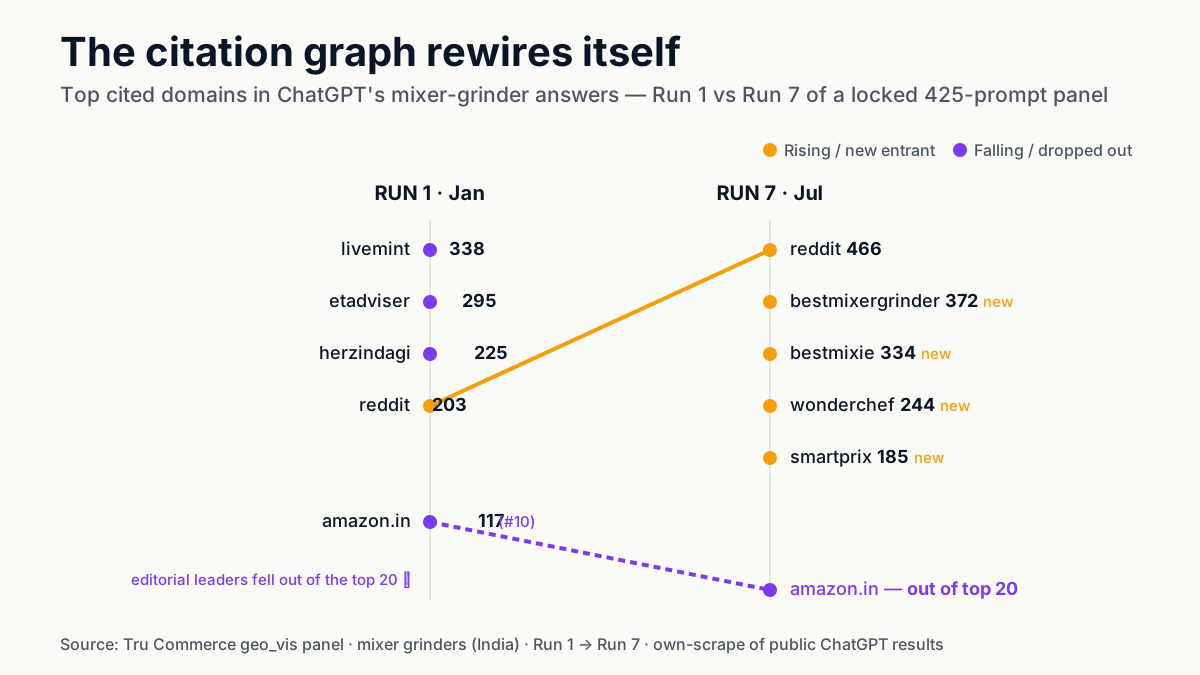
The Citation Graph Rewires Itself — Editorial, Then Community, Then Niche Affiliate

The set of domains ChatGPT cites to justify its shopping answers is not stable — it churns fast. Across seven monthly pulls of one locked panel, the leaderboard rewired from mainstream editorial to community to niche affiliate: Reddit climbed from #4 to #1 (203 to 466 citations), four of Run 7's top five did not exist in Run 1's top five, and amazon.in fell out of the top 20 entirely even as its buy links kept winning slots. If you track your own page instead of the graph, you cannot see the ground moving under your placement — here is the data, the mechanism, and what to watch.

Citation Rank & Share of Voice · Sep 10, 2026

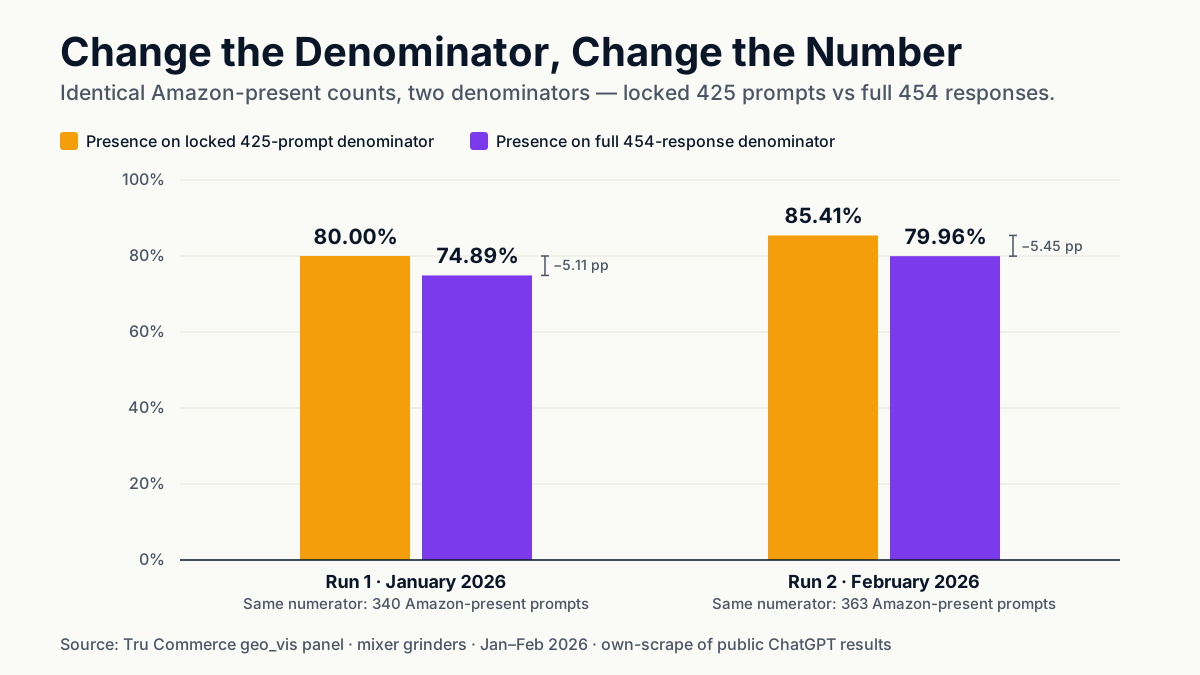
Measurement Is the Moat — Why Every AI-Visibility Number Lies Without a Locked Prompt Set

The same Amazon-present count reads 80% on a locked 425-prompt denominator and 74.89% on a full 454-response one — the number moves five points on the denominator alone. Add runs with zero cards, partial card coverage, and a position metric that swings from 0.41 to 1.41 depending on where you start counting, and most AI-visibility dashboards are quietly reporting fiction. This piece shows the exact ways a number lies, includes a correction we owe our own data, and gives the validity checklist that has to run before any figure ships.

Citation Rank & Share of Voice · Sep 10, 2026

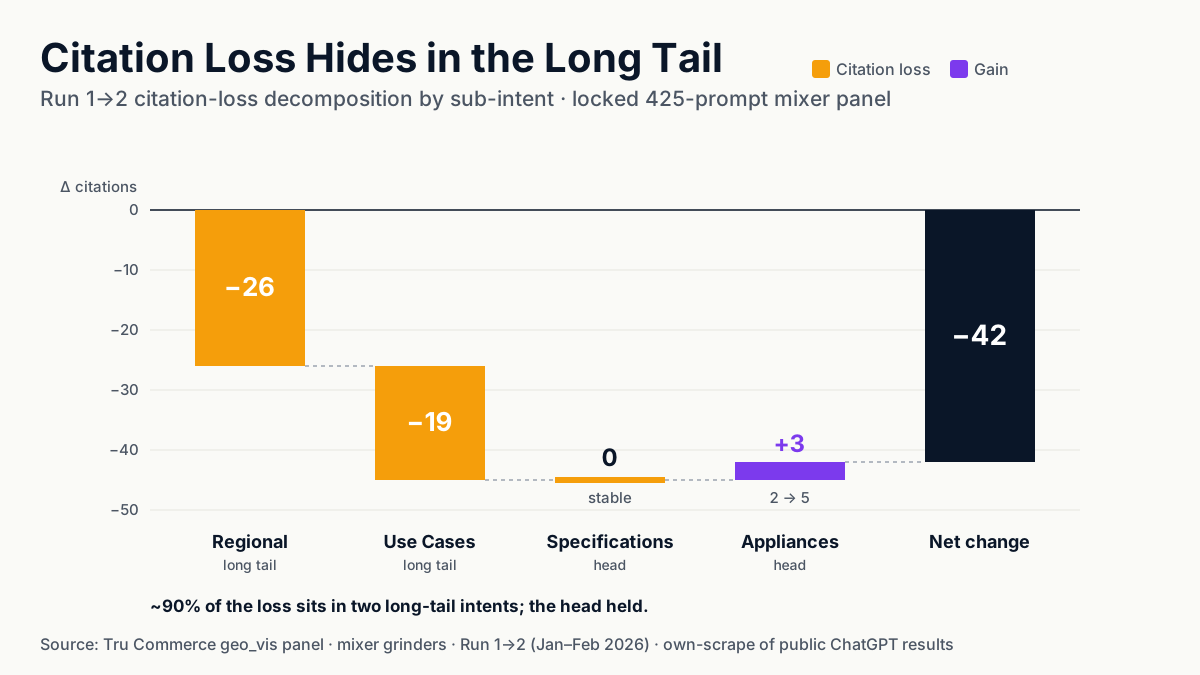
The Long Tail Is Where You Lose — Regional and Use-Case Queries Are the Leak

When we decomposed AI citation loss by sub-intent between two early runs, almost all of it lived in the long tail: regional queries contributed a drop of 26 and use-case queries 19, while spec queries stayed stable and appliance queries even gained. Hero terms held; the tail leaked. This piece shows why the model retrieves differently for 'mixie for dhokla batter' than for a spec query, and why you defend the tail before the head.

Citation Rank & Share of Voice · Sep 9, 2026

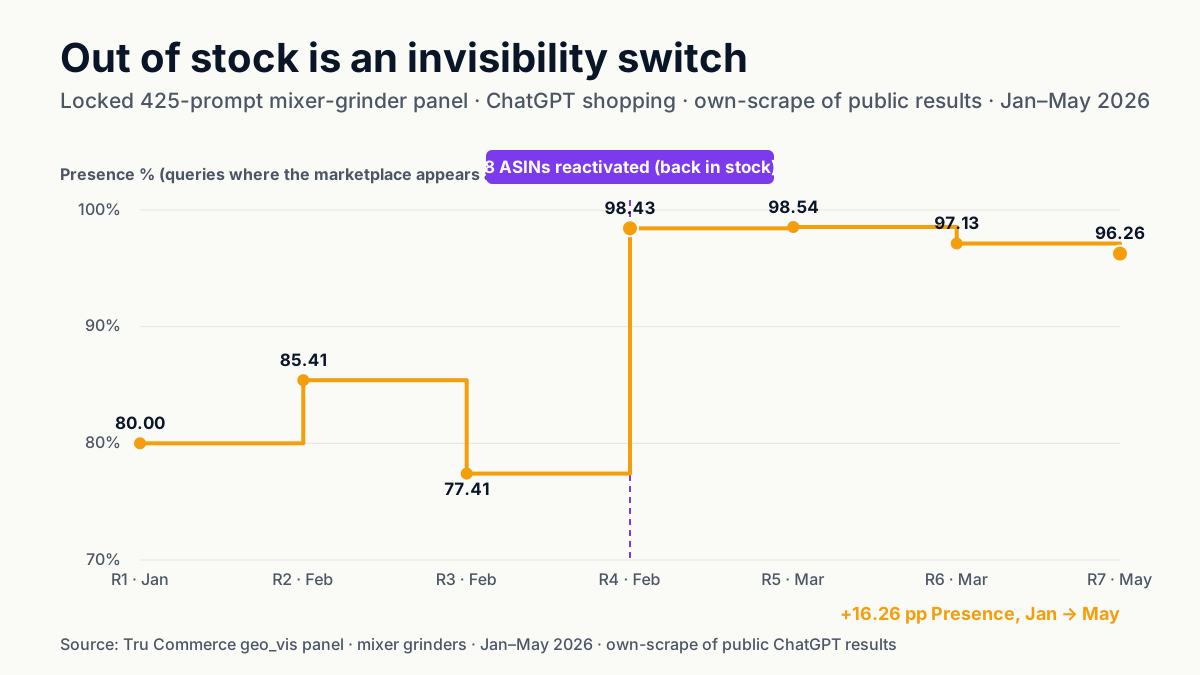
Out of Stock Is an Invisibility Switch — Availability Beats Cleverness in AI Shopping

When a product goes out of stock, AI shopping does not down-rank it — it silently deletes it from the answer. In our locked mixer-grinder panel, the largest marketplace's Presence jumped from 80% to 96.26% (+16.26 points) across seven monthly pulls, and the step-change lands exactly when 8 previously lapsed ASINs returned to stock. Availability is not an operations problem hiding downstream of visibility; it is the first gate of visibility. With ChatGPT product feeds live since June 2026, feed and stock hygiene are now visibility infrastructure.

Citation Rank & Share of Voice · Sep 8, 2026

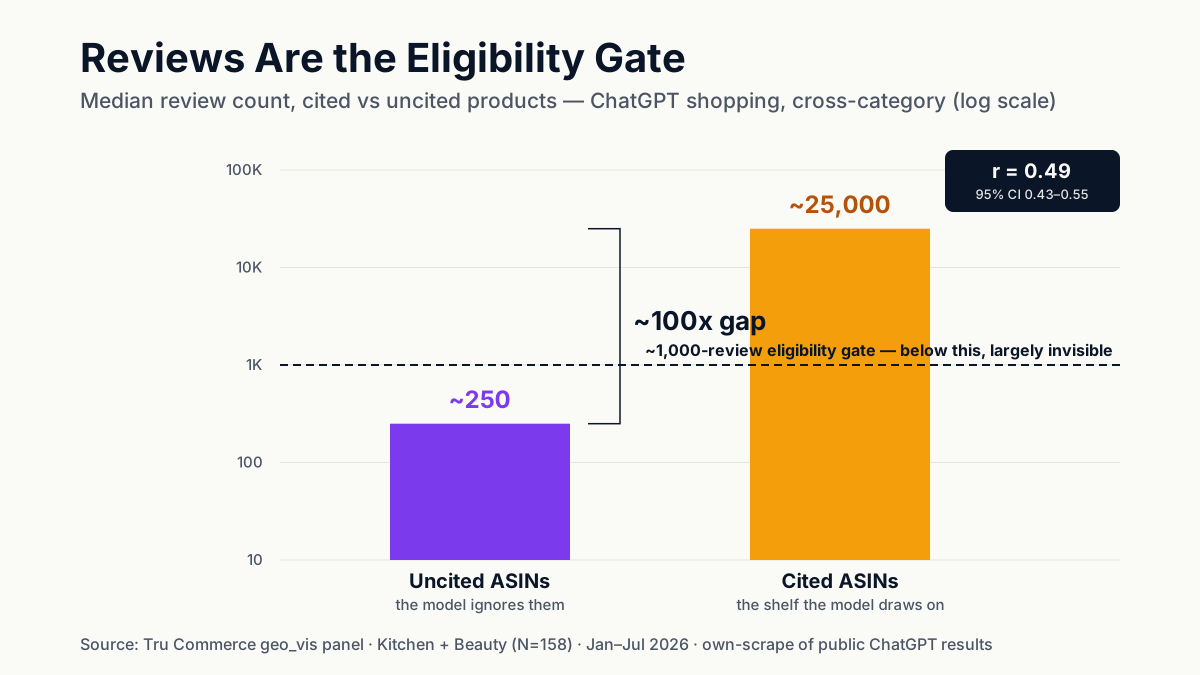
Reviews Are the Eligibility Gate — You Don't Get Cited Until You Cross the Threshold

Review count is the strongest single predictor of whether a product gets cited in ChatGPT shopping answers (r = 0.49). The products the model cites carry a median of ~25,000 reviews; the ones it ignores sit around ~250 — a roughly 100x gap. Below about 1,000 reviews a product is largely invisible to the citation layer, no matter how good the listing is. Reviews are not a tiebreaker. They are the gate you cross to be eligible at all.

Citation Rank & Share of Voice · Sep 3, 2026

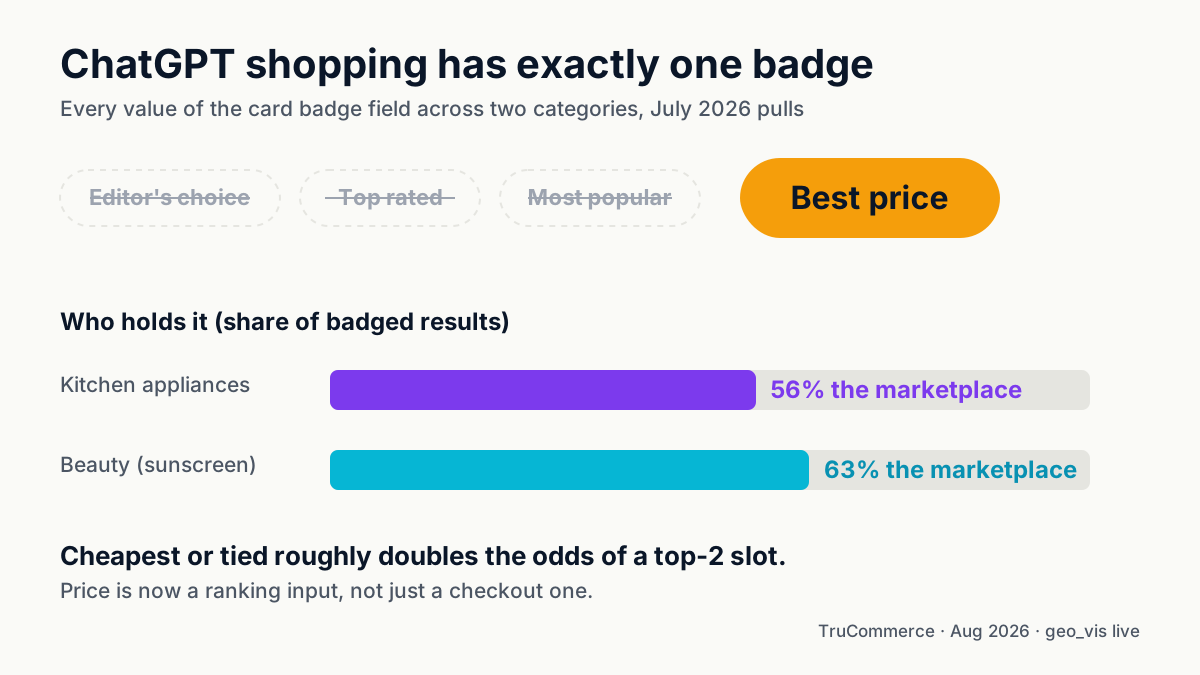
The Cheapest Product Wins — ChatGPT's Only Badge Is 'Best Price'

ChatGPT shopping ships exactly one product badge. Not Editor's choice, not Top rated — Best price. In our tracked categories the largest marketplace holds it on 56% of badged kitchen results and 63% in beauty, and holding the cheapest-or-tied offer roughly doubles a product's odds of a top-2 slot. Price has quietly moved from a conversion lever to a distribution lever: the model compares every offer before the shopper sees any of them. Here is the live data, the mechanism, and what a repricing strategy that stops at the buy box is missing.

Citation Rank & Share of Voice · Sep 1, 2026

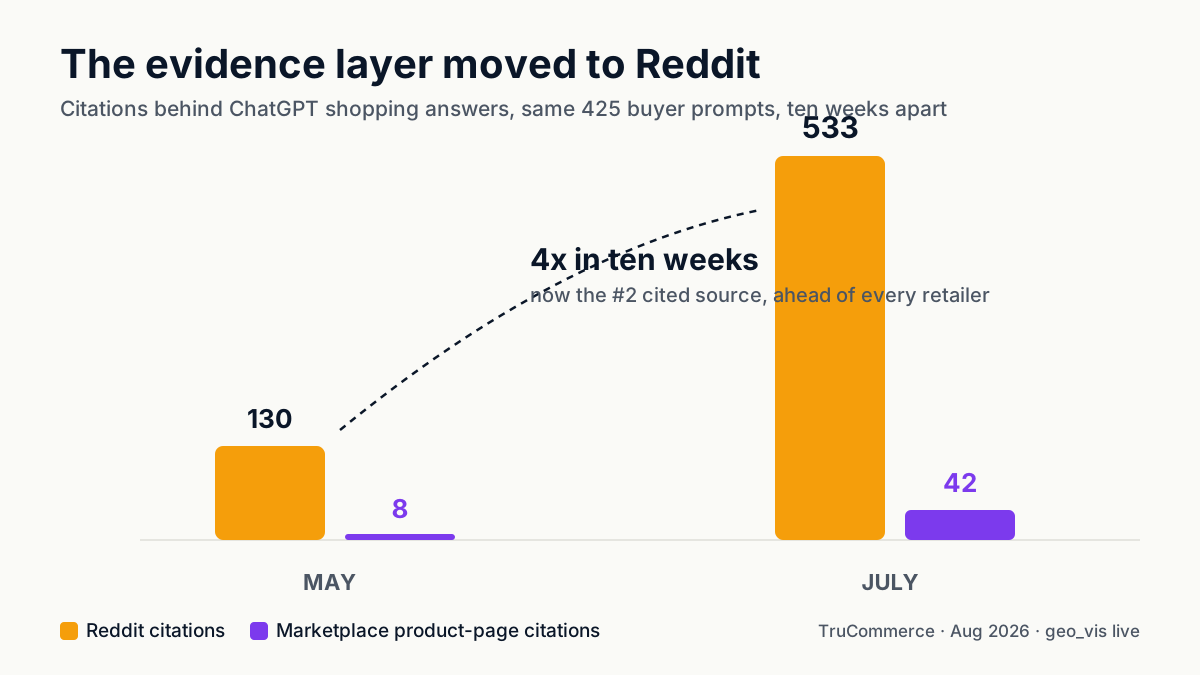
Reddit Is the New PDP — Where AI Shopping Actually Gets Its Evidence

Over ten weeks of locked-panel measurement, Reddit citations in ChatGPT shopping answers grew 4x to become the #2 cited source in the category — ahead of every retailer. Product pages, including the marketplace's own, stayed under 1 source in 25. The page you control most is the page the model trusts least. Here is the data on where the evidence layer actually lives, why threads beat product pages, and what a brand can do about a layer it cannot buy.

Citation Rank & Share of Voice · Aug 29, 2026

How to Track Your Brand Mentions in ChatGPT

Before the rebrand, the two highest-demand queries reaching our old site were 'chatgpt brand tracker' and 'chatgpt visibility tracker' - and we had no page answering them. This is that page: the manual method, the math on why 20 prompts a month tells you nothing, and the metrics that make ChatGPT presence a number you can manage.

Citation Rank & Share of Voice · Aug 7, 2026

The 86% Rule - In AI Shopping, Eligibility Beats Ranking

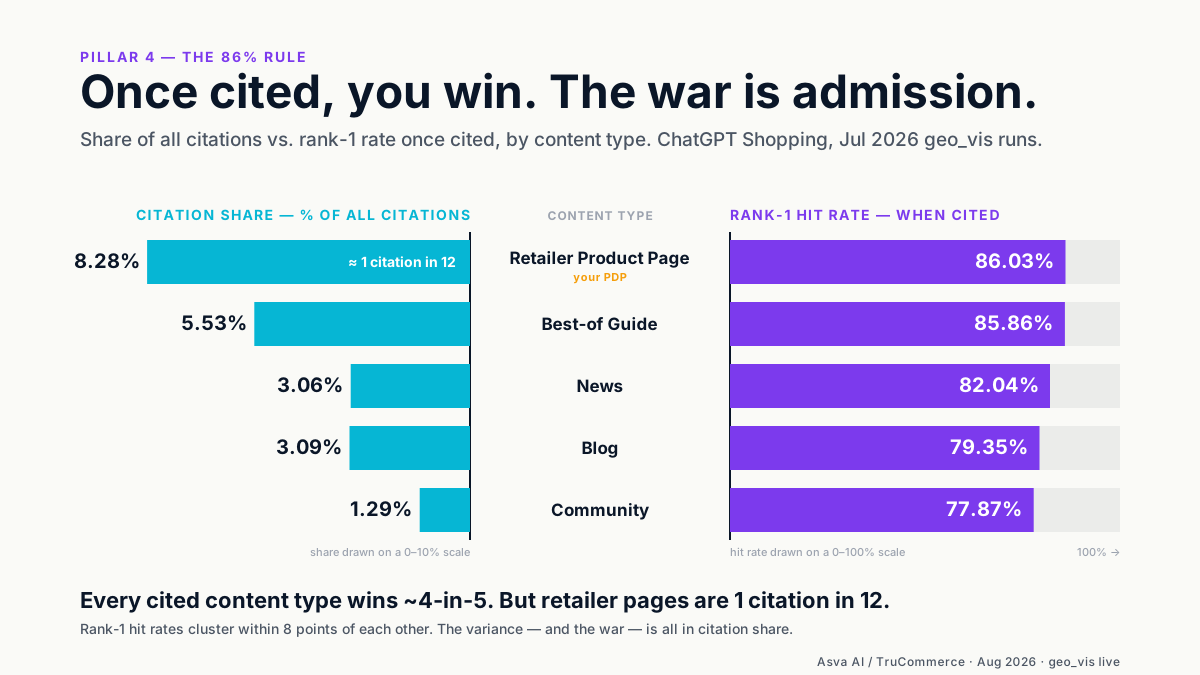
When a retailer product page gets cited in a ChatGPT shopping answer, it wins the top recommendation slot 86.03% of the time - the highest hit rate of any content type in an 18,942-citation dataset. But retailer pages are only 8.28% of what ChatGPT cites. That inversion rewrites the whole playbook: the scarce, high-conversion battle in AI shopping is getting cited at all, not ranking once cited. Here are the three gates that decide citation eligibility - reviews, product-type fit, sub-intent presence - and the two beloved PDP levers that tested statistically dead.

Citation Rank & Share of Voice · Aug 7, 2026

AI Visibility Has Two Layers: The Placement vs Citation Dashboard That Actually Works

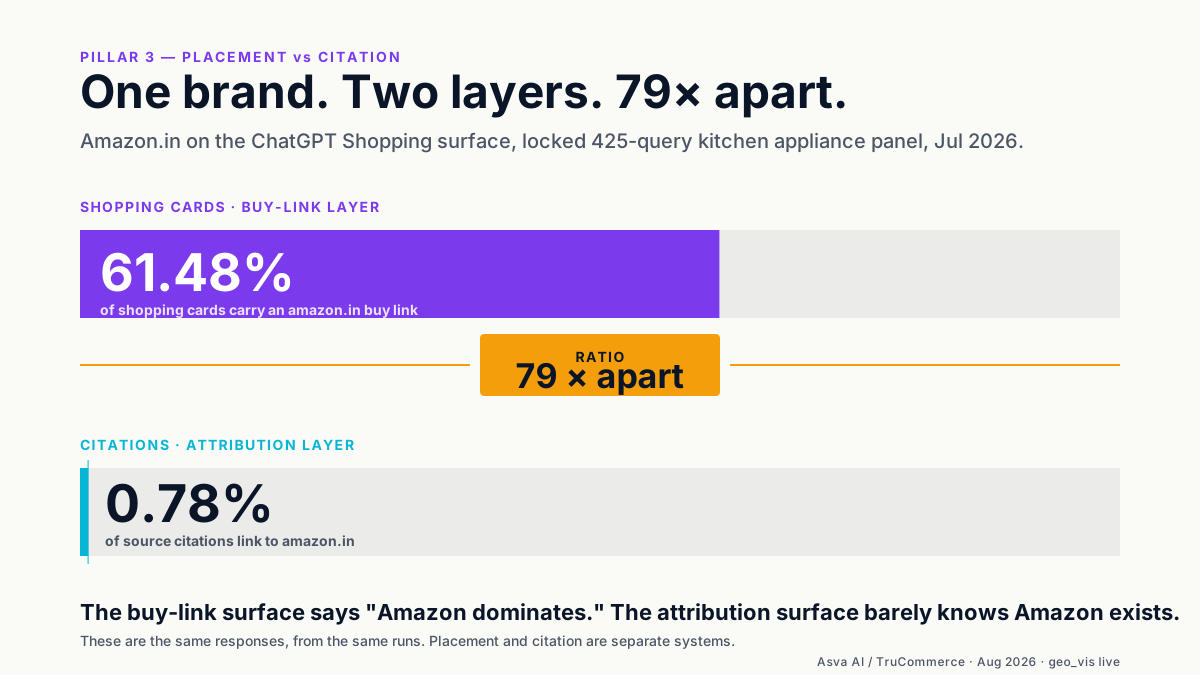
AI shopping answers have two independent layers - the products the model recommends (placement) and the sources it attributes the answer to (citation) - and every brand's AI-visibility dashboard is quietly blending them into one number that lies. On Amazon's India mixer-grinder data, one layer is 61.48% and the other is 0.78% - a 79× gap. On sunscreens the same structural pattern holds at 25×. And both layers moved in opposite directions twice in eight months. Here is the four-KPI-group model that fixes it.

Citation Rank & Share of Voice · Aug 7, 2026

The Amazon Shelf Story: What Really Happened to Amazon in ChatGPT Shopping Between May and July 2026

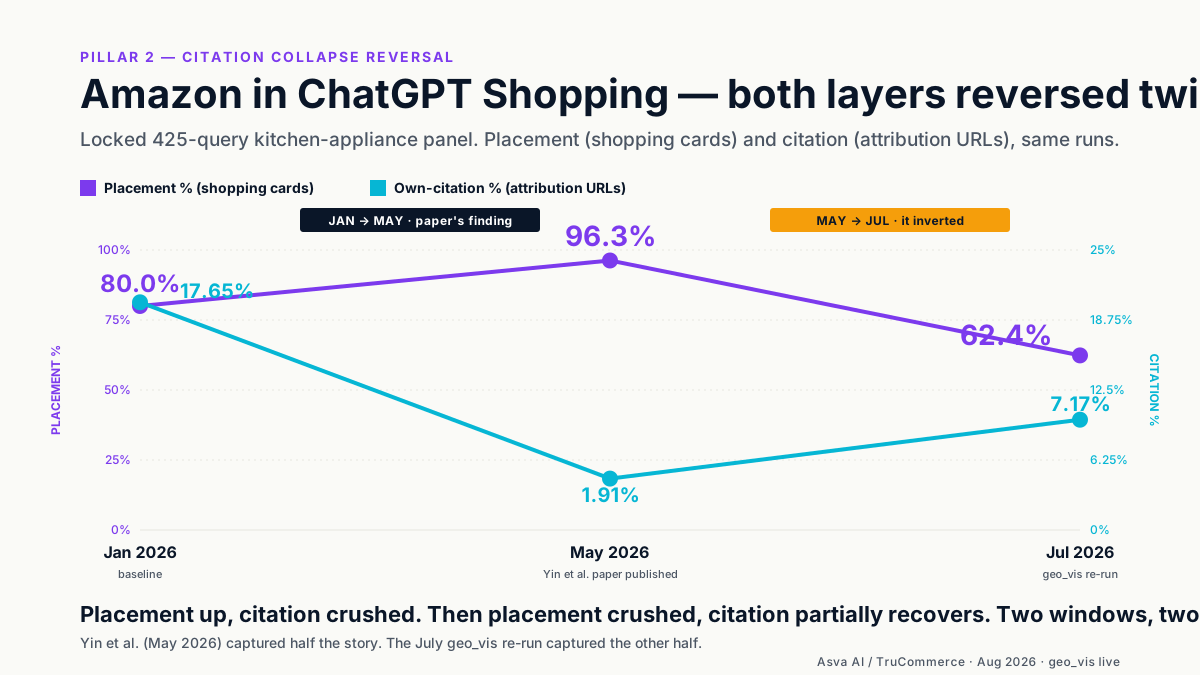
Everyone screenshotted the May chart: Amazon's ChatGPT presence rose to 96% while its citation rate collapsed to 1.91%. Two months later, on the exact same 425 buyer prompts, both metrics reversed - and the popular narrative got the story completely wrong. The 96% was on a half-empty shelf (56% zero-card responses). The July shelf is about three times healthier. And Amazon still wins the top-2 slot plus cheapest price on 210 of those 425 prompts. Here is the reverse-engineered version of what actually moved.

Subscribe

Get the issue Monday morning.