
PRODUCTS · AGENTIC CHECKOUT
Agents recommend.
Now they can sell.
Move from an AI recommendation to a purchase through an eligible embedded flow or your existing checkout. You stay merchant of record.
Check eligibility before choosing a checkout flow
ChatGPT documents merchant-hosted checkout, saved-payment flows, and embedded payment access for selected partners. An integration does not automatically grant access to every flow.
Reviewed September 21, 2026 · OpenAI checkout documentation · Integration availability
The checkout flow
See an embedded checkout demo
This demo shows cart, shipping, payment, and confirmation in one conversation. The experience available to your store depends on the surface, market, and integration.
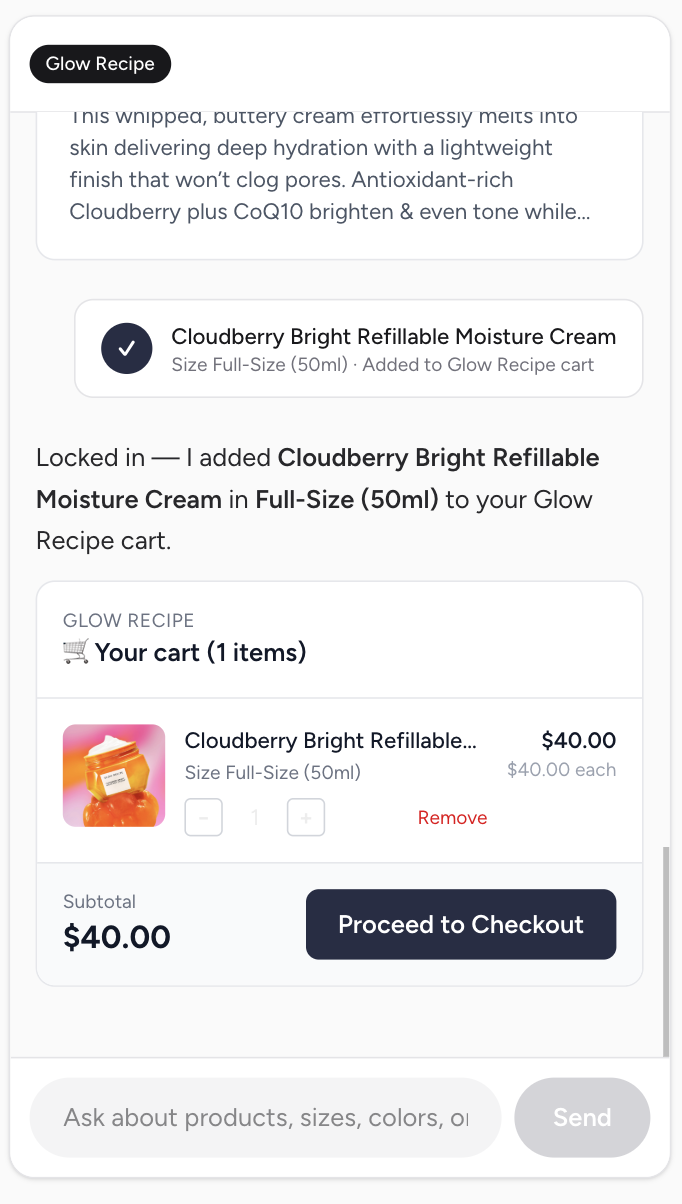
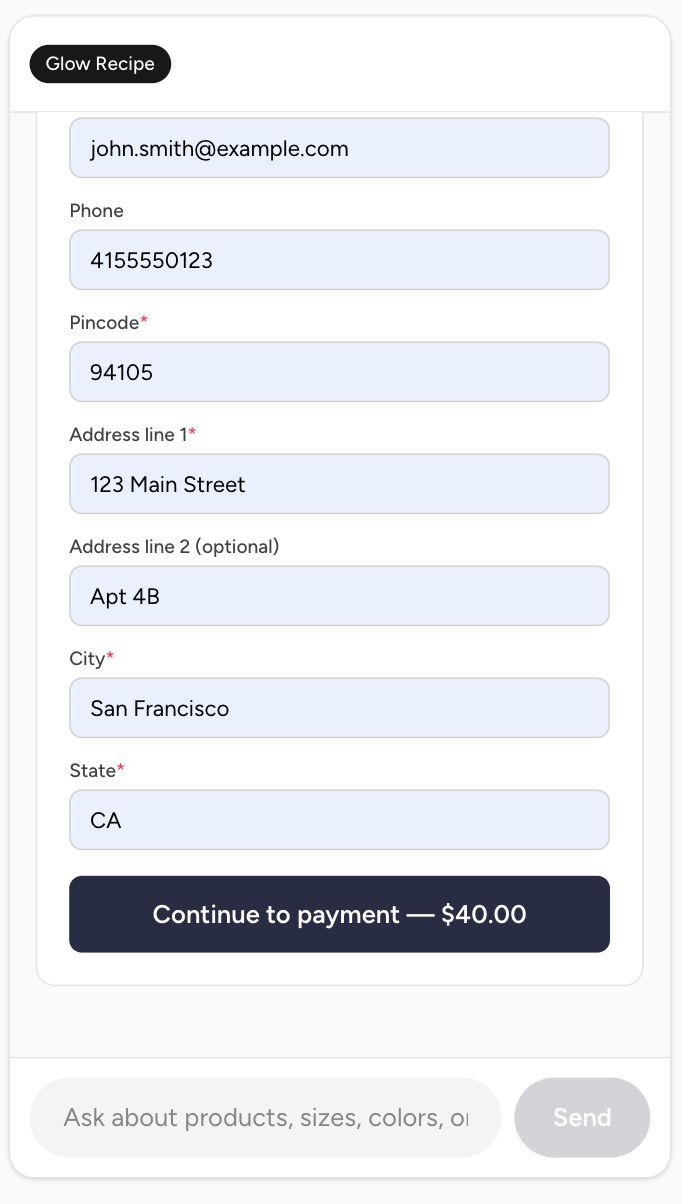
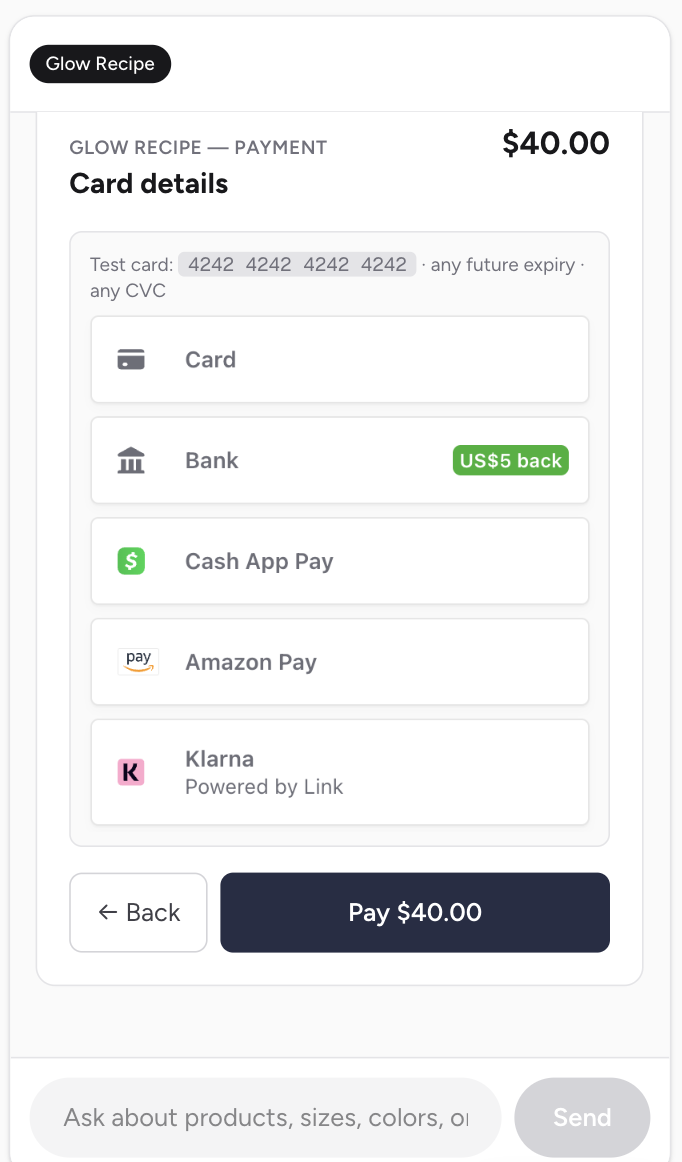
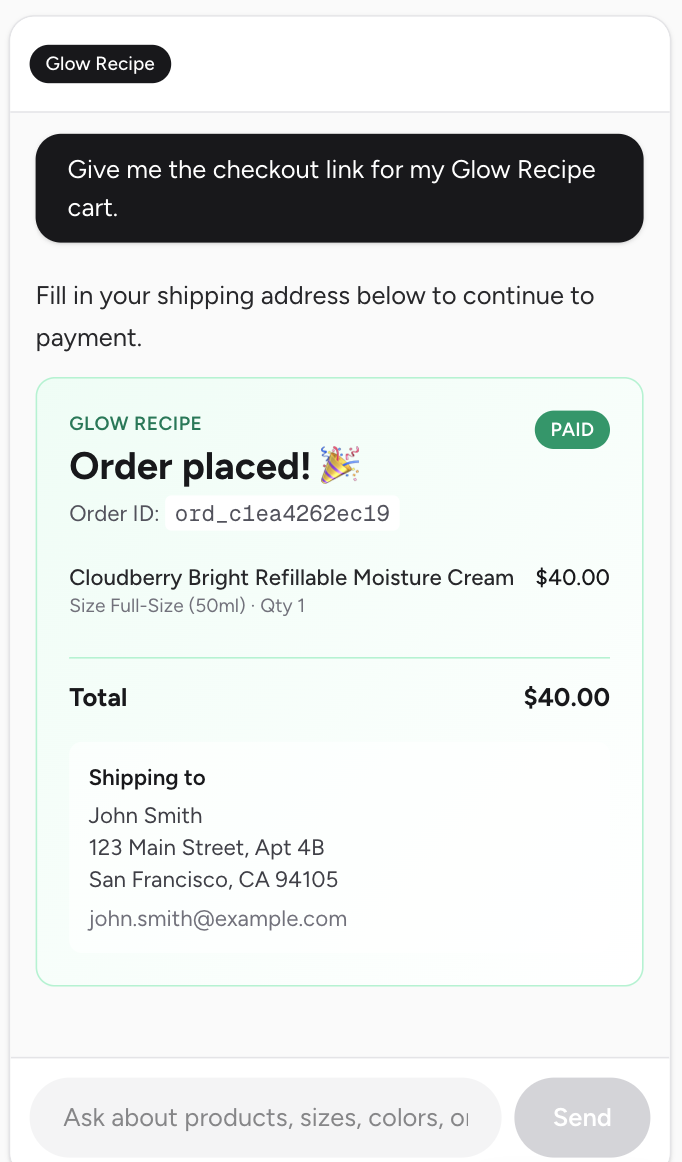
Cart
Under the hood
Choose the protocol your checkout flow needs.
Agents can use structured actions to check availability, confirm a price, or prepare an order. The protocol and payment path depend on the surface. Review availability below before choosing an implementation.
| Protocol | What it standardises | Where we are |
|---|---|---|
| MCPModel Context Protocol | How an agent reads your catalog and calls your actions live, inside the conversation. | Live today |
| ACPAgentic Commerce Protocol | How an agent completes a purchase against a merchant while the merchant keeps the customer relationship. | Adapter available |
| UCPUniversal Commerce Protocol | How catalogs and transactions are described between merchants and agent platforms. | Adapter available |
| AP2Agent Payments Protocol | How an agent is authorised to pay on a shopper's behalf. | Planned |
Live means ready to use. Available adapters are scoped per engagement; planned support is on the roadmap. Review the integration details before launch.
The agent is a channel. It is not your replacement.
The objection every brand raises, answered directly. Selling through an agent should not cost you the things that make the customer yours.
You stay the merchant of record
The order is placed against your store, under your terms, with your returns policy. The agent surface is a channel the sale arrives through - not the seller.
You keep the customer record
Confirm which customer fields and consent records the selected surface sends to your order system. Keep follow-up and retention rules consistent with that consent.
You set the price
Pricing, promotions and availability come from your catalog. Validate final totals and any provider or surface fees during setup.
Your payment provider stays yours
Confirm support for your processor and its settlement flow before enabling agent checkout. Provider and wallet availability depend on the integration.
The number a visibility dashboard structurally cannot report
Being named in an answer and being bought in one are different events. Measurement tools read what a model said in public, so they can report the first. The second is a private transaction between merchant, agent surface and payment rail - it is not observable from outside, which is why no dashboard reports it.
When the purchase completes in the conversation, the prompt, the recommendation and the order join up on one row. You stop inferring the sale from a traffic proxy and start recording it. That matters more than it sounds: assistant referrals usually arrive with the referrer stripped and land in analytics as direct traffic, which is why most brands cannot see this channel at all.
We publish how we measure all three - appearance, recommendation and completed transaction - including the run counts and the limits of the method.
Capabilities
Your store rules, carried into the selected checkout flow
A checkout path for each surface
Use an embedded flow where eligible, or guide shoppers to your existing checkout.
Your checkout rules apply
Validate discounts, tax, and shipping against your store settings before launch.
You stay merchant of record
You own the transaction, the customer data, the margin. The agent is a channel.
Protocol availability, clearly scoped
MCP is live. ACP and UCP adapters are available per engagement. AP2 is planned.
Confirm provider and wallet support for your checkout flow





Behind the scenes
See the events in an agent checkout
This illustrative event feed shows the stages to track: carts, discounts, payments, and confirmations. Actual events depend on your integration.
Checkout events
Agent transactions streamed in real time
How it works
Three steps to agent-powered sales
01
Connect your store
Shopify, WooCommerce, Magento, custom. We sync your catalog, checkout rules, and payment provider.
02
We map your checkout
Discounts, shipping zones, tax rules, payment methods. All configured so agents can transact correctly.
03
Agents start selling
AI agents can now build carts, apply codes, and complete purchases. Orders appear in your dashboard.
Common questions
The payment path depends on the agent surface and your integration. Shoppers may complete payment in an eligible embedded flow or continue to your merchant-hosted checkout. Confirm the provider, payment handling, and settlement flow during setup.
Your store remains the source of truth for discounts. Validate the discount types you use against the selected checkout flow before launch; support can differ between merchant-hosted and embedded checkout.
Your store keeps the order and customer relationship. The data exchanged with an agent or payment provider depends on the integration. Review required fields, permissions, and provider terms before enabling the flow.
Subscription support depends on your subscription provider and the agent checkout flow. Confirm recurring billing, consent, and renewal handling during setup. Use your existing checkout when the selected agent flow does not support subscriptions.
Returns follow your existing policy. Orders placed through agents appear in your normal order management system. Customers can return through your standard process.
The checkout tool is where money moves. Read how scoped payment tokens keep the blast radius to a single capped purchase, what a checkout provider for AI agents actually does, and who carries returns and chargebacks on agent-placed orders.